Full article about Eiriz: Where Vinho Verde Ferments Amid Furniture Dust
From granite workshops to pergola vines, this Paços de Ferreira parish blends craft, cult and cocker
Hide article Read full article
Fermenting Wine and Furniture Factories
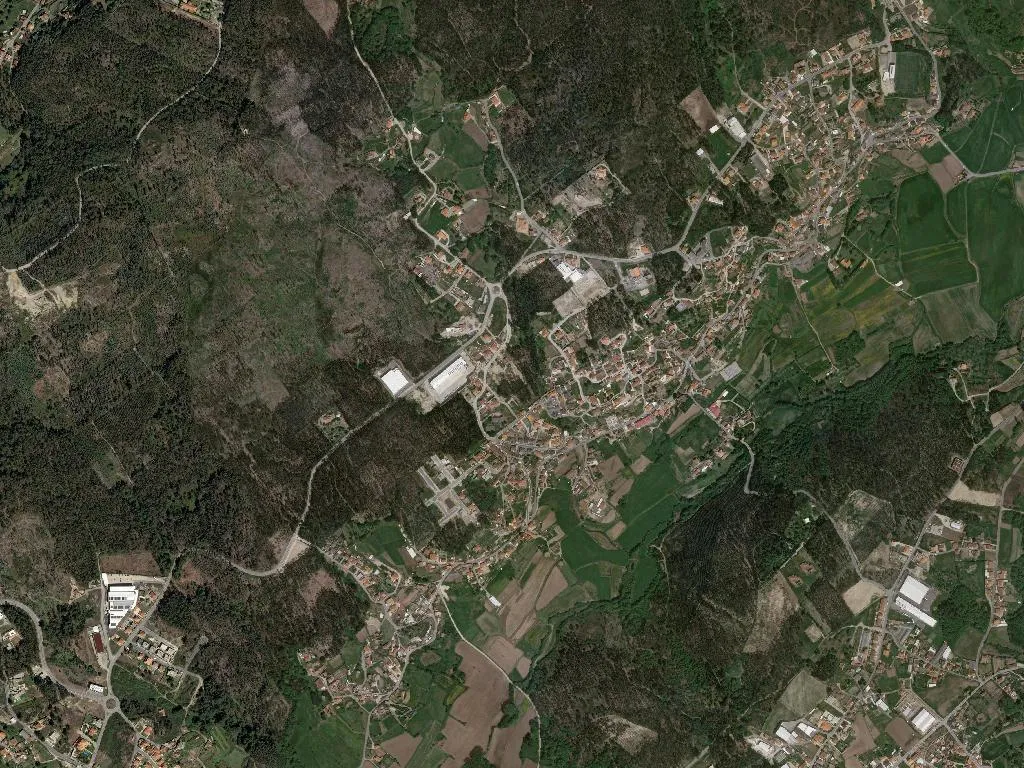
The scent of freshly-pressed loureiro grapes, still fizzing with primary fermentation, drifts out of open barn doors every September. In Eiriz’s domestic adegas, stainless-steel tanks have replaced the chestnut barrels, yet the protocol survives: dip a copper mug into the cloudy must, taste the razor-sharp acidity that will mellow into next summer’s vinho verde. At 351 m above the Sousa valley, this parish of Paços de Ferreira lives a double life: granite workshops that sand and lacquer headboards for IKEA hum beside pergola-trained vines that refuse to surrender the slopes to industry.
Two Festivals and a Parish Church
Only two dates really matter. On 3 February the bells of Igreja Matriz ring for São Brás, patron of throats, whose intercession is urgently required when Atlantic fog pools in the valley and every household keeps a pot of eucalyptus leaves on the boil. Mid-July brings the Sebastianas, three days of processions for Saint Sebastian, the Roman martyr drafted by rural Portugal as insurance against plagues. Both start with mass in a neo-Gothic church built in 1869 over a 13th-century chapel; both end at riverside picnic tables where wood-smoke and cheap-rockets linger long after the parish choir has sung its final hymn. Founded in 1978, the coral still numbers more farmers than sopranos.
White Wine and Cockerel
The Vinhos Verdes demarcation reaches this far inland, so local growers work either the high pergola—vine leaves forming a green parasol over vegetable plots—or the modern espalier introduced in the 1990s. The resulting wines are low-alcohol, lightly petillant, happiest beside a skillet of Ferreira river trout or a bowl of Paradela’s white-bean rice. Yet Sunday lunch revolves around something more substantial: Capão de Freamunde IGP, a castrated cockerel reared for 150–180 days on home-grown maize, then wood-roasted whole for four hours until the skin lacquers itself. Restaurants in Paços town will take your order mid-week; by Sunday noon the bird arrives under a cloak of potatoes anointed with rancho, the oily pan juices locals refuse to call gravy.
Between Sawdust and Silage
Paços de Ferreira bills itself as Portugal’s furniture capital; Eiriz supplies the grunt work. In the hamlet of São Cristóvão, former cottages now house CNC routers shaving birch panels for flat-pack wardrobes. The air tastes of Akzo Nobel varnish and cellulose thinner; articulated lorries from Jomar upholstery weave round the EN106 roundabout every half-hour. Yet maize is still drilled in April between the sheds, and 18 Miranda cows graze the water-meadows of Paradela until September. It is a residual, almost opportunistic rurality: the Agrícola de Eiriz tractor and Moveis Silva forklift politely swap right-of-way on the 1041 municipal road, one heading to silage, the other to Sweden-bound pine.
Casa da Cerca, a 2018 conversion of an 1850s stone farmhouse, is the only registered lodging. Visitors arrive to inspect cabinetry samples or to see cousins, not to tick off viewpoints; there are no signed footpaths, no classified monuments. Walk the unmade lane to Monte do Fogo and you earn a parish-scale panorama—granite cottages, factory roofs, vines stitched across the ridge. Older residents insist that, before the 1980s sawdust haze, you could pick out the Atlantic on crystalline winter days.
Granite, Concrete and Cockerels
The defining soundscape is binary: Jomar’s 24-hour mechanical saws provide a bass note, answered at dawn by the last backyard cockerels of Eiriz de Baixo. No synthesis is possible. Local stone—Anchora granite quarried since 1953—forms the very plinths on which the furniture plants stand, turning Nordic pine into bedside tables bound for Hamburg department stores. When the evening shift ends at 7:30 p.m., the church bell offers a counter-rhythm; soon every chimney issues the sweet, coal-smoke perfume of home-made charcoal from Freamunde. The parish does not perform itself for visitors; it simply continues, 362 inhabitants per km², more over-65s than under-18s by a margin slim enough to matter.