Full article about Freamunde’s mahogany-skinned capon rules the hills
In Paços de Ferreira, rosemary-scented air heralds 2.5 kg castrated cockerel Sundays
Hide article Read full article
The bird that weighs a kilo more than you expect
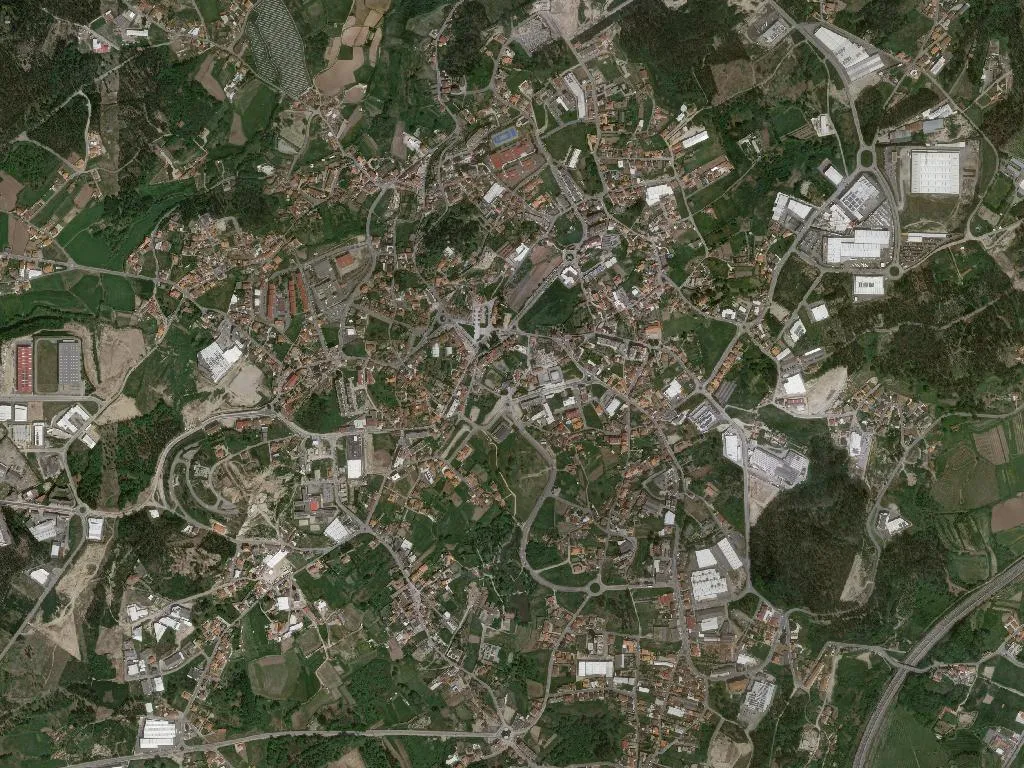
The smell hits before the road sign does: a drift of rosemary-laced fat that slips from extractor fans and settles over the terraced roofs like a second layer of slate. It is the calling card of Freamunde, a compact parish that rises 346 m above the Minho plain, 35 minutes north-east of Porto. Here the air carries the same gravity as Burgundy’s must or Parma’s prosciutto fog – proof that a place has staked its reputation on one edible artefact. In this case, a castrated cockerel.
Capão de Freamunde carries Portugal’s protected-geography seal (IGP) and a set of rules that read like monastic discipline: birds castrated at eight weeks, crated singly, corn-fed for a minimum of 15 weeks, slaughtered only when they top 2.5 kg. The result is burnished skin the colour of antique mahogany and muscle fibres that hold a blade like silk stretched over stone. First-timers notice the chew – firmer, deeper, almost gamey – and the way the fat pools gold rather than yellow. Locals simply call it “o menino da casa”: the household child, raised on time rather than additives.
Demand is brisk enough that the parish abattoir works Thursdays exclusively for capons; by Saturday the birds rest in chilled display coffins at Mercearia São Brás or under muslin at Café Central, ready for Sunday’s marathon lunch. Industrial poultry never breached these hills; the nearest battery sheds lie 40 km west, close enough to smell if the wind turns but too far to compete.
February cold, August brass
Freamunde’s calendar pivots on two axes. The first is São Brás (St Blaise), patron of throats, honoured during the first weekend of February when Atlantic fog still clings to granite like cold breath on glass. Processions leave the 18th-century igreja matrice at dawn, escorted by the Banda Musical de Freamunde whose trumpets sound sharper in the damp. By dusk, hawkers sell honeyed almonds and the parish council lights a single ferris wheel on the football pitch; its bulbs flicker against the mist like a grounded constellation.
Five months later the same streets surrender to the Sebastianas, a mid-summer convulsion that commemorates St Sebastian with louder artillery: four historic quarters – Urrô, Ferreiró, Carreira, Vila – compete in all-night serenatas, costumed parades and the “rusgas”, a form of choreographed street shouting that predates rap battles by about four centuries. Brass bands reheal after beer breaks; fireworks ricochet between balconies; grandmothers patrol doorways with trays of lamprey rice, ensuring no visitor escapes without a third helping. The festival’s soundtrack – tuba, snare and the metallic rasp of a snare drum – is audible as far as Paços de Ferreira’s furniture factories, whose night-shift workers time their coffee to the crescendo.
Green wine at altitude
Freamunde sits inside the Vinho Verde demarcation, but the landscape is less romantic vineyard, more smallholding pragmatism: pergola-trained vines hover above vegetable plots, the bunches high enough to let cabbages fatten underneath. At 346 m the nights stay cool, sealing acidity into the grapes and delivering wines that fizz gently, like bottled mountain water. Locals drink them from straight-sided glasses thick enough to survive a tiled floor, pairing the lemon-peel zip with the capon’s richness in a cut-and-restore rhythm that feels almost medicinal. Producers such as Quinta da Lixa, ten minutes west, bottle a single-vineyard Loureiro labelled “Sextante” whose 11 % alcohol and green-apple bite can reset the palate faster than sorbet.
A grid that refuses to empty
Portugal’s interior has haemorrhaged residents for decades, yet Freamunde holds a steadier line: 958 residents under fourteen, 1,311 over sixty-five. Numbers that hint, rather than shout, at shrinkage. The local EB 2,3 school still enrols 600 pupils; the municipal library runs robotics workshops; the skate park behind the health centre hums after 4 p.m. Proximity helps – Porto’s orbital A42 motorway is an eight-minute drive, and Paços de Ferreira’s furniture cluster (Portugal’s answer to North Carolina’s High Point) absorbs carpenters, logistics clerks and CAD designers. The result is a parish that functions past closing time, where cafés open at 6 a.m. for truckers and close after midnight for third-shift engineers debating football.
Accommodation remains resolutely low-key: three guest rooms above the Solar da Curva restaurant, two rural cottages in the surrounding oak belt. No boutique flotation tanks, no infinity views. Tourism arrives with purpose – a family reunion, a capon craving, a cycling club tracing the Curva dos Três climb (18 m gained in 350 m, gradient peaking at 42 %). Visitors slip into the rhythm rather than inspect it.
The weight of ritual
Watch any kitchen on Sunday morning: the cook lifts the bird from its roasting tray, palm braced under breastbone, elbow locked to absorb the shock. A two-and-a-half-kilogram capão is heavier than logic suggests, density disguised by poultry politeness. The skin crackles under the first knife stroke; steam escapes, carrying rosemary, rendered fat and a faint whiff of vine-wood smoke. Outside, afternoon fog reconvenes over the slate roofs, muffling the clink of coffee cups in the praça. Somewhere up the hill, another cook repeats the gesture, and another, until the entire parish feels like a single, synchronised heartbeat. In Freamunde, repetition is not monotony; it is the sound of a place that has already decided what perfection tastes like, and sees no reason to improvise.