Full article about Meixomil: Where Wood-smoke Clings to Copper Snails
Meixomil, Paços de Ferreira, hides a snail-hunt school run, gilded chapel cherubs and 3,749 residents who count life in horsepower and wood-smoke.
Hide article Read full article
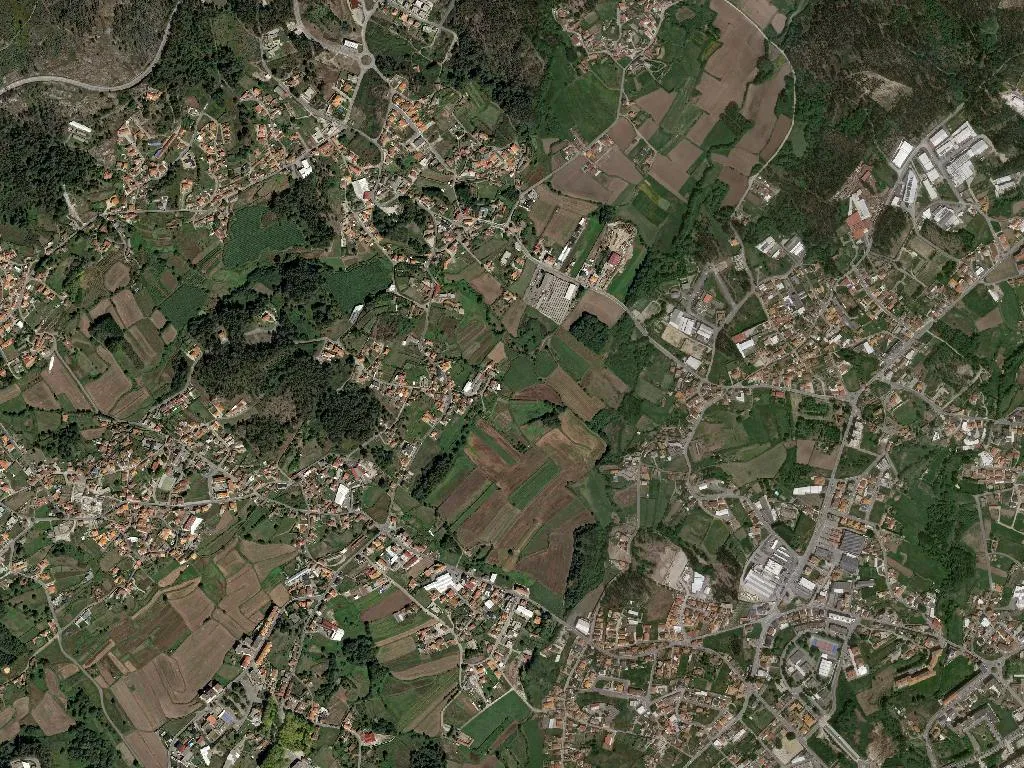
The scent is not pine-wood boutique candle; it is damp eucalyptus burning in the corner hearth next door, the resinous smoke settling on Monday’s laundry like a second skin. Meixomil’s fields refuse to behave like manicured quilt-work: they fracture into pocket-handkerchief plots, divided by sluggish ditches where bulrushes grow and children hunt snails the colour of old copper once the bell rings at Escola Básica do 1.º Ciclo. The vines do not romantically drape overhead; they are trained on waist-high wooden stakes, forcing anyone over twelve to stoop as though entering an invisible chapel. When the wind drifts down from the Serra de São Tiago it carries not mountain freshness but the honest reek of dairy herds, strong enough to make the green shutters clap against the granite.
Gold leaf and January saints
Inside Igreja de São Brás the floorboards flex like piano keys under the weight of Sunday best. The gilded altarpiece is foxed and bruised, varnish lifting in brittle curls; cherub faces wear a uniform grey of forgotten incense. Missa das Sebastianas begins at four, yet by three the forecourt of the adjoining São Sebastião chapel is already a parliament of housecoats arguing whose turn it is to feed the bonfire. Slices of massa folhada are portioned with the household bread-knife; wine sloshes into recycled plastic cups because every last thick tumbler met the flagstones years ago.
A parish of a thousand tractors
Roman map-makers may have named it “Meixomilium”, field of a thousand paces, but the modern tally is measured in horsepower. Of the 3,749 residents, 3,748 remain whenever José heads to France for seasonal dry-lining work. Three streams circle the settlement—Outeiro, Várzea and Ponte—each baptised because parents need a precise answer when a child limps home soaked. The footpath to the ridge begins behind the cemetery, 2.3 km of winter mud or summer talcum, passing a wall where “Zé + Lúcia 1997” is still legible in fading marker-pen ink.
Lunch with Saint Blaise
Arroz de cabidela acquires its mahogany hue from backyard chicken blood, not a supermarket tray. Cubes of rojão steep for three days in a neighbour’s smoked paprika and two bruised garlic cloves—no Instagram-worthy marinades here. The vinho verde was bottled last autumn, lees and all, poured from a terracotta jug hand-thrown by Zé’s mother in the Douro village of Santa Marta de Penaguião. Capão only appears at Christmas; the rest of the year it is yard-rooster, simmered until the scent drifts through every doorway. Sarrabulho porridge is served in patterned china; pig’s ears left untouched are diplomatically slid to the dog. The bilhóres—doughnut holes no larger than a walnut—vanish in one bite and can spark sibling warfare if the eldest claims more than her share.
Dusk settles. Sr Joaquim’s John Deere coughs twice before disappearing into the shed. Lights click on in sequence: Dona Rosa first, always dinner at seven sharp, then the bar whose door stays ajar until the last domino player leaves. Silence is not poetic, simply familiar: thirty years of the same mongrel barking at its own shadow cast by the road-side mirror, and everyone knows it’s Melro, João’s dog, sounding off again.