Full article about Rockets, Vinho Verde & granite: Penamaior awakens
In Paços de Ferreira’s loftiest parish, gunpowder scents mix with lime-zipped Vinho Verde amid 13th-
Hide article Read full article
The crack of rockets arrives before anything else, splitting the February sky above Penamaior. Then comes the low burr of a procession edging down the single main street. It is a Sunday shortly before Lent and São Brás—Saint Blaise—is returning to his granite porch, shouldered by men in dark coats while women circulate trays of bolos benzidos, blessed buns studded with crystallised peel. Gunpowder drifts through cold incense; behind both scents hangs the wood-smoke of living-room fires that have been fed since dawn. At 333 m the air carries a different edge—thin, scrubbed, and salted by Atlantic weather that rides up the Ferreira valley and settles on the churchyard flagstones.
The rock that named the place
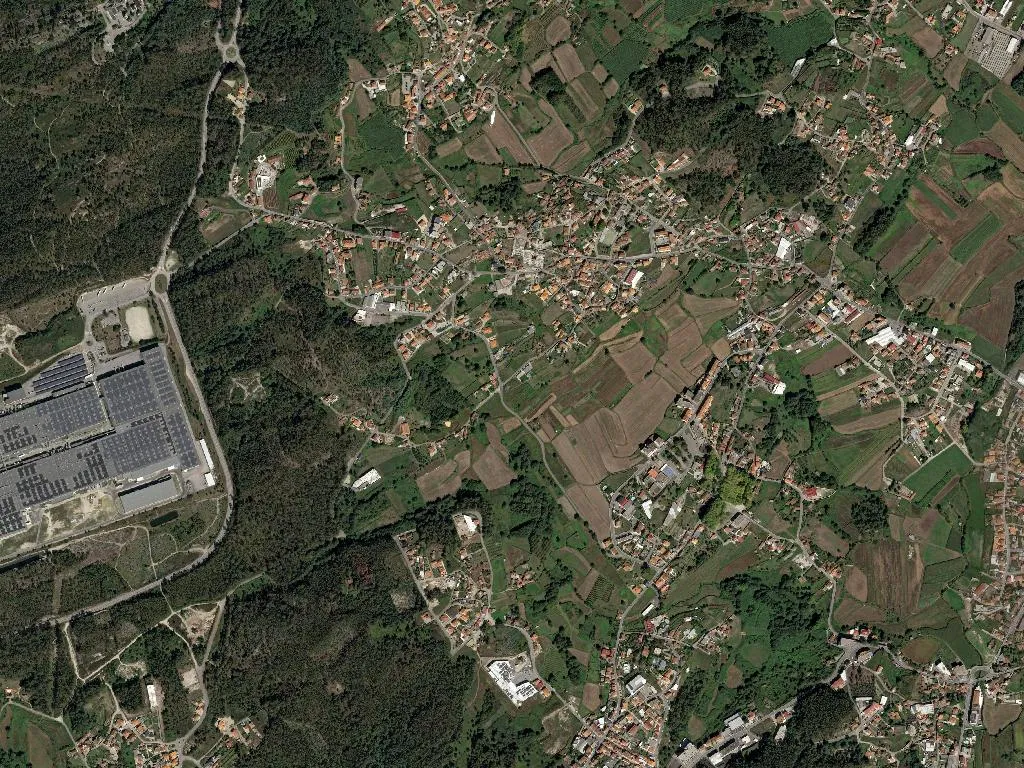
Penamaior makes no mystery of its pedigree: penna maior, the larger crag, appears in a 1258 charter as Pena Maior within the medieval termo of Ferreira. Seven centuries on it is one of the few settlements north of the Douro to have kept its Latin name intact, proof of a community that expanded cautiously, pegged to the slow turn of vineyard seasons. The parish covers barely 671 ha—smaller than Hyde Park and Kensington Gardens combined—yet the density of plantings outstrips the national average. Cracked granite, Atlantic breezes and a mosaic of small plots create textbook conditions for Loureiro and Arinto, the grapes that give the Minho’s loudest, lime-zipped Vinho Verde.
Gilded altars and winter pilgrimages
The parish church, rebuilt in 1874 over an 18th-century chapel, anchors the village square. Inside, an unreconstructed rococo altarpiece still flashes its original gold leaf; São Brás, throat protected by crossed candles, shares the predella with São Sebastião, the arrow-pierced co-patron who book-ends the winter calendar. Fifty metres away the 1758 Chapel of São Sebastião hosts an annual romaria on the Sunday closest to 20 January. The Sebastianas—a brotherhood in crimson cummerbunds—lead the Dansa dos Sebastianos, a masked sword-dance performed to concertina and frame-drum. Declared of Municipal Interest in 2017, the ritual is now rarer than a wild wolf in these parts. A twenty-minute walk across oak scrub brings you to the hilltop chapel of Nossa Senhora da Saúde, its nave wrapped in 1920s folk murals: sky-blue virgins, terracotta sheep, a moon-faced Christ that would make Eric Gill envious. On the last Sunday of August the parish council lays out plank tables for an open-air mass and arraial supper; the scent of grilled sardinha drifts downhill for miles.
What the table receives
Penamaior’s kitchen is a ledger of small holdings. Rojões—cubed pork—marinates overnight in white wine and bay, then hits the copper pot with hand-cracked potatoes and a slab of maize broa to mop the juices. Winter Sundays belong to lamb stew thickened with turnip greens and cannellini beans. For sweets, suspiros—snowy meringues bound with local heather honey—sit beside bolinhos de São Brás, thumb-print pastries stuffed with pumpkin jam and handed out free after Mass. Christmas tables reserve a place for Capão de Freamunde IGP, a capon fattened in backyard coops and killed according to a 16th-century statute; its flesh, steamed then roasted, tastes faintly of the maize on which it gorged. Everything is rinsed with Vinho Verde poured in short, stemmed glasses, the wine’s razor acidity resetting the palate between bites.
Tracks and lookout points
The Serra de São Brás crests at 408 m, the highest point in Paços de Ferreira. Way-marked as the Penamaior Trail (PR 15), the seven-kilometre loop climbs from the church gate, threading schist walls, irrigation leats and a restored water-mill whose grindstone still smells of maize flour. At the summit a granite platform delivers a topographer’s dream: the Sousa valley rolling south in waves of vine and quercus pyrenaica, the infant River Ferreira glinting like a dropped coin. No official river beach exists, yet locals still gravitate to deep August pools where children bomb from flat-topped boulders and grandparents spread towels on schist shelves.
Silence up here has body—broken only by blackbird song and the soft shift of oak crowns. Below, the village roofs compress into a terracotta slab, smoke curling from fumeiros where chouriço links cure for spring. Stay long enough and the plateau empties of everything but your own footfall on stone polished since the thirteenth century.