Full article about Raimonda: Where Vineyards Outnumber People
Raimonda, Paços de Ferreira—vine-stitched parish where pruning starts on St Vincent’s day and gorse fires burn winter’s throat.
Hide article Read full article
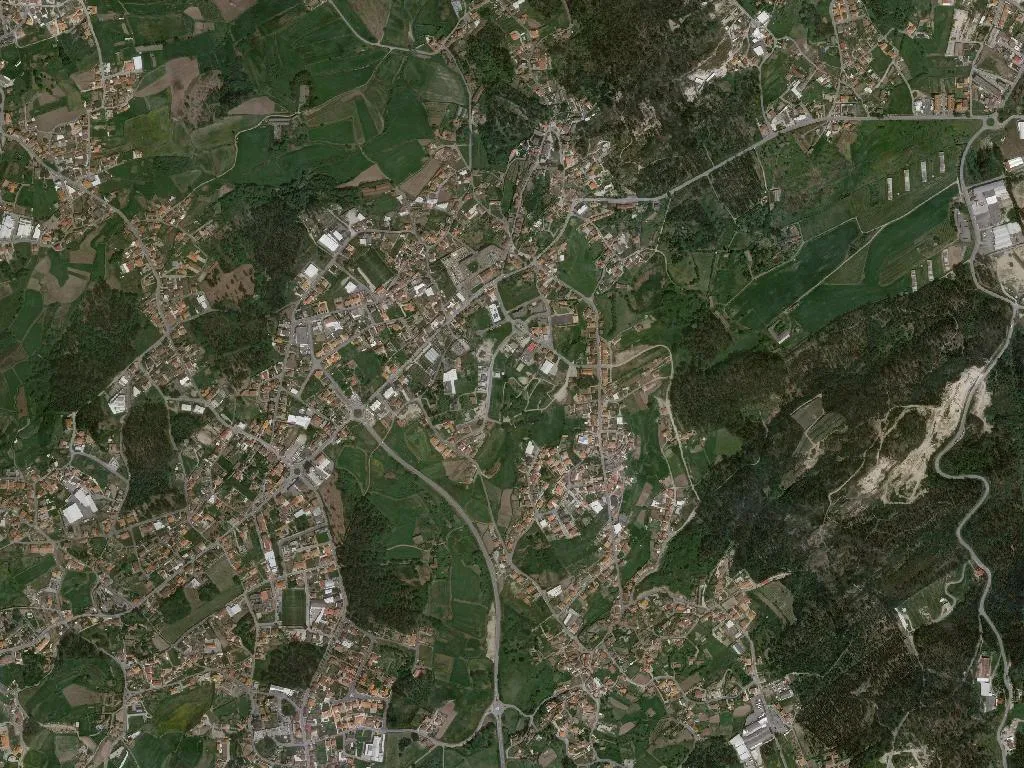
The church bell strikes eight-thirty, its bronze tongue carried downhill to the N206 where the milk lorry passed twenty minutes earlier. At 367 m above sea level the air is thin enough to make the 800-metre haul up Rua do Cemitério feel like penance; when the engine refuses, villagers still walk it, lungs sharpening on winter air. Two-and-a-half thousand souls share 336 hectares—740 per square kilometre, if you trust the census—but the statistic that matters is that Dona Firmina’s china jug of still-warm milk reaches her neighbour before nine.
Vine and livelihood
Vines occupy forty-two per cent of the parish, the council’s 2022 report insists, yet the eye already knows. From the granite cruise-cross at the top of the hill to the shuttered primary schools, 140 ha of pergola-trained vines hang from schist posts in the manner the Vinho Verde board labels “enforcado”—literally “hanged”. Pruning starts on 22 January, St Vincent’s day, when the almanac still lists “spinach season”. Sixty-eight per cent of owners hold less than half a hectare, so labour is pooled in afeitadas: Zé do Souto trims Antoniozinho’s parcel before the whole crew files into Guida’s tasca for Sunday lunch of bucho—tripe sausage—served only on the Lord’s day.
The capão, the castrated cockerel prized at Christmas, is reared elsewhere but arrives alive every December Monday from Freamunde, 6 km south. Alda, behind the grocery counter since 1973, still writes orders in her ledger: 3 kg bird for Natália, delivered before the 23rd, receipt dated because “the village oven has one chamber—first come, first served”.
Calendar, fire and sermon
3 February, St Blaise. At ten-thirty the Baroque silver processional platform—gift of Brazilian emigrants in 1922—emerges from the church and inches 400 m to the chapel of Our Lady of Fátima. There, fachos, great pyres of gorse, are lit to “burn winter’s throat”. By one o’clock the sports hall is fragrant with suckling pig: 250 plates at €7 apiece, washed down with three-litre jugs of Zé Mário’s vinho branco.
The feast of St Sebastian is officially 20 January, yet Raimoda shifts it to the following Sunday. The custom dates from 1835 when cholera halted at the parish boundary after townsfolk vowed a sermon on the saint’s “five wounds”. Father Antonio has read the identical text for eighteen years; afterwards, slabs of meat-loaf cake made with Estremoz streaky bacon and Foz Côa cinnamon are handed round.
Arithmetic of shrinkage
Three hundred and ten under-fourteens attend the merged EB1 school in Raimonda/Jordão, but classes have fallen from seven to four since 2016, the year Raimonda’s own primary closed. The building is now a day centre where 421 over-65s—seventeen per cent of the population—eat turnip soup on Wednesdays before boarding the 804 bus at 7.45 for hydrotherapy in Paços, 11 km away. Even so, Café Progresso unlocks at six sharp, pulling its first espresso at 6.05; rival Central manages 6.08. The split has defined dawn politics here since 1962.
What the stone remembers
Beside the cruise-cross lies an unmarked granite slab: the former pillory, toppled in 1834 after the dissolution of the monasteries. Memory keeps smaller monuments. Joaquina de Jesus—“Tia Quim”—bought the first electric sewing machine in 1957. Zé do Pipo defied his father and planted his vineyard in straight rows in 1974. Father Amândio piped running water to the Calvário chapel in 1983. At 18.20 on a January evening the sun slips behind Monte do Marco, Zé Mário’s loureiro Vinho Verde—11 % vol.—still burns the throat, and the scent of eucalyptus smoke rises from chimneys. No postcard carries this; it is corked inside a bottle bearing the 1998 seal of the village press.