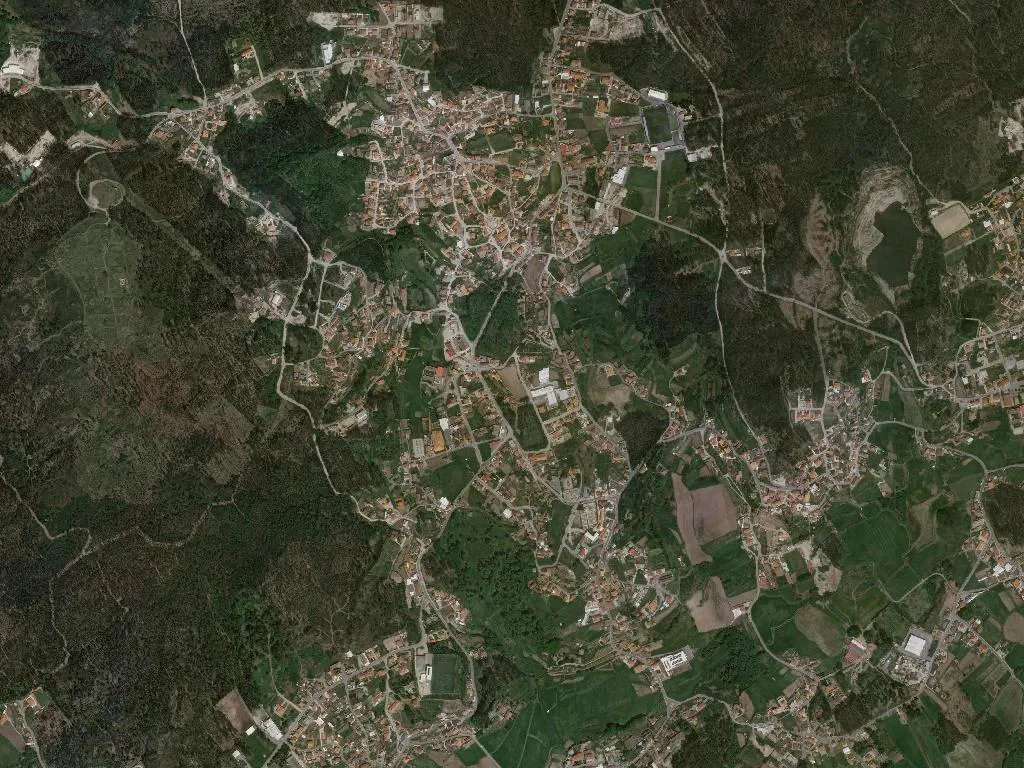
Full article about Sanfins de Ferreira: Where Bells, Bread & Vine Meet
Granite lanes, wood-fired loaves and vinho verde terraces shape this Porto village.
Hide article Read full article
A Bell's Wake-Up Call
The bell of São Brás chapel tolls from afar, but it is not the only one. At seven, at noon, and again at seven, the bell’s clang cuts through the air from the church tower — a metallic sound that blends with the barking of dogs and the creaking of window shutters opening to the morning. Sanfins de Ferreira wakes in increments: the first bus to Porto left at 6.30, yet the wood-fired loaves at Padaria do Celestino won’t emerge until eight. Those waiting outside inhale the smell of eucalyptus smoke drifting from the brick oven, wedged improbably beside a stainless-steel sink.
Carved out of the ancient parish of Ferreira in 1843, Sanfins stitched its name from “São” — São Brás, the fourth-century plague-defying physician — and “fins”, the medieval term for boundary stones. Geography and belief are baked into the word itself. The settlement grew around smallholdings and the cultivation of vinho verde, activities that still pattern the hillsides with hand-pruned pergolas and low granite walls. Every dirt lane, every property line, looks laid out by the same patient hand that plants and waits nine months for the grapes to acid-bright perfection.
Stone, timber and gilt
The parish church stands square in the middle of the village: a sober 18th-century façade punched through with baroque exuberance inside. Gilt altarpieces flare against the gloom of the nave; painted benches the colour of bitter chocolate creak under the weight of two elderly parishioners who cross themselves with index finger extended before sitting. Smaller, closer to daily life, the chapel of São Brás is where February festivity ignites — and where the priest sprints to administer last rites when the ambulance is delayed. Granite calvaries still punctuate crossroads; single-arch bridges stride over summer-dry streams. These are remnants of a rural network that once ferried people, ox-carts and devotion between hamlets — walkable today if you choose soles thick enough for basalt cobbles.
When the scattered return
On 3 February the feast of São Brás fills the streets with processions, brass bands and open-air dancing that last until the thermos of aguardiente runs dry. The bandstand on the Alameda becomes a reunion spot for those who left for Switzerland, for France, for Newark — children taller, grandparents thinner, neighbours suddenly conversational. In January the “Sebastianas” honour Saint Sebastian with rifle-shooting masses and evening concerts, a tradition most villages have quietly dropped. During these weeks the calendar halts: houses refill, Ryanair flights empty into Francisco Sá Carneiro, and the parish regains the population it lost to emigration. Inside Café Central, António still charges ten cents for coffee if you bring your own cup.
Garden greens and barrelled juice
At table, roast kid arrives with oven-charred potatoes and a dark gravy of garlic and vinho tinto. Minho-style pork shoulder comes glossed with chestnuts and slices of home-grown orange — stored by José in his loft since December. Caldo verde is non-negotiable: kale from the back garden, potatoes from last year’s clamp, olive oil pressed in Trás-os-Montes and couriered down in spring. Feast-day lunches stretch to papas de sarrabulho — a cinnamon-dark stew thickened with blood and cumin — or butter-bean rice. The Capão de Freamunde, a castrated cockerel with Protected Geographical Status, is Christmas and Easter law, bought directly from the farmer who fattened it on corn mash. White vinho verde, bottled while the grapes still prickle with malic acid, is poured into stubby glasses that are refilled until Silva pulls the metal shutter of his adega at three sharp — he has to eat lunch too.
Walking the built landscape
At 377 m Sanfins surveys the Ferreira river valley, views unrolling north to the Serra de Rates. Rural trails thread between pergola vineyards, knee-high walls and pocket-sized woods where cirl buntings still call. There are no nature reserves, only a topography sculpted by centuries of subsistence: quintas with carved gateposts, stone-paved paths just wide enough for a single ox, chapels set where two tracks diverge. Walking here is to move through a geography of labour and liturgy, every bend revealing another plot of loureiro vines, another wayside calvary. Along the Caminho do Calvário wild strawberries colonise the joints of the stonework; grandchildren of the original owners still collect them for jam while their city cousins Instagram the view.
As the sun drops, orange light ignites the whitewash and the bell sounds again. Nothing new is announced — only the continuance of what has always been. In the Alameda the fountain drips, Café Central closes at nine precisely, and someone carries a jug of warm milk to the neighbour’s door, same as every night since the baker first lit his oven.