Full article about Aguiar de Sousa
Aguiar de Sousa pairs century-old chestnut estates, granite chapels and oak-shaded river trails with smoky chouriço and cinnamon-dusted bilhóres.
Hide article Read full article
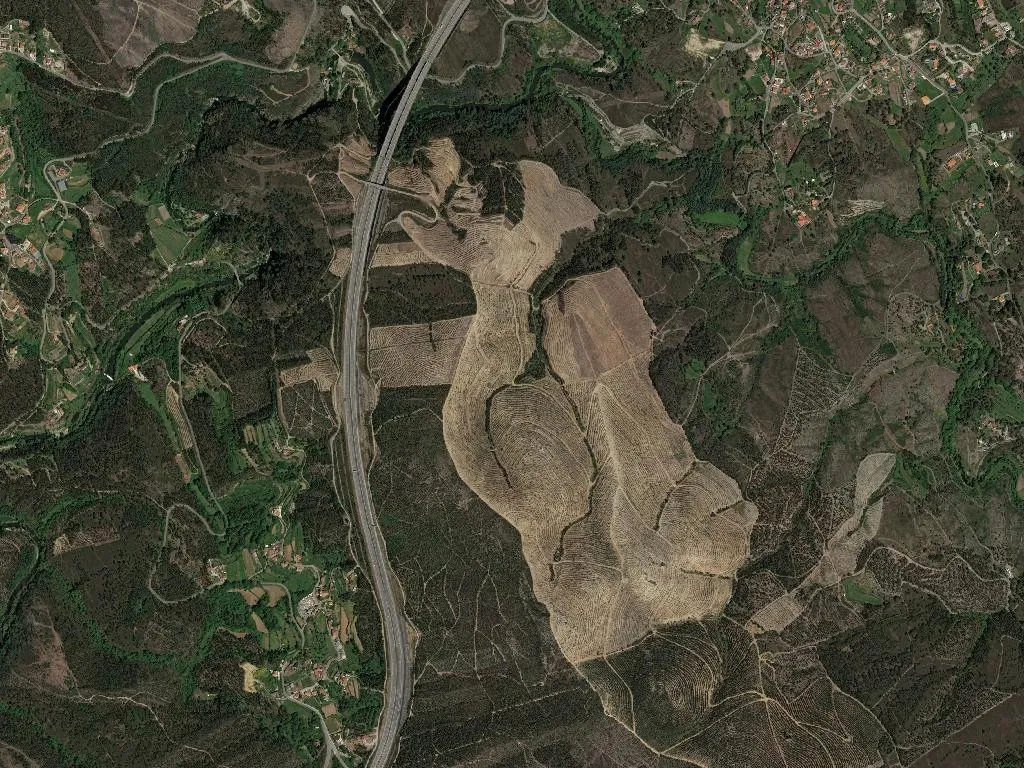
The air carries a tannic sweetness of chestnuts blistering on iron pans while granite chimneys exhale their blue-grey breath. Up the folds of the Sousa valley, ancient chestnut estates (soutos) quilt the hills—each tree a century old, bark fissured like the palm of a labourer. At 218 m above sea level, between the river and its tributaries, the only sounds are the mew of a circling red kite and the bronze toll of the church bell.
Granite & belief
The 18th-century parish church dominates the square; inside, candlelight ricochets off a gilded baroque retable. Beside it, the whitewashed Chapel of Our Lady of Health hosts the first-Sunday-in-May field-blessing: farmers climb from hamlets with baskets of corn cobs and honey stamped DOP Terra Quente, trading them for sprigs of holy laurel. Faith here is built of the same material as daily life—granite. You see it in farmhouses with metre-thick walls, in the window-slit granaries perched on staddles, and in the mortar-less single-arch bridge that has carried pack mules since the Middle Ages.
Tastes of the parish
Smokehouses rule the cuisine. Strings of wine-flavoured chouriço, air-cured salpicão and dew-laced pancetta dangle from blackened beams. In cast-iron pots, sarrabulho rice simmers with pork blood and cumin; rojão, diced shoulder, crackles in its own lard; kid goat slow-roasts in a wood oven until the skin lacquers. On feast days, chickpea stew binds three generations around a single tureen. Coffee from a cloth filter arrives with bilhóres—lard-fried dough knots dusted in cinnamon sugar—at the village grocer’s counter.
Trails & water
The Ribeira de Aguiar walking loop is six kilometres of oak and strawberry tree shade, following the stream past ruined watermills whose paddle-wheels still spin when winter spates return. In July the nightjar’s mechanical trill bounces off the schist.
Voices
Population 1,582, density seventy souls per square kilometre—yet cultural life refuses to thin. Two associations keep 19th-century street theatre alive and stage cánticos ao desafio, improvised duels of voice and rhyme. On 29 September, São Miguel’s fair fills the granite praça: procession, open-air mass, philharmonic brass, and plastic cups of chilled vinho verde refilled from jeroboams.
At dusk the chestnut canopy turns molten and oak-wood smoke ascends, scenting the air with the valley’s oldest perfume.