Full article about Beire: granite lanes, smoke rings & vinho verde
Tractors hum among terraces of loureiro vines above moss-dark granite walls in Beire, Paredes.
Hide article Read full article
Granite, smoke and green wine
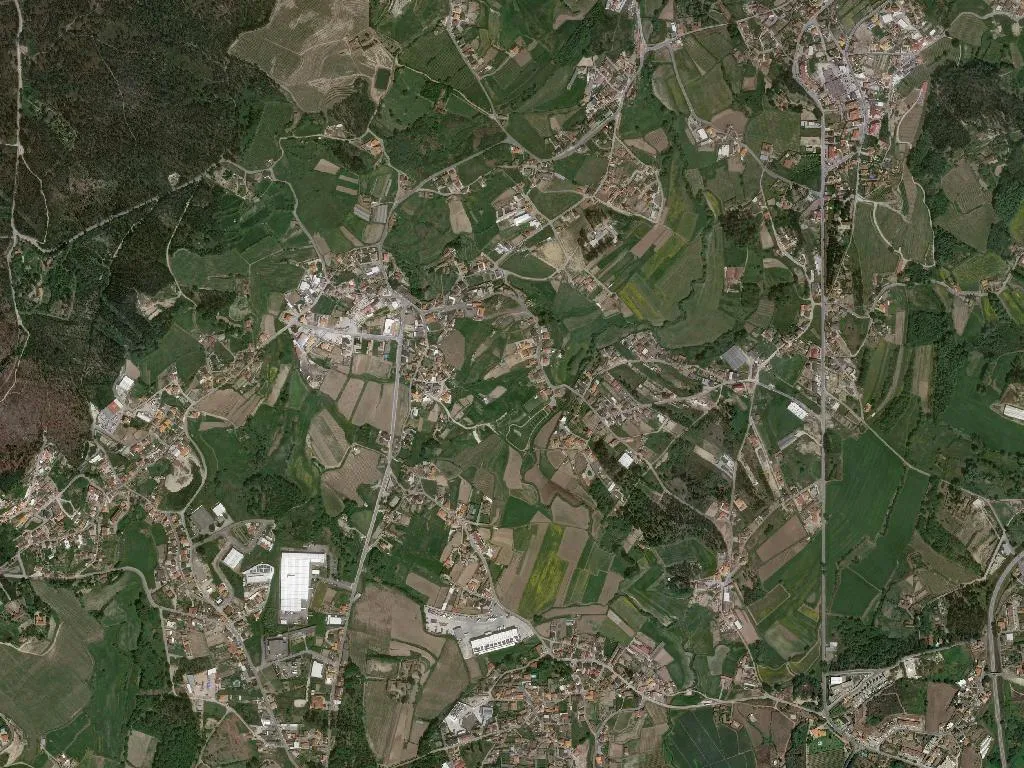
The lane climbs gently, flanked by waist-high walls of speckled granite whose crevices darken with moss after every shower. At 174 m above sea-level, the air in Beire smells of damp earth and the sweet, resinous tang of wood-smoke curling from stubby chimneys. Houses drift across 330 hectares of hillside as if they had been scattered by hand; the only punctuations are a distant dog and, somewhere below, the low cough of a tractor working narrow terraces of vines.
Beire is a parish of 2,011 souls within the municipality of Paredes, 35 minutes east of Porto, yet it keeps its own slow metronome. Density is 607 people per km² – enough for neighbours to recognise every footstep, yet low enough for clocks to surrender to sunrise and sunset. Between the 263 under-30s and the 327 over-65s hangs the delicate equilibrium of northern Portugal’s interior, where memory is passed on like land.
Vine and smokehouse
The parish sits inside the Vinho Verde demarcation. Vineyards stitch the granite in irregular pleats, the vines trained on short wooden stakes or over low pergolas so the bunches can hang, still green and hard, until early September. There are no glossy tasting rooms; instead you follow a cousin-of-a-cousin into a kitchen tiled with decades of gossip and leave three hours later lighter by a bottle of lemon-sharp loureiro and a slab of smoked belly.
Food here obeys the rhythm of the smokehouse and the backyard hen. Capão de Freamunde – a castrated cockerel raised free-range under chestnut trees, then roasted until the skin bronzes and crackles – appears only on feast days and carries Portugal’s protected geographical status. Higher up the slopes, small apiaries produce Mel das Terras Altas do Minho DOP, an almost opaque honey whose floral notes shift with the bloom of heather, gorse or lime.
Saints and fireworks
Beire’s calendar is stitched to those of neighbouring parishes. In July the Festas do Divino Salvador draw processions of banner-carrying romeiros through Paredes’ centre, the air split by rockets and the brass thump of the local band. August brings the Festa de São Miguel, when sardines blacken over makeshift braziers and the night sky turns zinc-bright with fireworks. These are evenings when every balcony sprouts a relative and every alley smells of charred fish and orange peel.
Where to sleep
There is only one place to stay: a single-storey granite house converted into two modest apartments, its back door opening straight onto the vines. No pool, no spa: luxury is measured in decibels – specifically their absence – and in the Milky Way reasserting itself after midnight. Book through the parish council; the key is handed over by Sr. Araújo, who also sells eggs and will draw you a map of the best walking loop through the chestnuts.
The way down
You leave by the same lane, now descending. The valley spreads below in graphite and oxidised green; a plume of smoke rises vertical as a pencil mark before the wind unravels it. In the pocket, a cork-stoppered bottle of 2022 loureiro sloshes gently – a reminder that tomorrow the tractors will start again, the smoke will rise again, and Beire will continue its unhurried conversation with the granite.