Full article about Cete: dawn in the Romanesque belfry
Hear the granite bell roll over red-tiled roofs and 14th-century tiles
Hide article Read full article
Dawn in the bell tower
The first light slips through the slits of the Romanesque belfry and prints diagonal bars of shadow across 14th-century tiles that have outlasted every Atlantic storm. One floor below, in the funeral chapel, the stone effigy of Dom Gonçalo Oveques has lain for a millennium under a vault that still hoards the night’s chill. A single bell tolls – a low note that seems to rise from the granite itself – rolls down the valley and merges with the sparrows nesting under the eaves of the monastery. Nobody checks a watch. Nobody needs to.
Carved memory
Cete owes its name to the Latin Cetum – local proof comes from Armindo, who ran the fruit stall in the square for 42 years and will tell you, “This was no backwater, senhora; bishops rode here on mules.” The Benedictine house Dom Gonçalo founded in the tenth century set the cadence for the entire Sousa valley. The present church is already a 13th-century rebuild, yet its single nave and timber roof keep the original severity: walls a metre thick, slits for windows, a gloom that lowers the voice. Statues of St Peter, St Lucy and Our Lady of Grace, polished by centuries of palms, look as if they remember every confession whispered in front of them.
Climb the tower stairs and you step into the former mortuary chapel where ochre and green Mudéjar azulejos refuse to fade. The restoration centre at nearby Tibães cleaned the glaze, but the real retouching came from the women who lit penny candles here every Saturday, warming the stone until time itself softened. From the balcony the view scripts itself: storks on red-tiled roofs, pergola-trained vines in back gardens – “for the household wine,” says Albertina from behind her gate – and, beyond, the hills that catch the last sun.
Between granite and the everyday
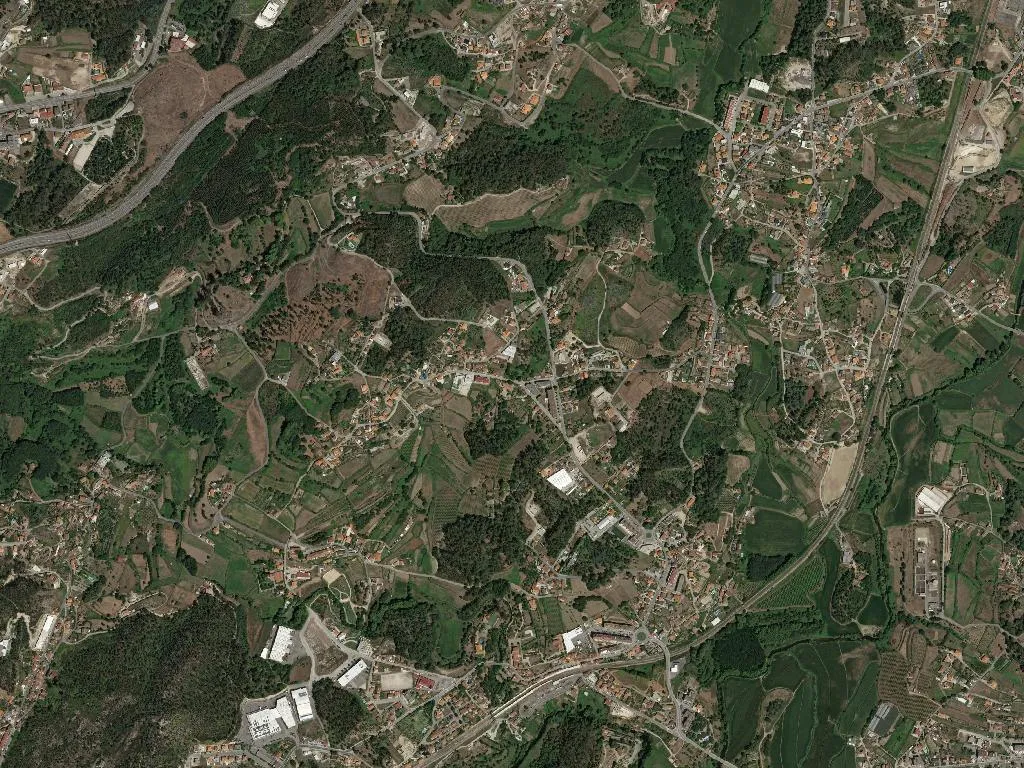
Cete is neither village nor town; it occupies the intermediate ground where strangers still greet one another without needing to ask where they were born. The centre is a lattice of lanes cobbled with granite that turns lethal when wet, flanked by two-storey houses whose joints are knitted with moss. Late-afternoon side-light chisels every block so the masonry looks hand-tooled. Joaquim, 84, points to a corner stone: “My father hauled that up with sisal rope and a patience I never learned.”
Food here is what the land yields. Capão de Freamunde – the region’s celebrated castrated cockerel – is roasted over olive-wood embers in backyard ovens. The highland honey, dark as treacle, arrives at breakfast on slices of rye that the bakery brings out at seven. There are no “concept” restaurants; there is Zé’s tasca where you eat whatever he bought at the market that morning and where the same chair has held him since 1976.
The sound of now
Walk the lanes and you move through overlapping centuries that never quite collide. A 16th-century fresco shares a wall with a satellite dish; students who spend the week in Porto come home on Friday and find their grandfathers at the Central café, where the galão is still served with milk boiled in a tin mug. Traditional carpentry survives not by preservation order but because the chestnut balconies will bear another generation and the wrought-iron has not yet surrendered to rust.
At dusk the monastery stone exhales the day’s heat. Inside, beeswax mingles with the scent of ancient beams – the perfume that brings emigrants back for the holidays. Outside, the wind carries the sweetness of grapes swelling in suburban arbours, ready for the first dawn pick of September. Cete stays with you: a taste on the tongue, the seven-o’clock bell travelling across the valley, the warmth of granite still in your palm long after sunset.