Full article about Duas Igrejas
Duas Igrejas, Paredes, hides 3,649 villagers between two churches, cloud-high Loureiro vines and the scent of DOP Freamunde capão.
Hide article Read full article
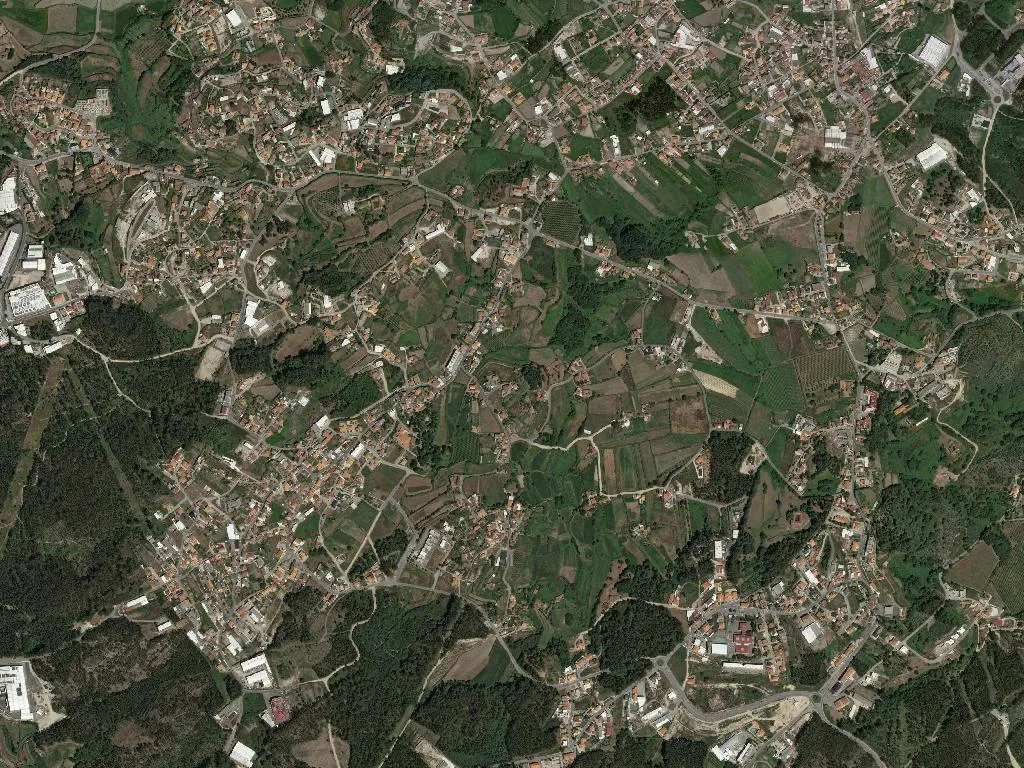
Granite walls, moss-splashed the colour of oxidised brass, stitch the roadside like dry-stone seams. At 334 m above sea level the Loureiro vines hang so high you half expect them to snag passing clouds. Houses huddle shoulder-to-shoulder, as if the Minho wind might steal anyone left standing alone. There are 1,000 souls in every square kilometre here – density to rival Porto, except the neighbour’s maize rustles right up to your kitchen window.
The name is literal: two churches, one uphill, one down. Locals still orientate themselves by whose saint is whose – Nossa Senhora da Saúde on the rise, Salvador do Mundo beneath. Neither carries the blue-and-white IPPAR plaque, yet both have candle-lit niches and geraniums watered like clockwork. When nearby Rebordosa throws its June romaria the brass band carries three kilometres on the night air; during Divino Salvador week buses from Lordelo grind up the N205 as though the road might never flatten.
The arithmetic of staying alive
542 children under fourteen, 491 residents over sixty-five. In rural Portugal those numbers amount to a census miracle: more future than past, the exact inversion of the country’s ageing interior. Proximity to Porto helps – 28 minutes by car to the Ribeira’s craft-beer bars – yet the butcher still hacks chouriço to order and the baker remembers how you like your pão de milho sliced. Spread across 378 hectares, 3,649 people live close enough to hear the neighbour’s cockerel and to borrow sugar after supper without thinking it odd.
Vines and smokehouses
The trellising is textbook Vinho Verde: granite posts, foliage three metres overhead, white grapes that dawdle towards sweetness. What matters more is the capão de Freamunde next door – a DOP-roasted cock so strictly local it is registered by parish, not postcode. Friday lunchtime, Café Certo fills with the hiss of tripe hitting charcoal. Minho honey, dark as burnt caramel, is folded into birthday sponge; my aunt swears it guarantees guests cut a second slice. No marketing agency invented that.
Passing through, pausing anyway
I arrived on the Marco line, a single-track railway that feels like a courtesy stop. The driver slowed, double-checked I really wanted out at Duas Igrejas halt. Asphalt is smooth, signposting clear, Google Maps behaves. What you won’t find is a starred hotel or fridge-magnet emporium. There is, however, Delta coffee drawn short and strong, a Mini-Preço that locks its doors at eight, and a football pitch where play continues until a mother’s voice cracks across the allotments. Risk of misplacing your car: negligible. Instagram opportunities: limited to locals posting proof that Sunday’s leitão espetado achieved the correct lacquer.
When the church bell strikes seven, Sr Alfredo’s dog barks twice, exactly. A kitchen light flicks on, wood-smoke drifts into the last embers of barbecue. Duas Igrejas is rarely the destination; it is the view from the coach window on the way to somewhere else. Stay a little longer and you learn: some places do not need discovering, only living.