Full article about Louredo, Paredes: Wine-Scented Silence Above Porto
Granite manors, laurel-scented lanes and razor-edged Vinho Verde in a high parish of 1,384 souls.
Hide article Read full article
The stillness of São João Batista
At half-past ten the churchyard of São João Batista is deserted. June sun bakes the chalk-white eighteenth-century façade and the only sound is a tractor clearing a lower terrace. Louredo never declares itself; it leaks into view—vineyards stepping down like green ladders, granite manor houses that look as if they have always exhaled this slow, high air. At 258 m the parish counts 1,384 souls and keeps time by the liturgical calendar and the wine-grower’s moon.
Where laurels once grew
The name comes from Latin lauretum—a grove of laurels—yet the plant that rules now is the vine. Parish registers begin in 1757, but the estates speak earlier: walls of schist and granite, iron gates forged in nearby Felgueiras, coats of arms eroded to shadow. The mother church, finished in 1763, is the reference point; every local set of directions starts “desde a torre”—from the tower. Walk south-east and you meet the modest 1829 chapel of Senhor dos Passos, its interior paid for by families who still press grapes on the same granite lagares. No brown signs point the way; you follow stone lanes that narrow into footpaths, past meadows where cattle egrets pace the plough.
Green wine, smoke-house fare
Louredo sits inside the Vinho Verde demarcation, and the whites behave as they should: low alcohol, razor-sharp, designed to cut the fat of rojão—pork belly stewed with cumin and bay. Order arroz de sarrabulho and you receive a plate the colour of burnished mahogany; corn bread is obligatory, not optional. In winter the same blood-based stock becomes papas, thick enough to hold a spoon upright. June brings São João and a Portuguese cozido brightened by chouriço de fumeiro that has hung above the kitchen hearth since Christmas. Convent sweets follow the old rule of egg yolks and sugar: pão de ló still collapses between fork and tongue, and no one will give you the recipe.
Between plateau and river basin
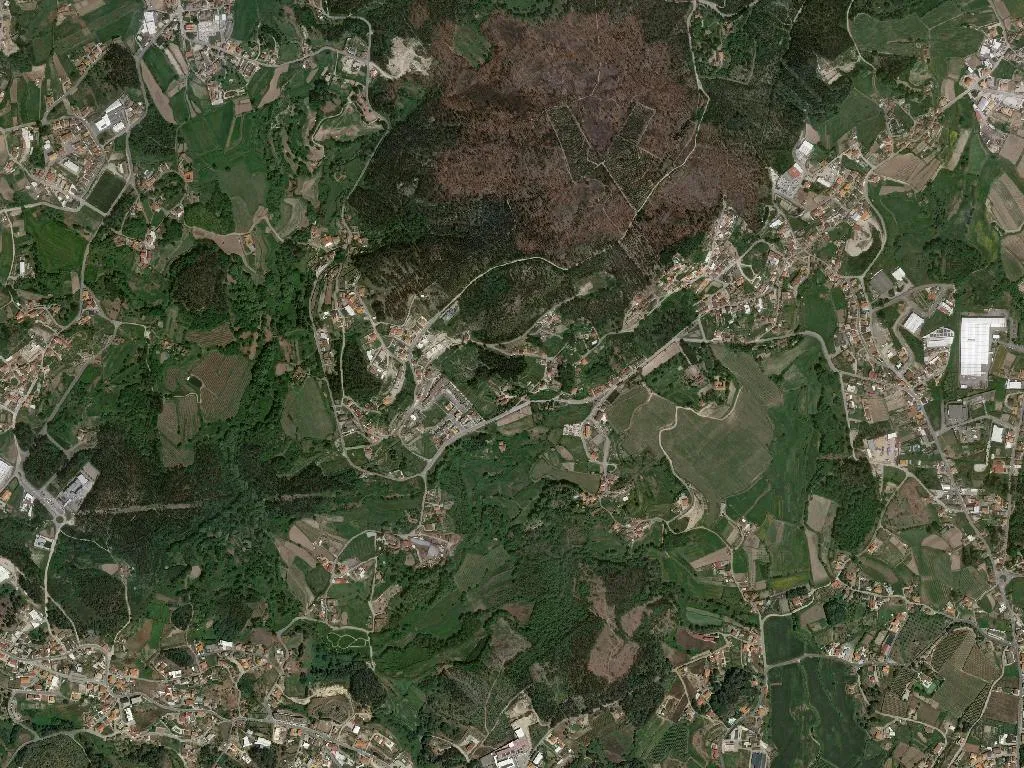
The land tilts from the Marcelo plateau toward the Tâmega basin. Maize grows shoulder-high in two cycles; potato flowers whiten the ridges; oak and cork give shade to the herds. Look north and you see the Serra de Montedeiras; look south and the Douro’s escarpment is a distant rampart. The soil is granite sand, quick-draining, forcing roots to struggle and berries to stay small—ideal for the azal and arinto grapes that dominate these pergolas.
Memory written in lime and stone
During the June marchas the lanes are strung with paper flowers and the smell of grilled sardines drifts through the night. Accordion lines float from the temporary stage in front of the church; the same families who queued for communion at Easter now dance until the sky over the vine rows turns oyster-grey. When the last bunting is taken down, the silence returns, layered with basil bruised underfoot and candle wax cooling on granite—the proof that another season has passed through Louredo and left its scent behind.