Full article about Sobreira
Terraced Vinho Verde slopes, pine-smoked capão and fogged cellars shape life at 186 m.
Hide article Read full article
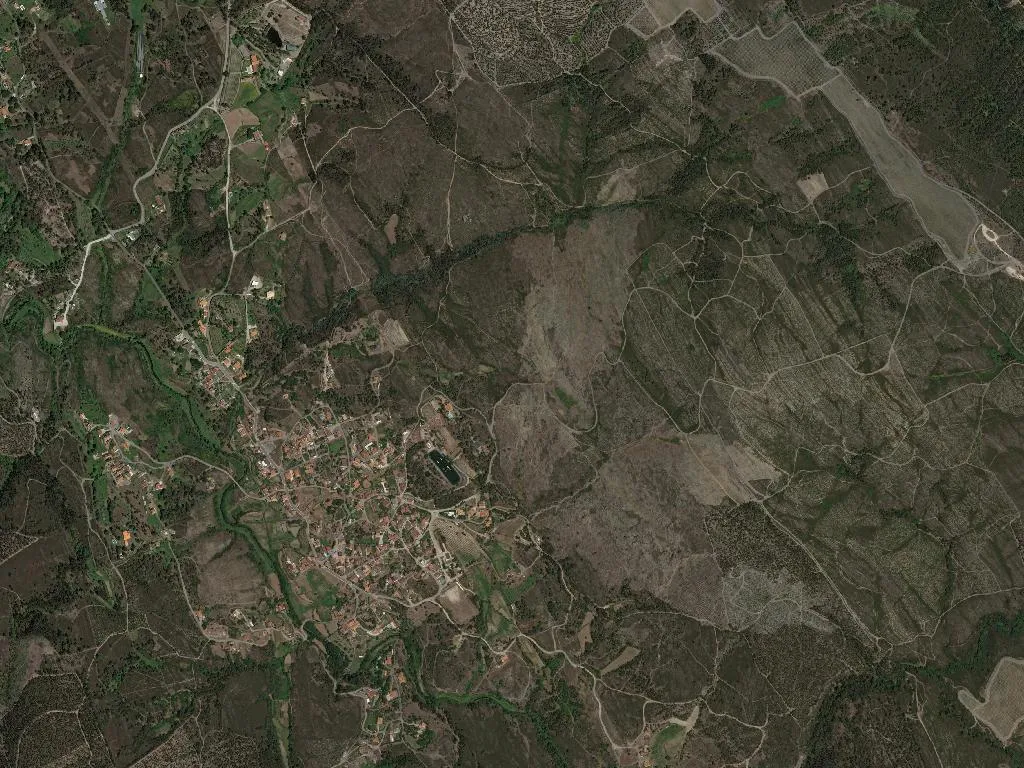
The granite setts still hold the dawn damp long after the sun has warmed the terracotta roofs. At 186 m above sea-level, Sobreira unrolls across gentle valleys and slopes whose scrubby past survives only in elderly anecdotes. Vine terraces nudge the grey stone of 19th-century houses, and the entire parish—twenty square kilometres, 4,122 souls—breathes to the rhythm of the grape. Walk past the whitewashed chapel where the EN205 bends and the place begins to disclose itself, slowly, like a wine that only opens after the second glass.
Vine terraces that climb
Sobreira sits inside the Vinho Verde demarcation, and the landscape has been drafted in green ink ever since the Cistercians arrived in the 12th century. Low schist walls stitch the slopes into narrow benches that follow every contour; in July the stones radiate a baking heat that ripens the Loureiro and Azal Branco bunches overhead. Come mid-September, the air in private cellars fugs up with fermenting must—a sweet, almost boozy vapour that clings to haircuts and childhood memories. Small holdings carry names you will not find on Google Maps: Outeiro de Cima, Casal de São João, Póvoa dos Pardais. Roughly 190 people per km² sounds dense, yet lanes feel spacious; nobody is in a hurry except the river Cavalum whispering below.
What the land allows
The table is ruled by what grows within a donkey’s trot. Capão de Freamunde—castrated cockerel, dry-plucked, maize-fattened—carries IGP status and dominates Christmas lunch, its flesh tasting faintly of the pine-smoke used to singe it. Bees work the heather and gorse of nearby uplands to produce DOP Minho honey, thick as set custard, sold in unlabelled jars at the mini-mercado. Behind terraced cottages, small smoke-houses still operate: oak and eucalyptus smoulder over three days, curing chouriço and paio that reappear on Sunday beside coarse rye bread and a tumbler of cloudy vinho verde poured from a clay bowl identical to the ones local brides once received as dowry.
Markers on the calendar
Three annual fixtures reorder life here. In late May the joint parish feast of Rebordosa and São Miguel erupts with brass-band marches and a produce fair that blocks the main road. Mid-July belongs to Salvador of Lordelo—an open-air Mass followed by grilled sardines, £1 a plate, and teenage courtship rituals conducted to the sound of fireworks. Finally, mid-August brings the borough-wide Festas do Divino Salvador in Paredes town, when Sobreira empties as everyone descends the hill for a weekend of agricultural shows and midnight concerts. Return on the Monday and you will still find streamers flapping above lanes that smell of gunpowder and stale lager.
Between generations
Demography tilts gently, not catastrophically: 515 children under 14, 725 residents over 65. The primary school has two classes; the doctor visits Tuesdays. Morning cafés fill with card schools discussing rainfall while WhatsApp keeps sons in Porto abreast of pruning dates. Bicycle tyres hiss along dirt tracks where grandparents coax kale, potatoes and the occasional illicit tobacco patch. Four village houses take paying guests—expect stone floors, Wi-Fi that flickers, and a breakfast tray bearing just-laid eggs—but Sobreira has not rebranded itself for visitors. It continues, instead, for inhabitants, even if the nightly bus to Porto carries off another cohort of eighteen-year-olds.
The church bell strikes on time, yet the real clock here is the quality of light on the vines, the first whiff of wood-smoke in October, the taste of new wine when the last basket is tipped into the press. Sobreira offers no spectacle, only the rough, candid texture of a place still busy being itself.