Full article about Vilela: Where brass echoes off 12th-century abbey stone
Thursdays at 8.30 the Banda de Vilela still rehearses beneath lime trees as Dom Teresa’s 1128 Benedi
Hide article Read full article
The sound arrives first
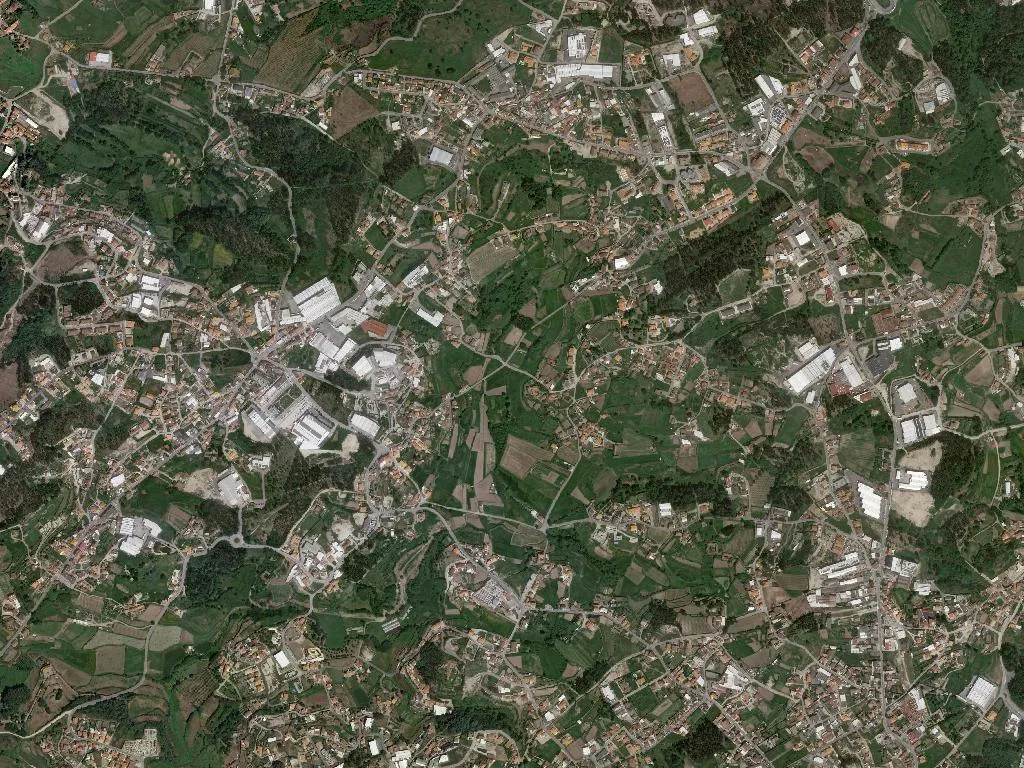
A tuba’s low growl and a clarinet’s bright run leak through the shutters of the Vilela brass-band hall, roll across the Praça da República and ricochet off granite façades until they fade above the treetops. Thursday evening, 8.30 p.m., same slot the Banda de Vilela has occupied since 1860, when musicians walked home from the pilgrimage at São Gens de Friestas and decided the village needed its own soundtrack. The lime trees they rehearsed beneath are still here, now warped and elephant-skinned, dropping the first leaf confetti of March. Cold air carries the smell of ploughed paddocks that will soon be sown with the maize whose cob appears on the municipal coat of arms. From 288 m up, the Sousa valley unfurls in soft terraces: rows of Loureiro vines checker-boarded against the angular roofs of the Outeiro furniture estates.
The abbey that shaped the village
Step from the square into the Igreja Paroquial de Santo Estêvão, a National Monument since 1910, and you move through every Portuguese century in one gulp. A thirteenth-century Romanesque doorway, all zig-zag and scallop, is framed by an eighteenth-century baroque frontage whose pediment carries the gilt arms of Dom José I. Inside, a Renaissance barrel vault studded with 38 monochrome azulejos (1716) shows St Benedict’s life in ghost-grey vignettes—work attributed to the master carver José de Almeida, the same hand that gilded the monumental high altar in 1745. Two sacristies (one is unusual; two is show-off) still store iron-bound chests that once contained Augustinian nuns’ gold-thread vestments, seized after the 1834 dissolution. The original Benedictine house was donated by Dom Teresa, mother of Portugal’s first king, on 6 March 1128; the date is carved into a cornerstone as proudly as any modern trademark.
Opposite, the Solar da Varziela stands roof-tiled and morose, its stone mottled by 150 years of moss since the Sampaio family bought it in 1873. Windows are blind with rot; a stucco cherub has lost its nose. While the town hall has funnelled grants into the monastery, manor houses and communal olive presses wait for someone with deep pockets and patience.
Climbing Monte Seixoso
A way-marked footpath installed in 2017 switch-backs through gorse and Pyrenean oak to the Capela da Senhora da Saúde, a small white beacon on the ridge. The soil here is schist so soft it sighs underfoot; blackbirds keep the only conversation. On a clear evening you can clock Rebordosa seven kilometres west, Lordelo five north, and read the agricultural DNA of the region—plots averaging 0.3 ha, schist walls older than Brazil, water channels feeding vegetable gardens where Miranda cattle introduced in 2019 graze between kale rows. The chapel itself, rebuilt in 1948 after a cyclone, is pure lime wash: no bell, no fuss, just a single ship’s-style lantern that glows like a landlocked lighthouse after dark.
Lunch with a capon that has a passport
Vilela sits inside both the Vinho Verde demarcation and the Capão de Freamunde IGP zone. The capon—castrated at 90 days, corn- and rye-fattened for another 45—yields dense, yellow-tinged flesh that tastes like chicken squared. At O Moleiro on the N225 it is slow-roasted for three hours until the skin shatters, then paired with punch-roasted potatoes slicked with Trás-os-Montes olive oil and a mint-flecked rice of giblets. Around it on the Sunday menu: Minho-style rojões laced with smoked bacon from Tabuaço, kid fired over oak, and a Portuguese cozido whose chorizo hails from Amarante. Desserts bow to the vanished nuns: silky ovos-moles piped to the 1928 recipe of Confeitaria Silva, golden slices dusted with flor de açúcar, cinnamon-doused rice pudding. The glass beside it should be Quinta da Romeira’s Loureiro—6.5 g/dm³ of racing acidity, a prickle of petillance that scythes through fat.
Monday timber and Tuesday brass
Market day still obeys the 1515 charter of Dom Manuel I. Beneath blue canvas you’ll find Rocha pears from Lourinhã, goat’s-milk cheese set in Vilela by the Costa family since 1982, and high-stem cabbages sturdy enough to survive a winter sermon. Honey from the Terras Altas do Minho carries the DOP seal, thick with heather and chestnut blossom. Elderly women in mourning black swap updates on Dona Alda’s funeral; young fathers manoeuvre pushchairs through pyramids of oranges. This is Vilela on an ordinary morning, stripped of festival plumage—no blue-and-gold uniforms, no rockets climbing 120 m for the Divino Salvador.
Walk the Rua do Outeiro at knock-off time and the air is half hearth-smoke, half oak dust. Movempresa’s showroom—founded 1978—displays American-oak tables cut on a 1962 German lathe; 34 % of the parish’s 4,739 residents still earn their living from timber. The scent of acrylic varnish drifts through streets where the last sunlight catches the monastery tower and turns granite to bullion. Inside the band hall musicians slot instruments into threadbare velvet cases; Joaquim Pinto’s silver clarinet, bought in 1903 from the Brussels maker Eugène Albert, gleams like new money. When the final chord dies, only the distant thud of a pneumatic stapler remains—furniture shift at the factory runs until 22:00.