Full article about Bustelo’s Granite Terraces Sip Vinho Verde
Stone-walled vineyards of Penafiel breathe mist-cooled Loureiro into razor-bright green wine
Hide article Read full article
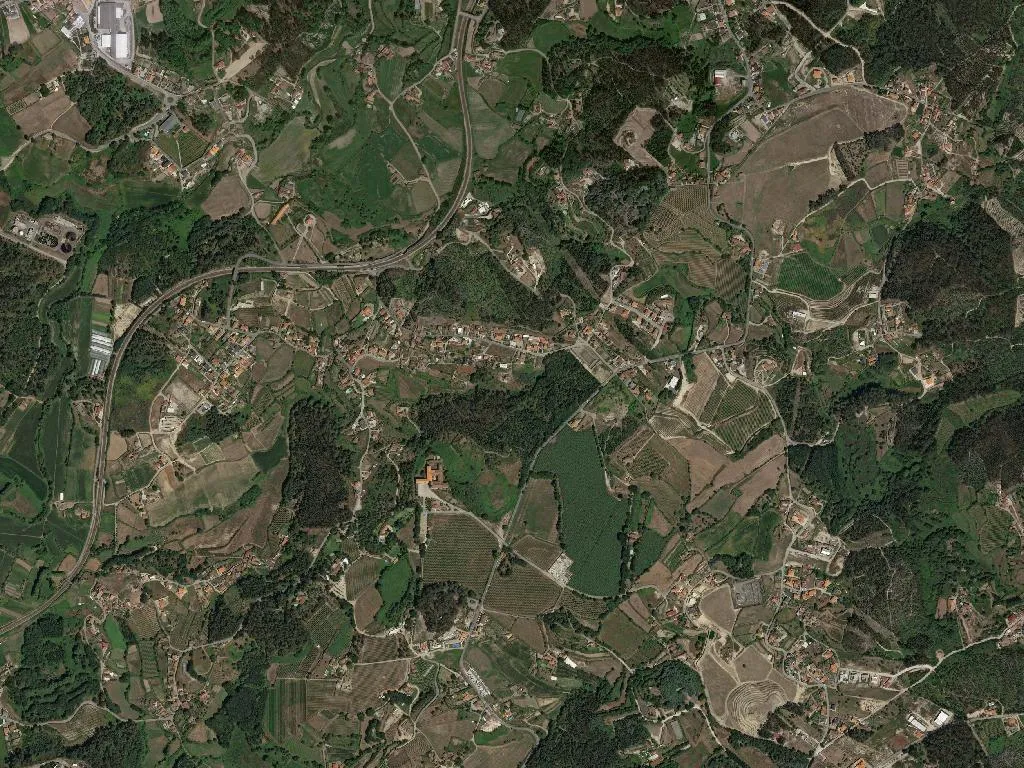
Granite ribs push through the vineyards like knuckles, splitting the terraces that cradle slow-ripening Loureiro grapes. At 258 m above sea level, the air over Bustelo has already been filtered by the oak-crowned ridges of the Entre-Douro-e-Sousa; it arrives cool, faintly resinous, and with the humidity that licences this pocket of Penafiel municipality to call its wine Vinho Verde. Somewhere below the trellis a pair of Felco secateurs clicks—one resident, one metre of canopy at a time, continuing a dialogue with the land that began in the thirteenth century and now covers 685 ha tended by 1,682 people.
Stone that works
The only building on the national heritage list is the chapel of São Silvestre, declared in 1982. It is a modest Romanesque rectangle, barely wider than a tractor’s wheel-span, yet its limestone blocks have anchored parish memory longer than any charter. Elsewhere, religion is measured in granite calvaries and roadside shrines, but the real liturgy is geological: dry-stone walls that shoulder the terraces, threshing floors (eiras) polished by decades of maize, and granite wine presses (lagares) whose runnels still smell of last year’s juice. These utilitarian surfaces outnumber monuments ten to one; they are the parish’s unconscious architecture.
Green wine, slow time
The Demarcated Region of Vinhos Verdes draws a stricter boundary around Bustelo than any map. Morning sun burns off the dew before mildew can set, allowing Loureiro, Arinto and Azal to keep their razor-edged acidity. Come mid-September the lanes clog with colour-coded crates, and the air turns cider-sweet as stainless-steel tanks replace the old chestnut barrels in family cellars. There are no tour buses, no selfie decks—just the offer to taste directly from the tank while the winemaker explains why he still foot-treads a quarter of the grapes.
What you’ll eat
The menu is dictated by what the garden gives the kitchen that morning: caldo verde made with galega kale, smoked chouriça from local Bisaro pork, and cornmeal broa baked in a wood-fired oven that doubles as the village’s unofficial meeting house. Sophistication arrives only in the glass—an effervescent white that snaps the palate back to attention after every spoonful of soup.
Practical notes
Five granite houses operate as licensed tourist lodging; all observe the parish rule that new windows must face the vines, not the road. Trains leave São Bento station, Porto, every hour for Penafiel (45 min); a taxi from the rank outside the station covers the final 11 km to Bustelo for around €15. Pack footwear that tolerates dusty schist paths and an appetite that tolerates nothing but second helpings.