Full article about Canelas: granite terraces breathing vinho verde
Above the misty Sousa valley, Penafiel's quiet parish lives by vine rows, stone wells and wood-oven
Hide article Read full article
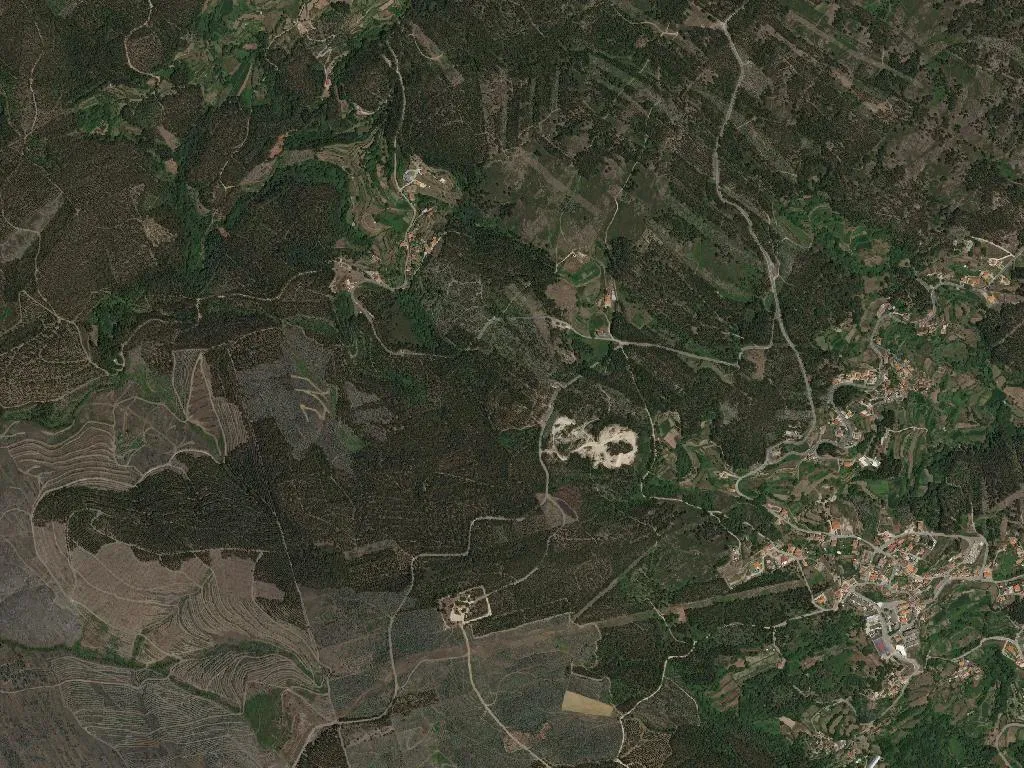
The terraces reveal themselves in vineyard steps, laid out with the patient geometry of families who have worked this granite for generations. At 436 m above the Sousa valley the air is cooler, laced with morning mist and, in August, the green scent of ripening bunches. Canelas stretches across 1,181 ha of rumpled ground where schist walls hem the plots and every horizon is stitched with vines. This is Vinho Verde country; the parish keeps time not by the church calendar alone but by pruning, flowering and the slow march of the harvest.
The vineyard as grammar
With only 133 people per km², scatterings of stone cottages punctuate the terraces. Of the 1,579 residents, fewer than 200 are under fourteen and almost 300 are over sixty-five. The demography is legible in the landscape: the highest, stoniest plots are slipping back to gorse and broom, while those within earshot of a tractor engine are still immaculately tied and weeded by hand.
Walking here means perpetual ascent and descent. The EN14 bisects the parish, but turn onto Rua do Fojo or Rua da Capela and you are on compacted earth, following modest streams that only truly run after October storms. Water over stone is the soundtrack—discreet, persistent—interrupted by a distant dog or the cough of a diesel engine climbing a 1-in-5 ramp. Outside Sunday mass the crowd level is, officially, fifteen; silence is the default.
Everyday, unfiltered
Access logistics score a relaxed 25: tarmac is narrow and serpentine but perfectly passable. Canelas, however, refuses to be ticked off a list. Stay long enough and you notice how the houses answer the climate—tiny north-facing windows to blunt the Atlantic wind, deep south porches where corn husks dry in autumn. Every back garden shelters a pergola, a stone well and a wood-fired oven baked into the boundary wall.
The gastronomy (score 35) is what the soil dictates: Galician kale, potatoes, onions. Verra pork is diced into rojões, stained red with paprika and garlic. The wine comes from the barrel in the neighbour’s adega—white, low-alcohol, faintly pétillant—served at 11 a.m. without ceremony. On Wednesdays drive ten minutes to Figueiró and the Celeiro dos Milagres still dishes out proper cozido à portuguesa, a clay-pot cannonade of sausage, shin and cabbage.
Where the eye rests
Romance (score 50) arrives not from selfie-ready belvedettes—instagrammability is a modest 30—but from light itself. Late-summer sun rakes the leaves gold before the pickers move in; winter fog rises off the Sousa and erases the village, leaving only the graphite outline of treetops and ridge lines.
The 18th-century bell tower of Igreja Matriz marks the civic centre. After mass the elderly reclaim the plastic chairs outside Café Central to arbitrate Porto's latest defeat. On 25 July the parish honours São Cristóvão with a travelling market: vendors from Louredo and Galpedra set out socks, honey and wrought-iron tools beside the churchyard wall.
Adventure? The risk level is ten out of a hundred. Canelas offers something rarer: the chance to cross a parish whose two tourist lodgings (both converted farmhouses) suffice for every passing stranger, and whose nature is not wild but negotiated, terrace by terrace, with agriculture. The church bell strikes the hour; the note ricochets off schist, drifts across the vines and lingers in the thin air. No translation needed: here, life is still measured in harvests.