Full article about Oldrões: Where Vines Outnumber Visitors
Oldrées, Penafiel, hides 400 ha of terraced vines, 17th-century granite crosses and a tavern wine so local it arrives in a clay mug.
Hide article Read full article
Between Granite and Green
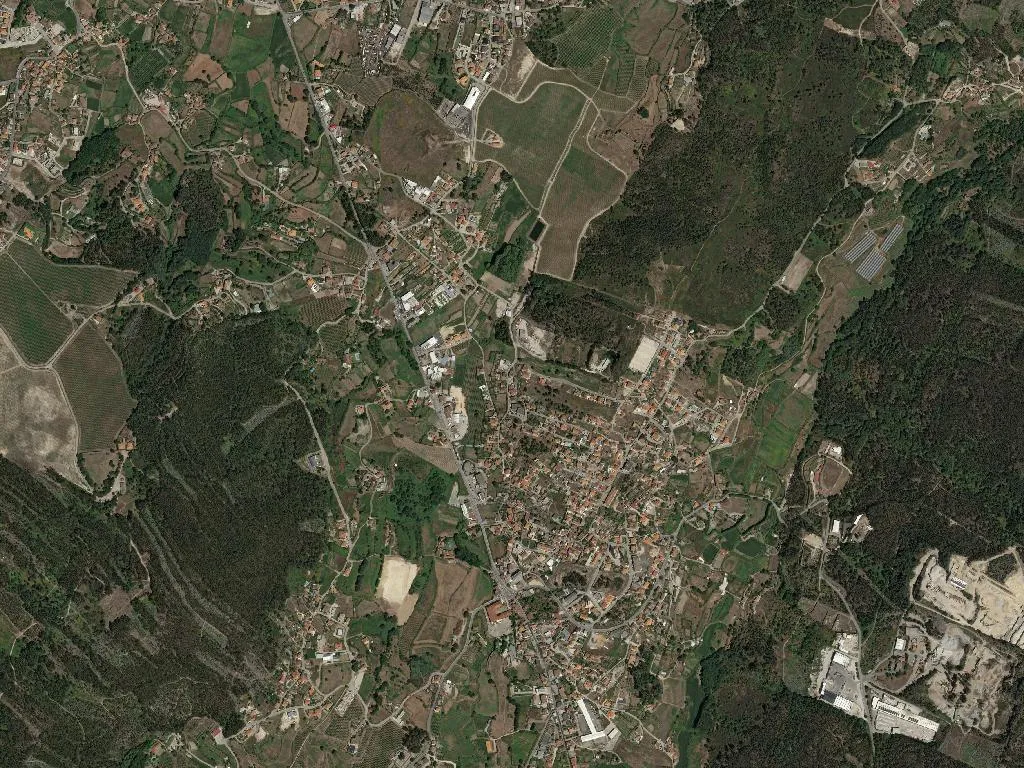
The lane corkscrews upward, dry-stone walls squeezing the tarmac until the vines take over. At 215 m the air smells of turned earth and crushed laurel; someone has already walked these terraces before first light. Spread across 400 ha, Oldrões counts 1,954 souls and measures time by the harvest, not the clock.
Stone, Brick and the Balance in Between
Granite cottages, their eaves still drilled for the original thatch, stand shoulder-to-shoulder with later brick boxes built when emigrant remittances arrived from France. The parish rolls like a gentle swell: 285 children chase footballs through the lanes while 297 elders guard the churchyard bench—equilibrium as delicate as a full glass of vinho verde on a Formica table.
Something here is listed—perhaps the 17th-century granite cross whose inscription is now lichen rather than Latin, perhaps the chapel whose barred door hides a Roman stele reused as altar step. The plaque has faded to a pale green that matches the surrounding vines; no one can remember the precise date, only that it predates the Republic.
A Wine That Refuses to Perform
These aren’t postcard rows. Vines climb or sag according to the stubbornness of their owner, trained either high on pergolas to dodge spring frost or low along wires to catch every shard of sun. In August the foliage is so bright it makes your throat ache; by October the bunches hang like glass beads. The result is not a cellar trophy but a kitchen-table staple: light, low in alcohol, with a natural spritz that pricks the lips and keeps farmers coherent through a 12-hour shift.
Oldrões has two officially registered beds, yet visitors are rarer than a rainy August. Whoever stays the night either has cousins in the cemetery or took a wrong turn leaving the A4. There are no viewing platforms, no way-marked trails—only the baker’s van at nine sharp, the grocery that shutters for lunch, and the tavern where the house wine arrives in a brown clay mug whose glaze is cracked like an old smile.
Evening’s Own Soundtrack
When the sun drops behind the western slope and every granite block glows molten, silence becomes a collage: a screen door slapping, Sr Joaquim’s mongrel reminding the postwoman she’s late, Cândida’s van coughing into life after siesta. Stand at the crossroads and you understand nothing needs explaining. The village simply continues—pruning shears sharpened, granite posts upright, canes tied—waiting for the spring when the first buds will rupture and the cycle starts again, unnoticed by anyone except those who call this ridge home.