Full article about Rans: granite lanes & Vinho Verde haze
Rans, Penafiel: walk granite alleys scented with first woodsmoke, sip Vinho Verde beneath pergola vines and watch copper façades glow at dusk.
Hide article Read full article
Stone and Woodsmoke
Morning light slips in at a slant through the granite-framed windows, throwing long shadows across uneven cobbles. In Rans the soundtrack is not traffic—this parish sits well clear of Penafiel’s main roads—but footsteps echoing in lanes barely wide enough for a tractor, answered by a dog’s half-hearted bark and the slow scrape of an iron gate over stone worn custard-smooth. At 242 m above sea level the air carries the damp chill of northern Portugal, sweetened by the first wood-smoke of the season sneaking out of chimney pots.
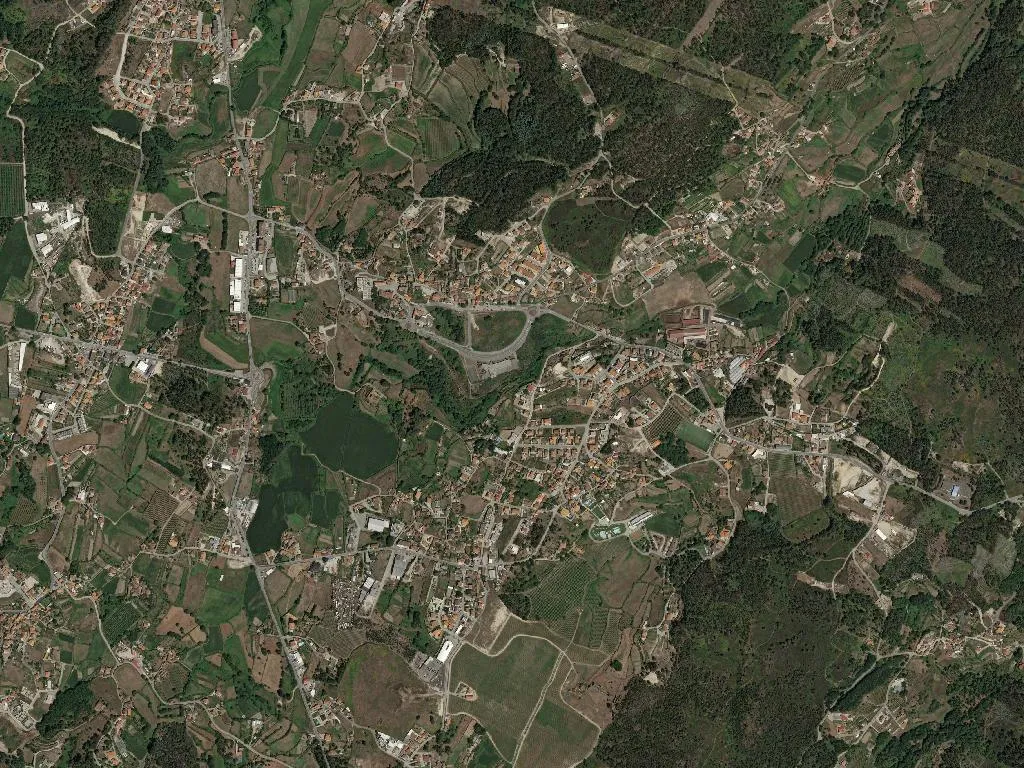
Rans operates at human scale. Its 1,804 residents share just over three square kilometres, so houses press shoulder-to-shoulder, party walls whispering shared memories. Age splits are almost equal—265 children to 227 pensioners—proof that the primary school still receives walkers every morning and that stone benches beside the 18th-century Igreja Matriz are rarely empty.
Mortar and Granite
The only state-listed building is the parish church, an Imóvel de Interesse Público whose plain Romanesque portal is older than the nation itself. There are no QR-code plaques or multilingual boards; the granite simply stands there, baked into everyday life. At dusk the façades turn copper under low sun, the whitewash picking up every groove and tool mark left by long-dead masons.
Streets rise and fall gently, following the wrinkles of the Sousa valley. No official “viewpoints” exist, yet half-way up Rua do Castelo you can look south across a patchwork of pergola-trained vines and chestnut coppices that fade into the horizon without theatrics—just the quiet negotiation between built and cultivated land that defines the Entre Douro e Sousa.
Green Juice and Sausage Fog
Rans sits inside the Vinho Verde demarcation, and the denomination is visible. Vines climb the terraces in the traditional ramada system—foliage forming aerial tunnels that shade the grapes from July heat. Come late August the air smells almost confectionary as alvarinho and loureiro berries swell. There are no glossy tasting rooms; most growers press 500-odd litres in the family adega, selling surplus to the local cooperative. The agricultural calendar still rules: prune in January, desbotar in June, harvest before the chestnuts drop.
Food is cooked, not advertised. Inside low-ceilinged kitchens iron pots guard recipes passed mouth-to-ear: caldo verde thick enough to hold a spoon upright, rojões simmered with liver and blood, corn broa still steaming when cracked open. Smoked chouriço and paio hang in a slow-curing fog above the wood-burner, perfuming clothes, hair, every corner of the house.
The Loudness of Quiet
What lingers after you leave is not a postcard image but the sense of a place running on mute. The church bell marks time like a metronome; between strokes the silence is almost viscous, broken only by plane leaves shivering overhead. After lights go out one by one, constellations spill across roof tiles unchanged since the 1800s. Cold granite underfoot reminds you that some lives are measured not in events but in repeated gestures: the latch clicked shut, the hearth re-lit, the same lane walked every dawn.