Full article about Recezinhos: granite hush above the Sousa mist
Recezinhos (São Mamede) is a 259 m granite hamlet in Penafiel where Vinho Verde vines, wood-smoke and cobbled lanes outlast time
Hide article Read full article
Dark granite cottages shoulder one another along the slope, braced against the wind that rides up the Sousa valley. At 259 m the air arrives rinsed and sharp on winter mornings, laced with the smell of damp schist and wood-smoke leaking from chimneys. Recezinhos (São Mamede) is stitched together by cobbled foot-width lanes where waist-high walls parcel out smallholdings that refuse to die—vegetable plots squeezed between pergola vines and thickets of oak.
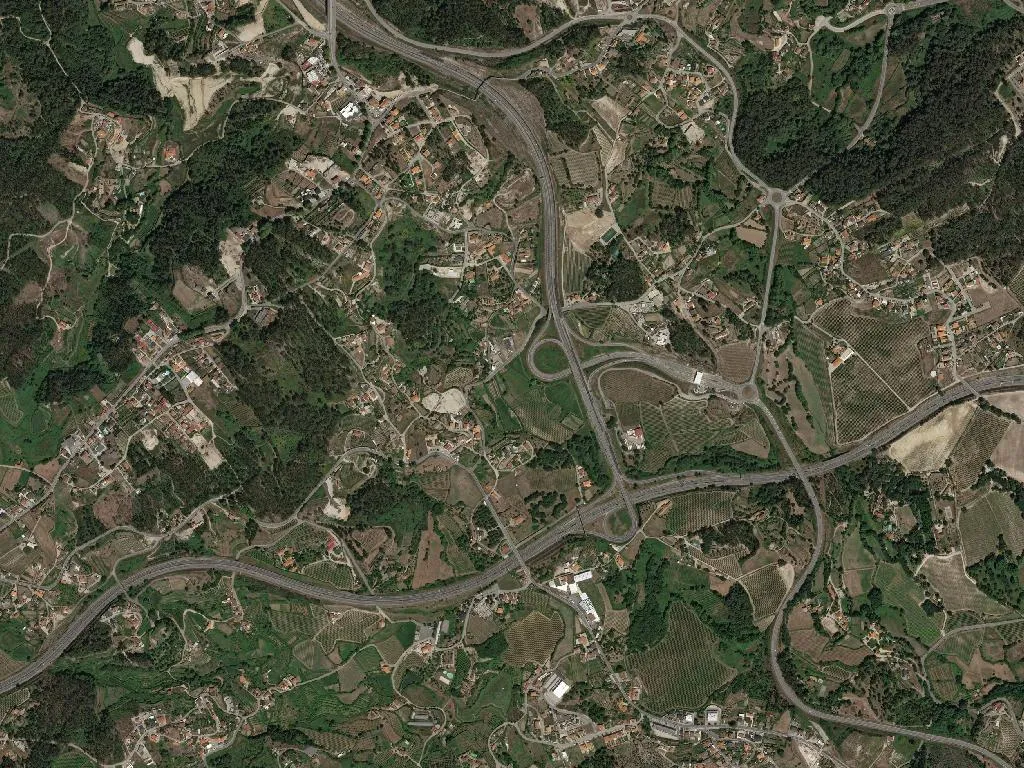
The parish covers barely four square kilometres in the heart of Penafiel’s wine country, yet packs in 1 364 souls. Vineyards dominate every incline: some trained high on traditional ramadas, others disciplined into geometric rows on south-facing terraces. With more than 300 inhabitants per km² you expect congestion; instead you find scatter—one couple in a granite house, a hamlet of six dwellings, a footpath joining them across fields of kale and maize.
Stone, lime and hush
Architecture obeys geography rather than fashion. Granite quoins, whitewashed lime render, terracotta tiles silvered by moss. Clusters of two or three houses break off, separated by vines and water-meadows where Barrosã cattle graze. There are no Manueline convents or baroque staircases—only the straightforward grammar of rural need: deep eaves for Atlantic rain, north-facing walls left windowless, bread ovens tacked on gable ends.
Demography tilts elderly—255 residents over 65, 183 under 14—but the place is not hollow. Children still walk to the primary school in São Mamede, and improvised football pitches appear beside field chapels at dusk. The clang of cowbells returning from pasture blends with the slap of cards on café tables.
Green wine, red soil
The calendar is dictated by the vine. Loureiro, Arinto and Azal produce Vinho Verde of racing acidity, with lime-zest notes that mirror the climate’s own sharp edge. Come September the entire parish harvests: grandparents on ladders, grandchildren ferrying plastic crates, purple juice webbing every wrist. Most ferment in temperature-controlled stainless steel, though a few family cellars still guard 200-year-old oak casks whose staves are stamped with great-grandfather’s initials.
Food follows the same radius rule. Caldo verde is shredded with galician kale from the kitchen garden; cornmeal broa is slid into wood-fired ovens shared by four households. For feast days there are rojões—cubes of marinated pork shoulder—and arroz de cabidela, both requiring a bottle pulled from the fridge at 8 °C. There are no restaurants; you eat at someone’s table. Knock at the village grocery and ask Dona Amélia if a pot is simmering; a plate will appear.
Walking the wires
Paths are still maintained for tractors and feet, not for tourists. Set out on the old stone lane that climbs past the 18th-century fountain and you’ll thread between walled plots each with a proprietor and a back-story. Silence is broken only by a distant chain-saw or a dog announcing the post-van. At the crest the granite cross of São Mamede marks where pickers once paused, wiped grape sugars on their skirts and murmured a Pater Noster before the afternoon row.
Light here is timekeeper: horizontal at dawn when valley fog pools like milk; white-hot at noon, bleaching walls; molten late-afternoon, turning stone the colour of heather honey. Beauty is incremental—touch the bruised bark of a 60-year-old vine, notice how moss colonises a slate roof in perfect gradients, read a date—1923—scratched into still-wet mortar.
By the time kitchen lights flick on and smoke again feathers the sky, Recezinhos has folded back into its quiet contract with the soil. The wind keeps coming up the valley, carrying either the sweet tannin scent of fermenting must or the first clay smell of spring ploughing, depending on the month. You walk down the hill aware that nothing has been staged for you; the place simply allowed you to coincide with its day.