Full article about Rio Mau: Where Vinho Verde Flows in Granite Valleys
Low-lying Rio Mau ripens Loureiro vines between stone-walled terraces 25 minutes from Porto.
Hide article Read full article
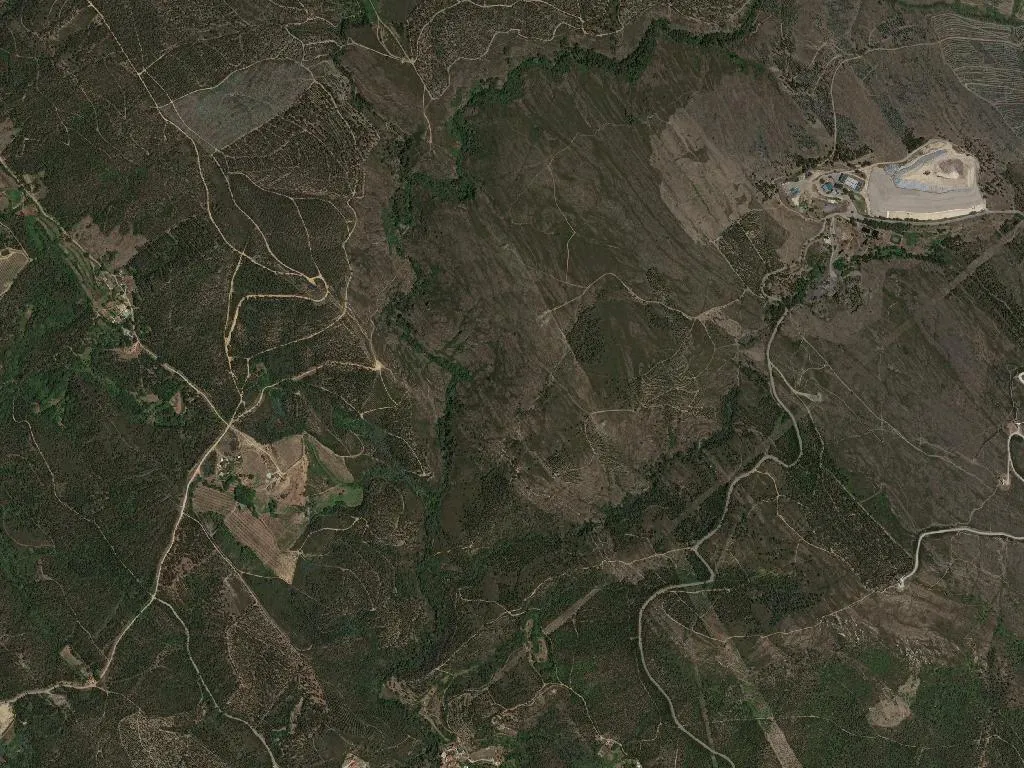
The damp granite of the M536 flickers silver in mid-morning light, a low-slung road that coils through folds of maize and vine. Fifteen kilometres south-east of Penafiel’s small-town traffic lights, Rio Mau spreads across 6 km² of Sousa valley at just 187 m above sea level – low enough for Atlantic breezes to slip in, high enough for the air to sharpen after dusk. Houses are spaced politely apart, separated by shoulder-high stone walls and vegetable terraces that step down to streams called Riso and Mau.
Green Wine, Granite Soil
Rio Mau has sat inside the Vinho Verde demarcation since 1908. Here the vines are still strung on granite posts or, more recently, concrete poles, the rows following the contour of every slope. Annual rainfall of 1,200 mm and mild summers coax citrus-scented Loureiro and mineral Arinto into the tiny family cellars – 500-litre barrels propped against pantry walls. Come mid-September the musty perfume of fermenting juice drifts through open windows, mixing with the first wood-smoke of the year.
Below the trellises, small square plots of sweetcorn are planted in April; cattle graze the water-meadows until October; cabbages, turnips and dwarf beans fill every domestic plot. It is subsistence farming that tops up wages earned in Penafiel’s service sector or in Porto’s design studios, a 25-minute dash up the A4.
The Rhythm of an Inland Parish
The 2021 census records 1,340 inhabitants: 157 under fourteen, 283 over sixty-five. Ageing faces gather at Café Central on Rua da Igreja after Sunday Mass in the granite Romanesque shell of São Pedro, yet the 07:45 school-bus stop still hums with children. Six licensed guest-houses – stone cottages retro-fitted with wood-burners and plunge pools – point to low-key weekend trade from Porto, people who want the Sousa valley without the selfie queues of the Douro.
Directions are given by memory, not street signs: turn left at the Oliveiras’ house, bear right by the 1892 wayside cross, park beside the chapel of São Sebastião. Every boundary, every lintel, every cattle trough is carved from the same honey-grey granite that defines the coastal Douro region. The stone drinks in August heat and exhales January mist, its surface fretted with ochre lichen and dark moss.
Late afternoon, when the sun slips behind the Crasto hill, silence is only relative: a goat bell, a distant tractor, a kestrel’s cry. Poplars blacken against the sky; the air smells of turned earth, split logs, cold stone.