Full article about Sebolido: Granite Terraces & Vinho Verde Silence
Crawl between pergola vines, hear gates creak and elders murmur on frost-cold granite in Penafiel’s
Hide article Read full article
Granite, vines and silence
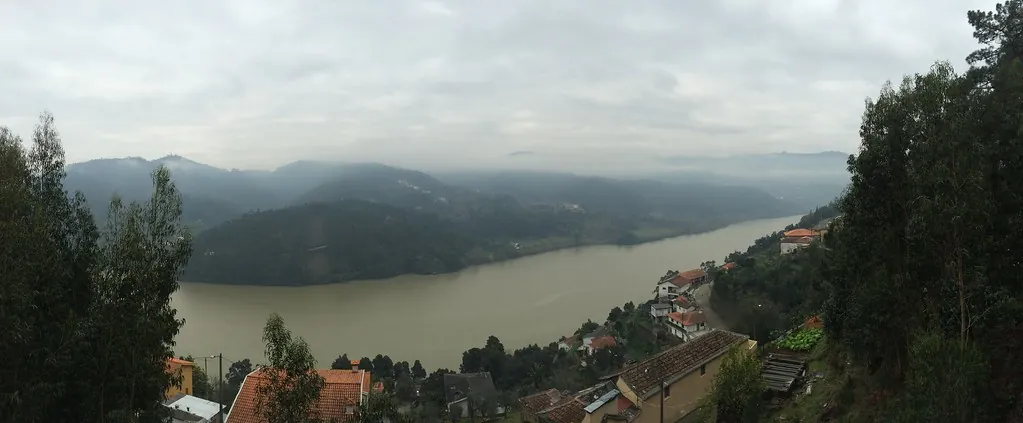
The lane corkscrews between shoulder-high granite walls and gates painted the colour of ox-blood. At 199 m above the Sousa valley, Sebolido scatters its houses across inclines so steep the vineyards are stitched into terraces that look like staircases abandoned by giants. Dawn silence is broken only by a dog barking three farms away and the metallic sigh of someone shutting a gate on the way to the vegetable patch. Of the 823 people who still appear on the parish roll, seven households leave a key out for cousins, emigrants or the simply curious; the rest get on with tending plots barely larger than an allotment.
Green wine country
All 515 hectares of Sebolido lie within the Vinho Verde demarcation, and the landscape advertises the fact. Vines are either wired to concrete posts in the modern fashion or trained in the old ramada system – pergolas knee-high, forcing pickers to crawl between rows on hands and knees. Granite is the other constant: in doorsteps, in the troughs beside springs, in the weathered boundary stones that pre-date the 19th-century land registry. The stone is dove-grey, freckled with acid-yellow lichen, and still cold at eleven in the morning – as if it remembers last night’s frost better than the sun now overhead.
Demographic arithmetic explains the hush. One hundred and forty-three residents are over 65; only 105 are under 14. After the school bus leaves at eight-thirty, the benches around the churchyard become the preserve of men in flat caps who follow every slow car with the same vigilance Londoners reserve for suspicious packages.
Everyday life, volume low
There is no tourist office, no gift shop, no interpretative centre. The risk of being ambushed by a coach party is roughly the same as being struck by lightning. People arrive because a great-grandfather was baptised here, or because they misread Google Maps on the way to the spa town of Vizela. The parish does not sell itself; it endures. If you are offered coffee, it will be poured from a dented aluminium pot and accompanied by genealogy: who left for Venezuela in 1962, whose olive oil is least bitter, which hillside produces the grapes with the highest acidity.
The kitchen calendar dictates the menu. January demands caldo verde thick enough for the shredded galega cabbage to float like green streamers on mashed potato; October pairs pork shoulder with chestnuts roasted in the embers of the community oven, fired so rarely these days that lighting it requires the same consensus as calling a parish meeting. The wine on the table is always the maker’s own: pale, slightly spritzy, tasting of wet stone and lime peel – a beverage for drinking, not for commentary.
The texture of time
A walk through the village is a flip-book of micro-landscapes: an orchard where windfalls ferment ungathered, a stream tunnelled by brambles, a granite threshing floor swept immaculate although the last rye was threshed decades ago. At 7.23 p.m. on clear days the westering sun ignites the vines for exactly five minutes, turning leaf, schist roof and quartz seam into hammered copper. Then the light snaps off behind the ridge, wood-smoke rises vertically in the still air, and yellow window squares appear one by one across the slope – a quiet Morse that signals another day safely repeated.