Full article about Aguçadoura: dunes tamed into tomato-scented parish
Póvoa de Varzim’s youngest parish turned drifting sand into salt-sweet lettuces and three mood-shift
Hide article Read full article
Where the dune became soil
The parish of Aguçadoura was only carved out of neighbouring Navais in 1933, yet its name first appears in 1258 as Petra Aguçadoira – a sharpening stone where Atlantic farmers whetted their scythes. Seven centuries later, the dunes were still winning: sand advanced inland, burying wheat and fishermen’s nets alike. Then came the 19th-century land-grab. Families shovelled depressions they called masseiras – wide, flat bowls scooped below sea-level – and fed them with bladderwrack, river water and wind-break pines. Against all logic, lettuces followed, then tomatoes whose skins are still thick enough to survive salt-laden mornings.
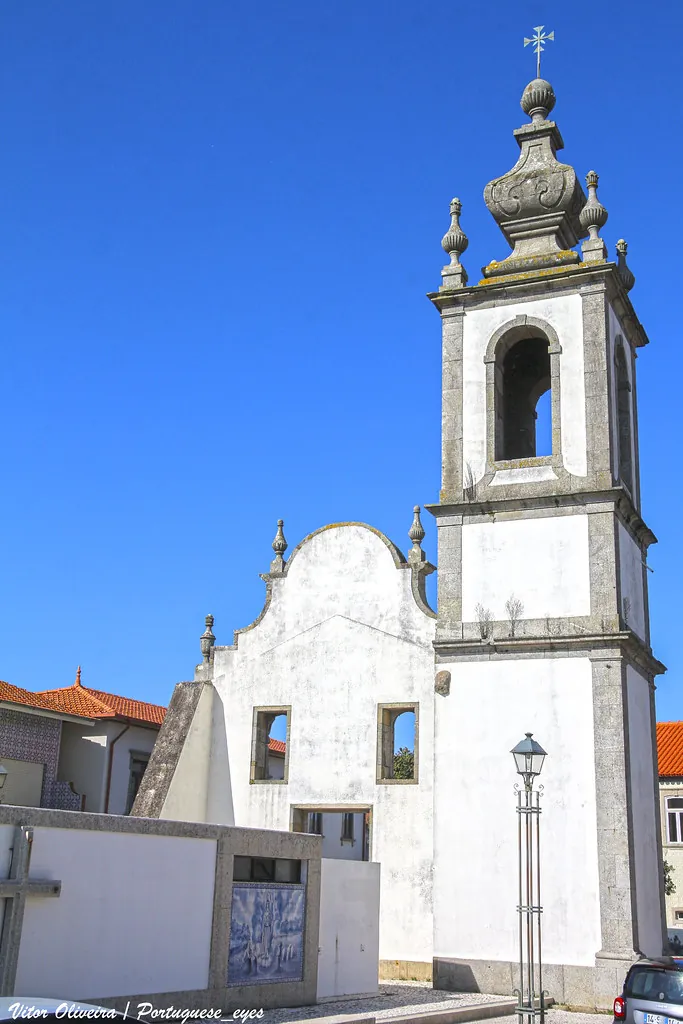
The whitewash of the 1873 church of Nossa Senhora da Boa Viagem reflects that gamble like a sun-bleached ledger. Inside, the single nave is cool enough to keep the scent of onions on parishioners’ cuffs. On the last Sunday of July the image of the Virgin is carried down Rua da Igreja and through the tomato rows; afterwards, Hortipóvoa market sets up beneath striped canvas to auction the harvest – golden-skinned onions, ox-heart cabbages, lettuces broad as cartwheels. No certificates, no PDO badges: just soil dragged back from the sea.
Three beaches, three moods
North of the fields, the protected littoral begins. Praia da Barranha tilts steeply at low tide; rip-holes open like purple bruises and the dunes muffle even the A28. Walk twenty minutes north-east and the sand widens into Praia do Paimó, where pine-boardwalks zig-zag between marram grass and the first kitchen gardens. Further on, Praia da Pedra Negra is named for a basalt outcrop that turns obsidian when the Atlantic slicks it.
The Coastal Camino cuts straight through. Pilgrims following the Portuguese route to Santiago swap the clatter of cobbles for the creak of those same boards, sea left, compost-rich soil right, skylarks overhead. Oystercatchers keep pace like feathered metronomes.
The taste of next-door
There is no tasting menu. Instead, a plate of tomatoes still holding the morning heat, dressed only with their own juice and a thread of house-pressed olive oil from inland Trás-os-Montes. Grilled mackerel arrives minutes out of the arte-xávega seine; its skin blisters to silver leaf over vine-prunings. Dessert is a fig baked in the embers, split and filled with queijo de ovelha that sags into warm jam. No provenance chalkboards are needed – the distance between plot and plate is measured in footsteps, not food miles.
Aguçadoura’s 2,695 inhabitants occupy a six-metre shelf of land; the sky owns half the real estate. When the sun drops, the slanted light ignites the masseira leaves so they look gilded from within, and the dunes blush copper. The wind drops a semitone, less a whistle now, more a lull. Stand between the impossible green of the lettuce and the unbroken blue of the Atlantic and you understand: some conquests are measured not in cannon fire, but in the quiet moment sand becomes soil.