Full article about Amorim: Where Maize Fields Taste of Atlantic Salt
In Póvoa de Varzim’s hidden parish, the ocean hums through chapel timbers and diesel-scented lanes.
Hide article Read full article
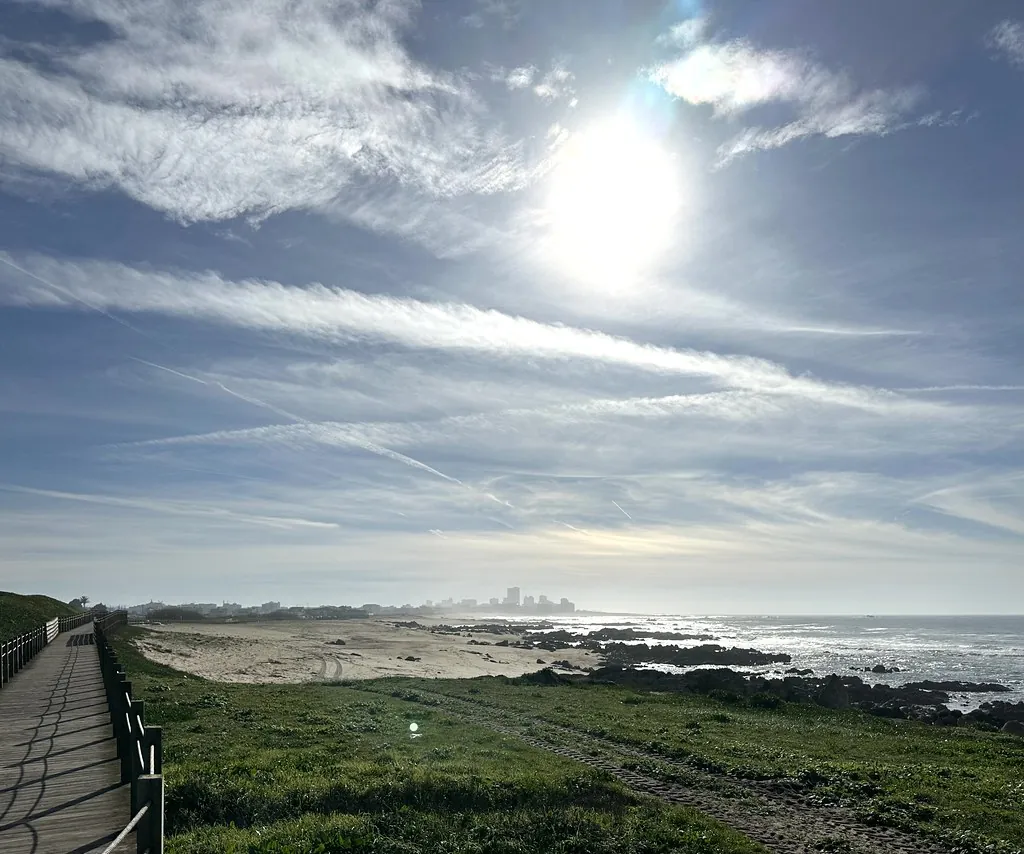
The Atlantic wind slips down Rua dos Moinhos and, before it reaches the tarmac, collides with the warm reek of tractor diesel and fresh manure spread across the maize rows. You cannot see the ocean from Amorim—houses face inland, stone walls climb to red-tiled roofs, gates are kept shut—but the parish inhales salt with every breath. It films the east-facing windows at dawn, sharpens the metallic after-taste of stolen blackberries, and teases the timbers of the thirteenth-century Capela de Santo André so that the porch groans only when the tide is high. Four kilometres of maize and allotments separate the church from the dunes, yet the Atlantic is the uninvited guest at every meal.
Between soil and salt
Local historians trace the name to the Latin Amorium, hinting at an ancient cult of love long since replaced by more practical devotions. What is certain is that by the sixteenth century Amorim already functioned as the market garden and laundry for maritime Póvoa de Varzim: women rinsed linen at the wash-house of Cais das Lavandeiras while ox-carts hauled sardine baskets inland along the old National Road 13. The port’s eighteenth-century golden age—ship-owners investing in Brazilian salt, English textiles arriving in exchange—never quite crossed the maize fields, but it paid for the stone crosses you still find at crossroads and for the brass band that strikes up the parish anthem one beat behind the conductor every June.
Urban pressure is felt nonetheless. Protected within the North Littoral Natural Park, Amorim’s building plots trade for sums that astonish the old farming families; planning permission requires ecological offsets and a tolerance for paperwork thicker than a eucalyptus trunk. The result is a parish of 4,751 residents occupying less than five square kilometres where agricultural lanes still end abruptly in curtains of sand and gorse.
Pilgrims passing through
Amorim sits on the Portuguese Coastal Way to Santiago, and on any spring morning you will meet Swedes with shin-splints, Koreans filming their blistered feet and solitary Galicians who refuse to speak Spanish. They stop at Café Central for an espresso cut with a drop of milk—what locals call café pingado—and to use the lavatory Señor António has not quite fixed since 1997. The footpaths that skirt the maize fields climb gently to the whale-backed dune system of Paramos; from the top you can follow the silver thread of Rio Santo André as it slips into the tidal lagoon where elderly men still trap glass eels with wicker baskets woven by their fathers. No viewpoints, no souvenir stalls—just the smell of maritime pine resin clinging to your shirt and, in late afternoon, the low sun igniting the cabbage plots so that the leaves look like sheets of green glass.
Saints, sardines and swing bands
June belongs to São Pedro. On the eve of the feast the parish council hires a fairground that blocks Rua da Igreja; bumper cars screech against the chapel wall while teenagers negotiate first kisses behind the shooting gallery. The procession leaves at ten the next morning: the statue of Saint Peter is carried beneath a velvet canopy, children scatter marigolds, the brass band hits the national anthem’s awkward pause, and everyone pretends not to notice. Behind them walks the church’s own imperatriz—a local girl in a crimson nineteenth-century gown who once would have led fishermen’s guilds and now simply looks magnificent. Sardines roast over sweet-pine fires; the priest’s son pulls pints of lager at €2 a glass; bingo begins at midnight. Foreign visitors are welcome but never announced—spectacle is not the point, continuity is.
Two weeks later comes the Romaria de Nossa Senhora da Saúde. Tractors draped in crepe paper and artificial roses escort a smaller statue to a countryside chapel; women recite the rosary in voices cracked by fifty years of roll-ups, and the party ends with caldo verde and vinho verde served in plastic cups. The wine is from Reboredo, a micro-terroir on the south-facing slope behind the cemetery. Zezé Manuel insists it should never be chilled—“the fridge murders its soul”—and pours it cloudy, almost green, sharp enough to make your cheeks sing.
Tastes that remember the tide
Amorim’s cooking is dictated by what enters the kitchen first: the sea or the land. Caldeirada starts with a rascasse bought off the Póvoa auction floor at dawn, not a frozen hake fillet; the rice for arroz de marisco is stained orange by berbigão clams raked from the sandbars at low tide. Bacalhau à Poveiro arrives gilded with Minho olive oil that the father-in-law brings in five-litre demijohns each winter. Conventual egg-yolk sweets—fidalguinhos, toucinho-do-céu—owe their depth to yolks from the neighbour’s chickens; surplus whites become Tuesday-night pavlova for the daughter’s birthday. Everything is seasoned by the awareness that the ocean is four kilometres west and the maize is whispering on every side.
When the fields turn to gold
Stay until the end of the afternoon. The sun stalls above the dunes, the wind carries the distant collapse of waves, and a rooster you cannot see rehearses tomorrow’s dawn. Amorim will not hand you postcard revelations; it offers something narrower and therefore rarer—the assurance that when you taste soil on your tongue it is still soil, and when you smell brine on the air the Atlantic is simply doing what it has always done—announcing itself before it is seen.