Full article about Argivai: clay under fingernails, corn bread in the oven
Visit Argivai to throw pots in iron-rich clay, tear warm corn bread at 5 a.m. and trace Rio Alto’s secret course.
Hide article Read full article
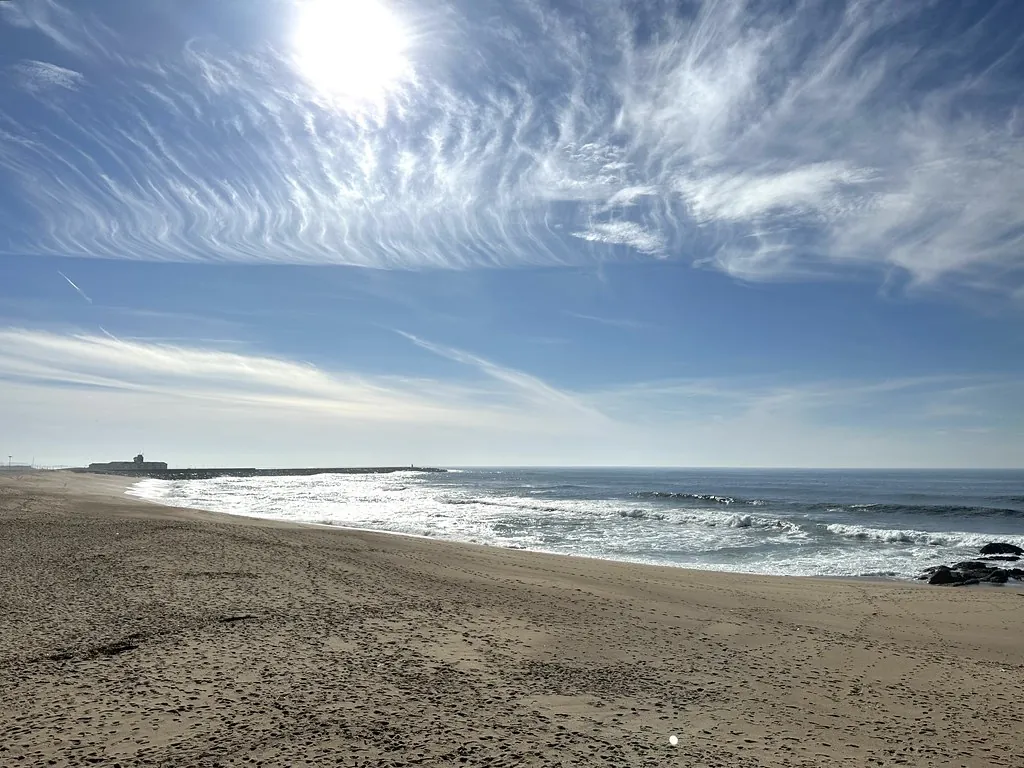
The scent hits first – corn bread sliding out of a wood-fired oven at Padaria Silva. Ignore the Avenida dos Pescadores, a name invented for picture postcards; the real loaves are on Rua da Estrada, where the baker still feeds the oven at five a.m. The crumb stays deliberately damp, the crust thick enough to survive a morning at the building site, an afternoon on the beach, or an evening weighed out on the grocer’s iron scales. October air tastes of salt, not bracing freshness but the fog that rises off the Atlantic and rubs against the houses like a stray cat. Thirty-three metres above sea level the dawn soundtrack is not hammer on stone but the diesel rattle of Sr António’s Toyota Hiace, shuttling yesterday’s catch from the fish market to the beach huts before sunrise. Argivai never stopped expanding, merely lurched – first the brickworks, then the canneries, then the villas built by families who escaped central Póvoa de Varzim in search of a back garden big enough for a loquat tree.
The earth that named itself
Argivai carries its raw material in the word, yet no one here speaks Latin. They say “red earth” and leave it at that – the same soil you scrape from the bottom of the vegetable patch when a wall needs building or a hole wants filling. The tile kilns are officially ruins, but they are not a heritage attraction; they are where teenagers smoke a first cigarette and where neighbours stack bonfires for the midsummer São João feast. Maria Manuela Viana was born over the parish line in Beiriz, yet she fires her pots here because Argivai clay is fatter, iron-heavy, forgiving in the kiln. At the Mó de Barro studio visitors hand over €15 and leave with a plate they have thrown themselves, but no one talks of artistic dignity; the phrase is “something small for Grandma”.
The stream that wriggles and hides
Rio Alto is not a river, it is a ribeira – anyone calling it a river betrays an outsider’s ear. It slips into Argivai gently, yet after rain over the Serra de Rates it swells within two hours and carries the footbridges away. Before seven a.m. the line-fishermen take up position: not elegant herons but men in moth-eaten wool, landing catfish and the odd eel that has dodged the nets up in Navais. The boardwalk is ideal for an evening stroll, though it was installed by German contractors working on the EU Natura 2000 scheme, not by local councillors. At six o’clock, when the sun drops behind the town’s decommissioned power station, the water turns the colour of rust – not poetic copper, literal rust, from pipes the electricity board left to rot and no one ever cleared.
The coastal route of the Camino de Santiago cuts through here, but most pilgrims beeline for the beach. The chapel of Nossa Senhora da Saúde does possess eighteenth-century azulejos, yet it also contains the cemetery where my grandparents lie; what I remember is the smell of melted candle wax and sand scuffing across the marble floor.
Processions, scarves and paper balloons
During the last week of June Argivai fills with people who do not live here. The folk-dance groups arrive from Gondifelos, Balazar, further inland; the parish itself can field only the school brass band and the senior-citizens’ ranchos, who rehearse all year for two evenings of dancing in the square. The São Pedro balloons are made of rice-paper, yet the craftsman is an engineer originally from Famalicão who retired here and brought the hobby with him. The fluvial procession is a conjuring trick – the boats belong to the harbour master, the priests come from Vila do Conde, the candles are LED because the Atlantic breeze snuffed out real flames years ago.
The romaria of Nossa Senhora da Saúde falls on the first Monday in September. White headscarves are still worn, though now they sit above orthopaedic sandals and WhatsApp screens. The eighteenth-century image survives, but the bearers’ platform is new; the old one weighed close to a tonne and the men’s shoulders are no longer what they were. In May the procession walks by moonlight, accompanied by a PA system bought second-hand at the Barcelos fair. The Feira da Espiga spreads across the churchyard, yet the chestnuts are supermarket stock and the modelling clay is trucked in from Vila Nova de Gaia – local supplies ran out long ago.
Where the stew contains eel and the wine is green
Eel caldeirada is simmered in an unglazed clay pot because the pottery will not crack over a low flame. The secret ingredient is the white-wine vinegar left behind when the local co-operative’s vats turn sour. A few eels still come from Rio Alto, most are frozen imports from Spain. Maize porridge is never garnished with monkfish, whatever Lisbon restaurants claim; it is enriched with razor-clams and a poached egg, eaten with a wooden spoon that leaves your fingers smelling of garlic for forty-eight hours. The Vinho Verde poured alongside is Loureiro from Quinta do Regueiro – not from a fictitious “Vale do Rio Alto estate” but from Estela, five minutes away, and the boy pouring it is cousin to Zé who runs the café. Toucinho-do-céu, the convent egg-and-almond sweet, is baked by Dona Alda, who learnt the recipe from a widowed nun and adds extra butter; no one complains.
The wayside cross that guards a half-erased prayer
The granite cruzeiro still stands, though the inscription is almost illegible. “Pestis” or “pax” – no one can tell, Latin having vanished from the curriculum in 1974. The church was consecrated in 1958, its tower only in 1962 after the original collapsed in a winter storm. The parish museum occupies the old spa pavilion and opens when the priest has an hour free – usually between a funeral and a baptism. Footsteps echo like those in a cathedral, only the nave is empty; visitors stare at the iron pipe that once carried sulphurous water and remember the chlorine Dona Rosa added to kill intestinal worms.
José Maria da Silva Nobre died in 1983; his widow still lives on Rua do Cruzeiro. She says her husband would recognise nothing now – not the Chinese discount store, not the traffic lights at the roundabout, not the five-storey blocks that block the sea view. Yet the dawn smell of corn bread, the red earth that stains the fingers of anyone planting tomatoes, and the noon bell that tolls the same three-beat message – I am here, I am here, I am here – remain unchanged.