Full article about Beiriz: Sardine smoke & mazurka mornings
Sugar-pink garlands, gilded church retables and Atlantic breezes in Póvoa de Varzim’s hill parish
Hide article Read full article
The scent arrives before the sight: sardines spitting on iron griddles, their smoke threading through cascades of sugar-pink paper flowers that sway from first-floor balconies. It is 09:30 on a June Saturday in Beiriz and the parish is already tuned to an anticipatory pitch. Somewhere behind a sash window a concertina rehearses a mazurka; farther downhill the Rio Alto slides over dark granite, audible only when you stop—and stopping here is effortless.
Less than five square kilometres hold 11,800 people, yet Beiriz feels aerated rather than dense. The name itself—Latin Biricus, “place of little hills”—is a topographical spoiler. In summer the slopes are stippled with maize; in spring they stripe green with vinho verde vines; in winter a leaden sky presses down the memory of occupations that began before the Romans.
Granite, gilt and a stone cross on lookout
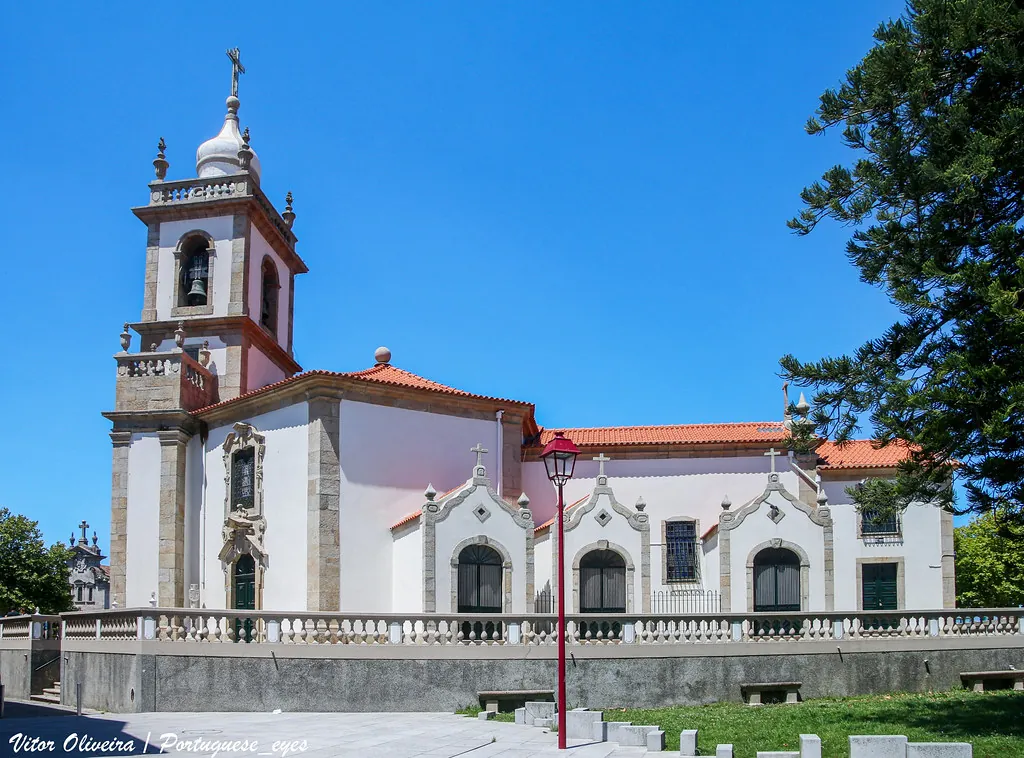
The 18th-century parish church anchors the crest of the hill in sober grey granite. Inside, the restraint dissolves: a baroque retable explodes into carved and gilded curls, each volute catching the oblique light that sneaks through lateral slits. In the churchyard an earlier stone cross, lichen-splattered and ivy-girdled, keeps watch. Face west from here and the view unrolls across terracotta rooftops until the Atlantic draws a faint pencil line—Portugal’s Northern Littoral Natural Park begins just beyond the last house, and the breeze always carries a ghost of brine.
Scattered through the hedgerows manor houses in blistered granite—Casal de São Bento is the most photographed—record centuries of agricultural surplus. Along the Rio Alto, restored water-mills still shelter their original grindstones and timber cogs cracked by decades of torque; beside them wash-houses and granite spouts survive, and on Monday mornings you may still see forearms plunged into cold water beating linen against stone. The chapel of Nossa Senhora da Saúde, classified in 1982, is a single-cell building of limewashed humility; on the first Sunday in May it becomes the hub of a barefoot pilgrimage from the mother church, led by a silver brass band whose counter-melodies ricochet through eucalyptus groves. At journey’s end convent sweets appear—toucinho-do-céu, papos-de-anjo—and plastic tumblers of vinho verde are passed from hand to hand.
Bread on heads and the corn that is blessed
Nothing fixes Beiriz in local memory like the Procissão das Fogaceiras. In honour of St Peter teenage girls balance on their heads wicker trays loaded with fogaceiras—loaf-sized sweet brioche perfumed with lemon zest and anise. After the procession the bread is broken up and distributed; by nightfall the parish square smells of charred sardines, burnt eucalyptus logs and sugar caramelising on cast-iron. In alternate years the Festa do Pão revives a pre-mechanised ritual: sheaves of newly threshed maize are carried to the church for blessing, then laid on the communal granite threshing floor, a pale slab polished by decades of shared labour. During the festival every alley becomes a tunnel of paper flowers—fuchsia, cadmium yellow, cobalt—introduced in the 19th century by Minho craftsmen and now a point of parish pride.
Sarrabulho, canudas and loureiro wine
Beiriz cooks with one foot on the land and the other in the Atlantic. Arroz de sarrabulho arrives at table almost black—pig’s blood, cumin and clove—its richness offset by cubes of crackling pork. The Atlantic answers with caldeirada poveira, a tomato-sweet stew of monkfish and conger eel scented with bay. On hot days a cod-and-mint açorda provides instant coolness; in winter kid goat crackles in wood-fired ovens until rosemary-scented fat pools on the chopping board. Among pastries, beiradas—flaky crescents oozing egg-yolk jam—compete with canudas, deep-fried cannelloni rolled in cinnamon sugar that shatter at first bite. Loureiro and arinto from the lower Cávado valley rinse everything away: high-strung whites with a seaside snap that begs for a plate of just-grilled sardines.
Trails through mills and the green corridor to the sea
The 6-km PR2 circular trail threads vegetable plots, riverine woods and three restored mills before delivering a sudden, cinematic shot of the Ave estuary. Stone walls hem the path; blackbirds fuss overhead; the gradient is gentle enough for children. Cyclists can pick up the North Littoral Eco-Path and freewheel to Vila do Conde in twenty minutes, Atlantic spray on one cheek, pine scent on the other. Walkers bound for Santiago divert through here on the Coastal Route, using Beiriz as the liminal pause between hill and ocean.
Late afternoon, when maize shadows stretch across the lanes and the church bell sends a low note through bedrock, a subtler sound persists: the slow, rhythmic creak of a water-wheel in the Rio Alto, as if the parish itself were breathing with the river that never stopped running.