Full article about Estela’s Pine-Scented Dunes & Cinnamon Biscuits
Ride sandy trails, taste cinnamon biscuits and hear fishing legends in Estela, Póvoa de Varzim
Hide article Read full article
Where the Pine Meets the Sea
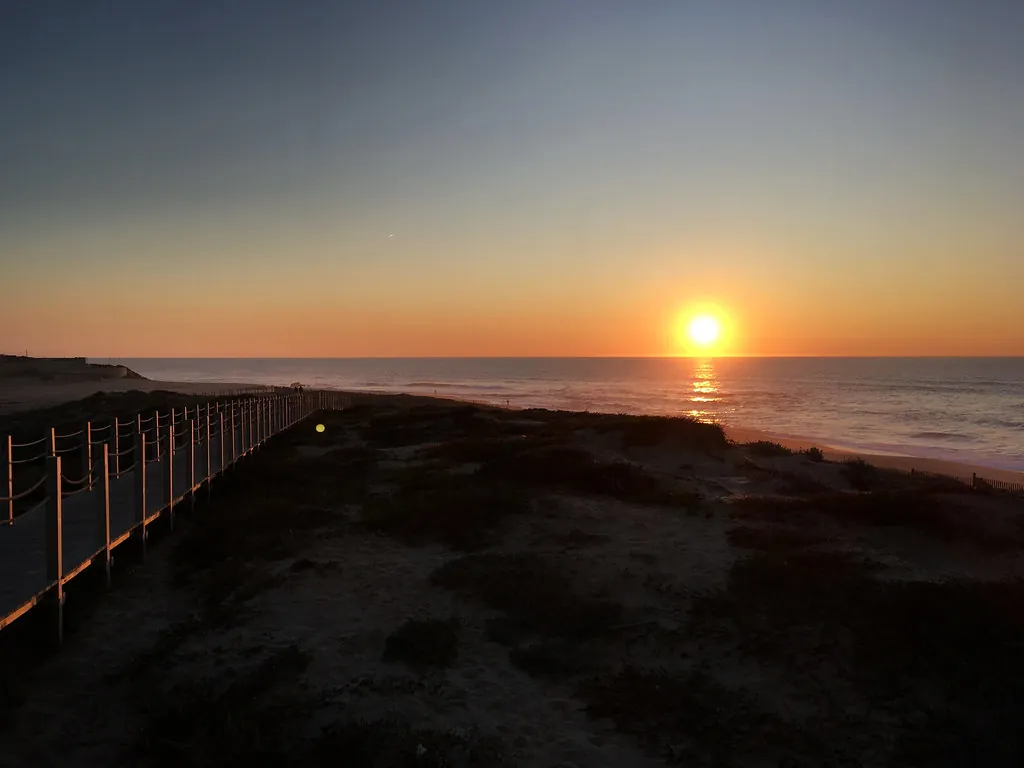
The name on the map is Estela, from the Latin stella – star – yet nobody here bothers with the etymology. Locals simply say “I’m going to Estela” with the same shrug they’d use for popping to the post office. The remnant pine belt is where half the parish learned to ride a bike and where their parents once gathered cones for the hearth. Authority now lies with the Northern Littoral Natural Park, but the sandy tracks remain identical. Bump into Sr António leaning against his cabana and he’ll point out the blackbird nest he has guarded since his wife died.
The Trilho dos Masseiros – the dune-garden trail – is a six-kilometre conversation that starts beside the 17th-century church (where the priest still hushes children with a stare) and ends on the high dunes. From the top you can read the coast like a book: north to the mouth of the Rio Alto, south to the Redonda rocks where boys dangle lines for safio bream. In the estuary the salt marsh glints; old men swear eels once grew “leg-size” there, though no one under seventy believes them.
Churches and Promises
Igreja de Santa Maria looks eighteenth-century from the outside, but step in and you get the universal Portuguese perfume of beeswax and mothballed linen. Fishermen’s alms paid for the gilded altarpiece – those who had no coins donated fish. Legend says Our Lady of Ó was found tangled in a net after a storm; when the Atlantic turns rough the women of the parish still ferry cinnamon biscuits to her statue.
Capela da Saúde is a different affair, stranded at the end of a lane that appears to lead nowhere. On the first Sunday of May the lane clogs with double-parked cars. The procession moves slowly – widows in black lace, teenagers in striped T-shirts – and finishes at a parish lunch where D Idalina serves sponge cake she has baked since 1973. Ask for the recipe and she’ll tap the side of her nose: “Whisk the whites to stiff peaks and don’t rush.”
What Fresh Tastes Like
Tia Odete’s fish stew is built on whatever her husband landed at dawn – gurnard, bream, ray – but the depth comes from sweet-paprika she makes at the end of summer, peppers drying on the washing line. The grandchildren’s café only serves seafood rice on Sundays: “Shellfish is dear and the kids eat like famine is forecast.”
Someone, somewhere, decided whelks belonged in a bean stew; it sounds perverse until you taste the briny sweetness cutting through the smoked pork. Sr Alfredo will cook you an eel hotpot better than anything in town, “provided he’s in a good mood”. The vinho verde arrives in unlabelled bottles from Jaime’s basement press; he insists it must be drunk at the first pull or it sours. Medronho brandy is never sold – you bring a bottle of red, you leave with a bottle of fire. That is simply how it is done.
White Sand, Cold Water
Praia de Estela is a broad runway of sand, empty from October to May. In August the car park fills with Spanish and French plates, and locals migrate to Rio Alto where there is “more towel room and fewer loud voices”. Surf works on a west swell, “but only if you know your exit, because the rip will garden-hose you towards Spain”. Instructors tend to be Cousin José, back from a year in Florianópolis with a board, two earrings and a new swagger.
The golf links sit slightly embarrassed behind the dunes – immaculate, American-designed, largely unvisited by anyone who actually lives here. “It’s for the English with second homes,” shrug the fishermen. The Portuguese Coastal Camino passes directly in front of the bakery; pilgrims shuffle in for still-warm pão de leite and ask if there is coffee. There is – Café Central, where the custard tarts are made upstairs and Antónia serves espresso in proper china.
São Pedro and the Things That Don’t Change
On 29 June the feast of St Peter still marches to the water’s edge. Boats braid themselves with yellow broom and scarlet ribbons; retired sailors pull on navy shirts as though heading for the Grand Banks again. After dark the beach splits into territories – the fishermen’s bonfire, the farmers’ bonfire, the teenagers’ Bluetooth speaker blaze. When the last ember dies and the smell of grilled sardine merges with burnt pine, only the Atlantic sucking at the sand remains. It is the same soundtrack grandparents’ grandparents heard.
Ask an Estela native whether the journey is worth it and the answer never varies: “Go. But go slowly, the way you’d arrive at a friend’s house. And take a jumper – the night wind has teeth.”