Full article about Terroso Looms: Weaving Cast-Offs into €85 Art
Hear shuttle beats echo from Iron-Age ramparts above Póvoa de Varzim’s lagoon
Hide article Read full article
The Rhythm of the Loom
The shuttle arrives before the view. A wooden clack-clack lifts through the open doorway of the Cooperativa Tecelagem Popular on Rua Direita, a sound that has measured out the mornings here since 1978. Inside, four weavers—Maria da Conceição, Palmira, Madalena and Céu—sit ringed by crates of cast-off cloth culled from Póvoa de Varzim’s charity depot. By 9 a.m. they are already unpicking 1970s polo-necks, yellowing wedding linens and baby blankets, re-weaving them into striped throws that sell for €85 in Lisbon’s Retrosaria Rosa and Porto’s Latina. The sting of bleach used to disinfect the fibres mingles with Delta coffee brewed by Ermelinda in the back kitchen, its red floor guarded by cardboard templates: five cm of navy, three of scarlet, two of mustard.
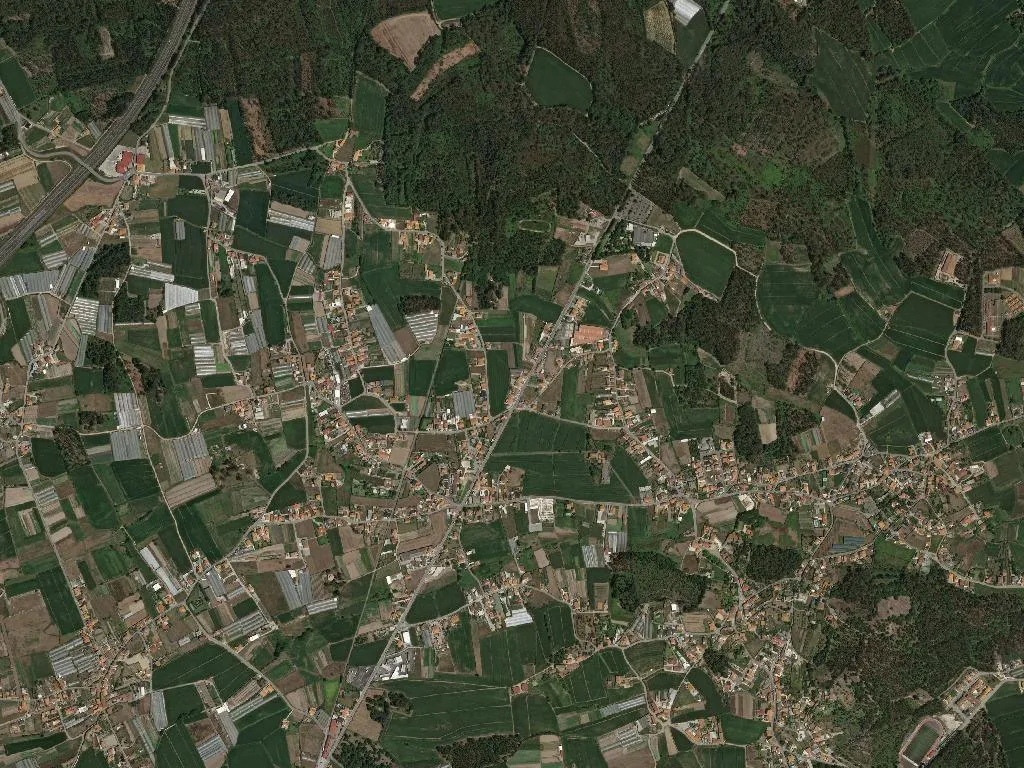
Terroso perches 55 m above sea level between the A28 interchange and the championship links of Quinta da Estela. The granite hump known as Cividade lifts a further 100 m, commanding the shallow valley of the Rio Esteiro as it slips into Póvoa’s lagoon.
One Less Than a Thousand
Archaeologists date the triple ramparts of Cividade de Terroso anywhere between the 9th-century BC Iron-Age “castro” culture and a 3rd-century AD Romano-Suevi occupation. The 1906 dig by local polymath Rocha Peixoto revealed 52 circular stone huts—four-to-six-metre diameters, central hearths, conical grain silos—plus a bronze “serpentine” brooch now displayed in Póvoa’s municipal museum. In an 1893 letter to Ramalho Ortigão, novelist Eça de Queirós crowed: “They’ve sent me a shard from Terroso’s hill-fort that seems to carry Roman taste into our wild Minho.”
From the 2018 steel-and-oak viewpoint you can clock the Ria de Estela 3 km away, the dunes of São Jacinto 18 km to the south, and—on crystalline mornings—the Regufe lighthouse at Vila do Conde. The prevailing 14 km/h wind encourages Costa pilgrims to retune their bagpipes before the long traverse of coastal plain.
Of the 999 arches that once carried the Aqueduto de Terroso (1610-1635) to Póvoa’s Clarisse nuns, only 17 granite piers survive in Quinta do Cruzeiro and a single complete arch on Senhor Albano’s farm. “A thousand minus one,” winks Joaquim at tasca O Padrinho, insisting the engineer João Rodrigues de Carvalho lopped off the final span to dodge the “evil eye” of a perfect number.
The wayside crucifix of São Lourenço, erected in 1583 by João de Novais and his wife Brites, pairs Vila Chã granite with Estremoz marble. Centuries of Atlantic weather have eaten the inscription down to an almost illegible “NOV”.
Friday nights at 21:30 the Rancho Folclórico das Lavadeiras rehearses above the 2004 cultural centre, once the village threshing barn. Dancers wear Xinzo wool pleated skirts, rabbit-fur scarves from São Miguel fair and the Brazilian silver pins that Guida’s grandmother shipped home in 1952. Their “Vira da Igreja” is counted in 6/8 time, pandeireta drum from Lousã and bass drum from Couço.
Cornbread Charged with Vinho Verde
The communal oven on Rua do Lagedo fires on Wednesdays and Saturdays, resurrected by the parish council in 1982 from a medieval bakehouse that served the couto of São Simão. The broa mixes water-mill cornmeal from Mão-Cruz, rye leaven from Terroso’s farming co-op and a 48-hour “head” of sourdough. Loaves emerge at 17:30 with a 4 mm crust and a crumb that retains 42 % moisture; the bakery logbook tallies 120 a day.
Lixa’s fish stew uses monkfish from Póvoa’s Tuesday/Thursday market, spring-to-autumn mackerel and sea-bass taken at the mouth of the Ave on a rising tide. The clay pot simmers 35 minutes in Nespereira earthenware: first 3 cm monkfish cubes, then mackerel steaks, finally bass cheeks. Loureiro white from Aveleda (200 ml), Quinta do Crasto olive oil (50 ml) and 2 mm strips of red pepper finish the sauce.
At Toca da Dona Guida the house vinho verde is a 2022 Loureiro from Quinta de Santa Cristina: 11 % abv, 6.2 g/dm³ acidity, served at 8 °C in crystal glasses inherited from a Vila Verde aunt.
Stone and Water Trails
The Cividade loop, way-marked by the Portuguese Camping Federation in 2019, measures 2.48 km with 95 m of ascent. It starts at the interpretation centre (Tue-Sat 09:00-12:30 / 14:30-17:00; €2) and reaches São Lourenço crucifix in 42 minutes, feeding into the longer PR3 “Terras de Póvoa” dotted with 14 polished-granite panels. Red-and-yellow blazes painted by Póvoa’s mountaineering club in 2018 keep you right.
The Coastal Camino enters the parish at km 17.4, crossing the São Pedro de Rates bridge over the Esteiro. It runs 3.2 km to Largo do Cruzeiro, where walkers stamp credentials at O Padrinho (07:00-22:00, stamp free with a 50 c coffee).
Sunday at 08:30 the “Trilhos de Terroso” group sets out from the churchyard for an 8 km beach march to Estela, shadowing the aqueduct, the Miocene fossil beds beside the river and the golf course’s 485 m par-5 seventh. The 12:15 Transdev 505 back to Póvoa costs €1.95.
When the sun drops behind the hill the 1897 cast-iron clock of Santa Maria church strikes six. The weavers fold finished blankets—1.60 m × 2.20 m, 2.1 kg, 78 reclaimed stripes—into kraft paper sacks stamped “Mantas de Terroso — Origem Garantida 1978-2024”. Up on Cividade the stone walls blacken against an orange sky, the same 14 km/h wind that once dried Roman broom for their baths still combing the gorse.