Full article about Agrela: Where Granite Bridges Whisper for Coffee
Santo Tirso’s quiet village warms its stones by the stream and its chapels with wine-soaked processi
Hide article Read full article
The granite bridge that asks for coffee
By four o’clock the granite blocks of Ponte Pau are warm enough to scald a palm. Below, the stream sidles up to the bank as politely as a villager requesting a bica in a low voice. Oak saplings dodge their own shadows in the water, and the air carries the unmistakable scent of damp soil – the kind that reminds you someone still scrubs earth off potatoes at an outdoor stone sink.
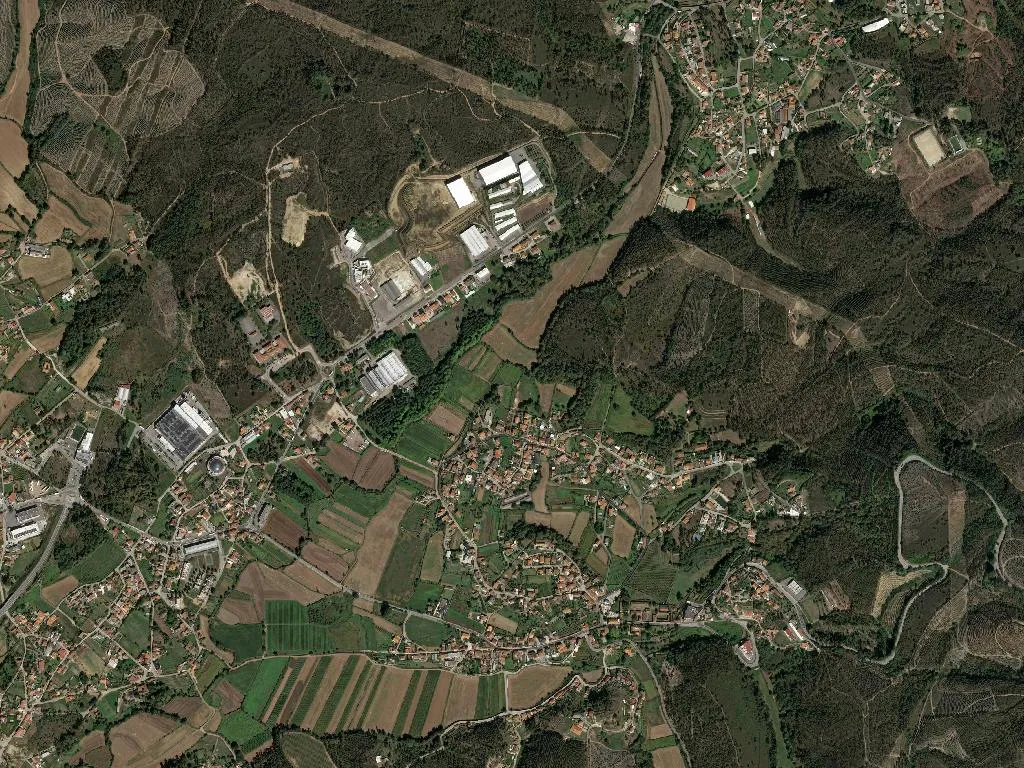
Agrela takes its name from the Latin agrum, a worked field, and the etymology still checks out. When the Benedictines of Santo Tirso dispatched monks here in the twelfth century, the monks dispatched peasants to do the actual digging. Not much has disturbed the rhythm since: fifty-odd houses, five granite wine-presses that still receive loureiro grapes each autumn, and a population density so low the local warbler loses its own trill mid-song. Officially 1,486 souls reside here; on a Monday morning it feels like 200, Sunday Mass doubles it, the August fiesta quadruples it – and there is still enough pork-blood rice to go round.
Bell, candles and a baroque wink
The mother church of Nossa Senhora da Assunção refuses to show off. One nave, a whisper of baroque gold leaf – the architectural equivalent of a teaspoon of sugar in espresso – and an altarpiece that catches candlelight as if to say, “Yes, I’m still here.” Outside, the Portuguese coastal Camino brushes the porch; pilgrims stamp credentials, ask whether the bakery does a galão (it does, until 11 a.m.), then march on towards Vilarinho, four kilometres of olive groves ahead. These trees have outlived more trends than BBC scheduling.
Higher up, the chapel of São Bento perches on its hill like a man nursing a half-pint: small, weather-wizened, refusing to leave. The first weekend after 1 September, villagers climb on foot, baskets of sponge cake swinging, bottles of green wine clinking; the descent is faster, no one complains. On the Carvalhinho knoll, São João’s chapel greets midsummer with dwarf basil that smells of soil and old flirtations.
When the village puts on weight
15 August is Agrela’s annual expansion. The Assumption procession inches down the single street, priest swaying beneath a velvet canopy, stomachs growling in formation, while the parish council ladles out sarrabulho: pork loin, ribs, liver, a dash of blood, all chased by cornmeal bread that only Grandma Lourdes can produce without measuring. Paper napkins, reusable plastic cups (this is 2023, after all), dancing until the local football referee whistles – or until the DJ caves and plays Paulo de Carvalho’s Eurovision swansong. Between courses, sapos de Agrela vanish faster than tickets for a Porto–Lisboa final: egg-yolk pastry, sugar crust, a dessert that fools both the devil and your glycaemic index.
Stream, vines and the boardwalk that confesses nothing
In July you can hop across Agrela’s stream; in January it sounds like a washing machine with a loose drum. Ponte Pau’s picnic tables are booked by hereditary right – the same families every weekend – and a wooden boardwalk now slips quietly towards Vilarinho without asking you to climb a single hill. Four flat kilometres, ideal for working off yesterday’s pastel de nata or for cursing the government beyond the hearing of your spouse.
Rua do Peso and laundry diplomacy
Widened last year, Rua do Peso lost the thrill of single-lane near-collisions but gained a pavement for grandchildren on scooters. Its name recalls the public weigh-house where maize was once priced as anxiously as today’s electricity bills. Granite houses still stand, airing chenille towels, Lidl boxer shorts and a vintage FC Porto tracksuit that has seen happier derbies. Wood-smoke drifts out, announcing, “I’m home, I’m no bother to anyone.”
When August light tilts across the altarpiece and the first green wine of the year fizzes on your tongue – sharp, stony, unapologetically brief – you realise Agrela offers no blockbuster sights. It offers a plastic chair beside a murmuring stream, the television left inside, and the certainty that, should the world end tomorrow, someone will still ladle out one last plate of sarrabulho for the final customer.