Full article about Aves
Experience Aves, Santo Tirso’s mill village: August rockets, technicolour sawdust carpets, granite alleys thick with espresso steam.
Hide article Read full article
The bang arrives before the view. A single rocket splits the August humidity and ricochets off granite façades blackened by last night’s rain. A second’s hush – almost liturgical – then the second report rolls down the valley, confirming that the Festa de Nossa Senhora da Assunção has begun. In Aves, a parish scrunched into the western flank of Santo Tirso at barely 140 m above sea-level, time is measured less by calendars than by these detonations that summon the neighbouring villages like an acoustic town crier.
Eight thousand souls in six square kilometres
Census figures tell a story the eye reads immediately: 7,946 inhabitants compressed into barely six square kilometres gives a density higher than central Norwich. This is no scattered hamlet; Aves grew tight and vertical around its textile mills. Terraced granite houses shoulder each other, low boundary walls fuzzed with moss that reclaims every joint. Demography skews senior: 2,065 residents over 65, only 879 under 15. The morning pulse is correspondingly slower – the shuffle of carpet slippers on damp cobbles, the reluctant scrape of a sticking iron gate, espresso cups clinked in the Central café before the foam has settled.
Walk through at dawn when mist still gums the rooflines and you read the stratigraphy: 1970s breeze-block garages grafted onto 18th-century stone, wrought-iron balconies hung with school uniforms dripping onto passing taxis. Function trumps ornament; everything is built for the shift whistle, not the photographer.
Three feasts, three ways to belong
Aves’ ritual year pivots on three events. The Assunção in mid-August is the heavyweight – rockets at lunchtime, brass bands reverberating between granite walls like a makeshift cathedral, processional carpets of sawdust dyed cobalt and scarlet. Windows fly open so women can duck under the shoulder-borne litter of the Virgin without leaving the washing-up.
Twenty-four hours later the scent shifts to charred sardine and basil as São João do Carvalhinho hijacks a small crossroads in the southern end of the parish. Locals call this neighbourhood “the village inside the village”; its stone crosses and single tavern feel closer to a Minho hamlet than to the dense grid up the hill.
Mid-July belongs to São Bento. Pilgrims in waxed cotton cloaks walk in from Guimarães, fulfil promises made in hospital corridors, pin silver ex-votos to a cloth-lined altar. The atmosphere is quieter, the fireworks smaller, the coffee stronger – a devotional detox between the summer explosions.
Feast days make the parish’s density tactile: every plastic chair is dragged into the street, every cousin is collared to stir the caldo verde, every narrow lane becomes a one-way system negotiated by people who have known each bumper since baptism.
Vinho Verde and a medieval thru-way
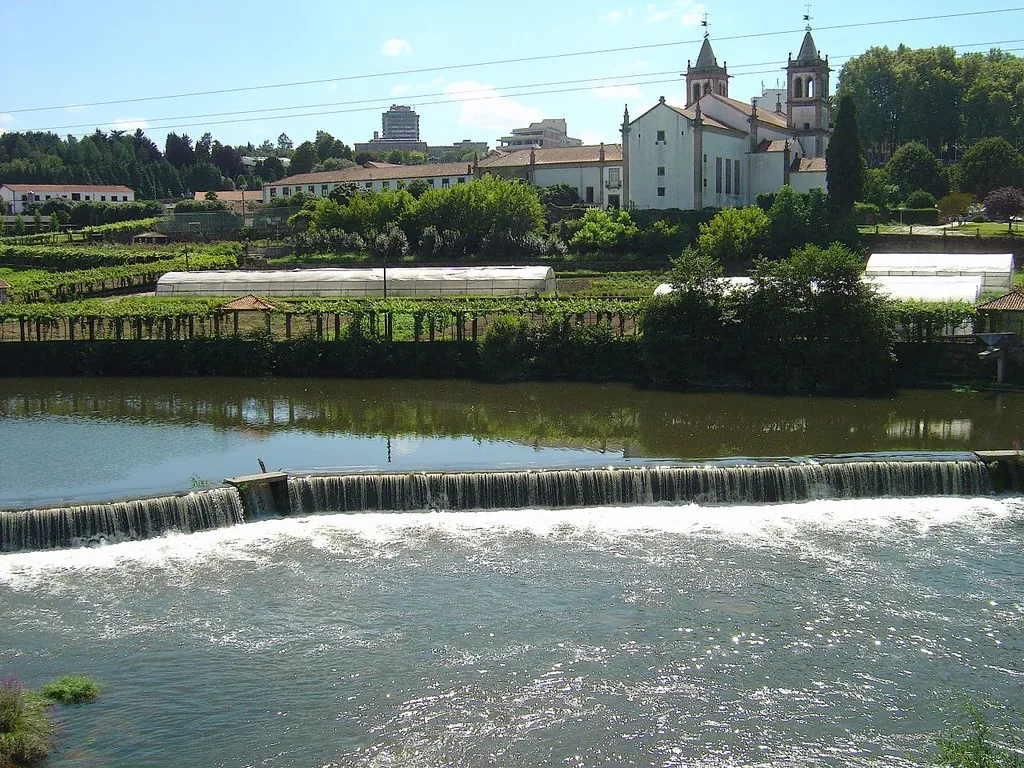
Despite the sprawl, Aves still lies inside the Vinho Verde demarcation. Between the last factory and the first service station a handful of pergola-trained vines throw shade over footpaths. Production is domestic: white or red, bottled in Coke crates and served in handleless pottery cups whose glaze is crazed from a thousand dishwashers. Accept a top-up from a stranger at the Central café and you will taste azalea acidity and a faint petillance that makes British prosecco feel overwrought.
Few residents dwell on the fact that the Central Portuguese Camino to Santiago passes straight through the same square. Yellow arrows guide backpackers past the bakery, past the vines, past the smell of detergent drifting from the 24-hour launderette. Two private houses offer €20 beds – towels not included, Wi-Fi intermittent – allowing walkers to leave the granite canyon of the valley and climb gently towards the open ridge that promises the Atlantic in another week’s blisters.
The everyday at 140 metres
There is no miradouro, no gift shop, no river beach with a boardwalk. What Aves offers is the texture of a place that refuses to become a set: the espresso machine already hissing at 6.45 a.m.; the grinding whine of a misfiring moped; the parish council loudspeaker that crackles out funeral notices at lunchtime. Even the camino way-markers fade into this routine – pilgrims become just another layer of traffic, briefly watched then forgotten once the school run resumes.
Buy nothing here except a €1.20 bica and you will still leave with something – the memory of damp granite, the sulphur ghost of a rocket, the voice of Zé behind the counter who remembers when “all this was maize fields and wolves”. Next August the rockets will crack again, the same washing will hang from the same balconies, the same ex-votos will glint under the same electric candles. Aves does not need you to discover it; it needs you to step aside when the procession turns the corner.