Full article about Eleven-Thirty Bell of Negrelos (São Tomé)
Bronze chimes, custard tarts and vines between hamlets in Santo Tirso
Hide article Read full article
The Eleven-Thirty Bell
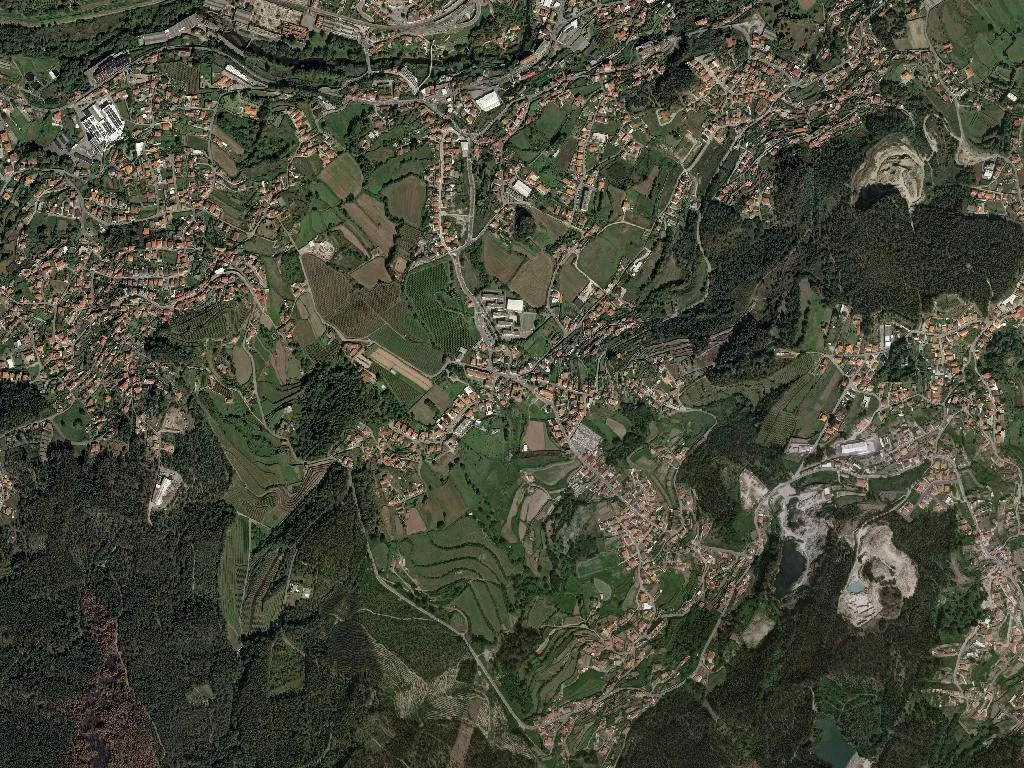
The bell of São Tomé strikes at eleven-thirty – a time nobody ordered, yet everyone recognises as the border between morning and lunch. Its bronze note rolls down the slope, bounces off Sr Armando’s granite wall and lands outside the café where the owner has just balanced a custard tart on the saucer. Negrelos (São Tomé) is neither village nor town; it is a scatter of hamlets – Carvalhinho, Cortinhol, Outeiro, Eiras – that the postcode decided to treat as one. The atlas gives 156 m of altitude, 3,755 souls and a density that looks alarming on paper. In reality there are more vines than people.
Waystation and home
The Central Portuguese route of the Caminho de Santiago cuts straight through, but pilgrims march head-down, counting kilometres and tapping phones at the spring without reading the street sign. Locals prefer it: the rhythm set when Tio Aníbal bought the first tractor in 1963 remains intact – Sunday mass, the Assumption fair with €3 sardines, and, if the year is kind, a firework display that sends every dog into August hysteria.
The national monument – Igreja de São Tomé – sits on the bakery corner: clean granite, baroque bones, steps my grandmother climbed with her head covered. Google labels it a “religious POI”; for us it is the ledger of baptisms and the waiting room for funerals, same pew, different decade.
Vines, smoke and continuity
Between the Lima and the Douro there is a scrap of Minho green that atlases never explain: it is here. The vineyards refuse to pose for postcards; they wedge themselves between Sr Albano’s vegetable plot and Dona Guida’s peach trees. The wine comes slightly spritzy, sharp enough to scour your molars, and is drunk from a short glass – ask for a stemmed goblet and you might as well wear a day-glow rucksack. The best grapes roll downhill to the cooperative in Vila Meã; the surplus waits in last year’s stone press because Zé Costa hasn’t dismantled it yet – “the grandson might want a look”.
Statistics insist one in three residents is over sixty-five. Translate that into seating: the parish garden offers two-and-a-half benches where conversation toggles between blood-sugar levels and last night’s referee. Newcomers arrive knowing they must bring their own chair. Children are scarce, just enough to keep the primary school open until Year 4; after that the bus swallows them to Santo Tirso and they return only at weekends, already fluent in diesel prices.
An unhurried circuit
To walk Negrelos is to coast down the M530, the car seesawing over speed cushions the council installed as a reminder that velocity belongs to the IP network. Old houses wear granite like a second skin; newer ones dress in colours nobody ordered, yet the parish paint van appears on Sundays when the budget holds. Scents layer the air: seven-o’clock wood smoke, midday manure when the vegetable beds are “fertilised”, overripe fig when the fruit drops and no one can be bothered to jam it.
There is no Visit Portugal stand, no gift shop, no selfie plaque. There is Basílio’s café, opening at six-thirty, the butcher who slaughters his pig on Friday if the weather is cool, and the cash machine that caps withdrawals at twenty euros because the paper roll is small. Want monuments? Try Braga. Want to see how time loosens its grip? Stay for dinner – Sr Faustino will show you the moon from the churchyard and swear it is the same Romans watched when they paved this ridge and called it a road.
When the nine-o’clock bell sounds, kitchen lights dim and television screens bloom bluish. Gates latch, cats keep the street, and the place sleeps. Negrelos does not court visitors, but should you arrive wear proper soles: the gradients are unforgiving and the silence, that costs nothing, will follow you home.