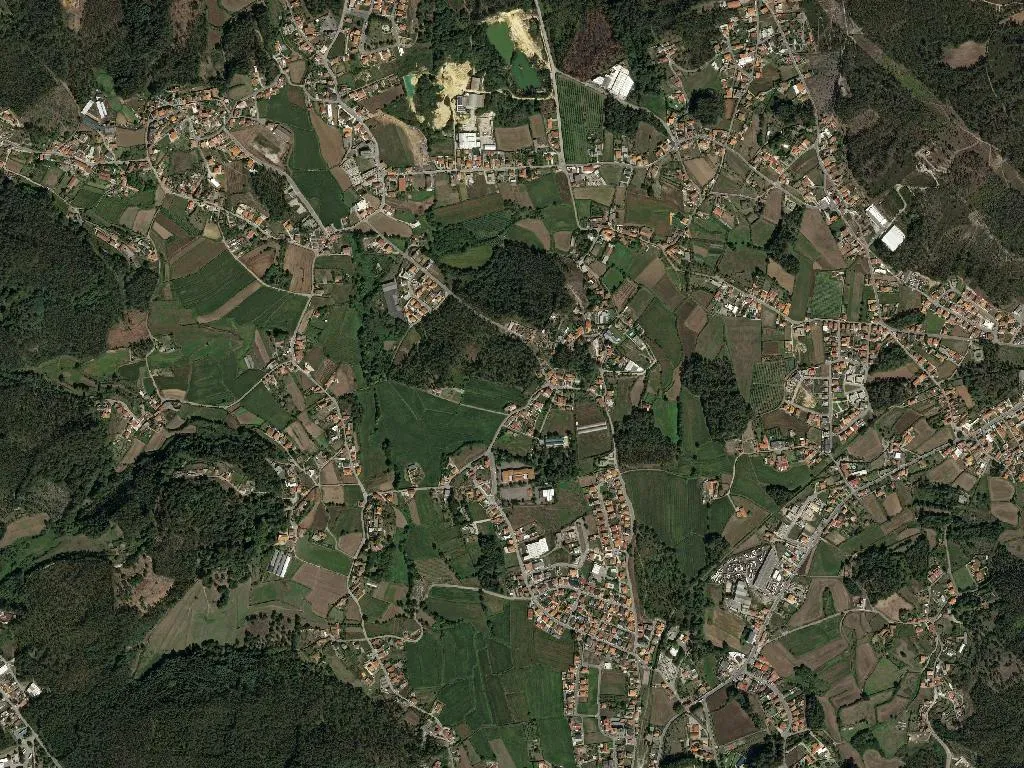
Full article about Alvarelhos: Footsteps Echo Across 2,000-Year-Old Castro
Bronze-Age ramparts, swaying 1894 bridge & almond blossom scent in Trofa’s hidden village
Hide article Read full article
The sound of your own footfall
Pebbles from the Ave, white as broken teeth, click beneath your shoes long before you reach the brow of the hill. Then the castro lifts into view – a two-thousand-year-old rampart of unmortared stone that has outlived Bronze-Age warriors, Roman road-surveyors, and the neighbour who was still herding goats up here six years ago. By nine o’clock the granite is already hot enough to make your jaw ache; the wind carries the river’s cool breath through a corridor of black poplars that hide the water like a coin under a runner.
Two millennia in the Ave valley
Alvarelhos first appears in 979, entered in the monastery ledger at Moreira as alvarelios – the open field where sightlines run clean to the ridge. The hillfort has been a National Monument since 1910, yet locals still call it “the place we pick almond blossom for 25 April”. Excavations have turned up milestones, coins, roof-tile scorched by fires not recorded in any chronicle; on Google Earth you can still trace the imperial road that once climbed the valley. Celts, Romans, Suevi, grandparents: layer upon layer like jumpers in a chest of drawers, none of them ever quite put away.
Below the summit the parish church of Nossa Senhora da Expectação was rebuilt in 1880 after lightning split the tower. Its whitewashed façade mirrors the surrounding maize plots; three eighteenth-century stone crosses serve as picnic milestones – when you reach the crooked cruzeiro you know the café is ten minutes on foot.
Iron over water
The suspension bridge opened in 1894 and still sways like basket-work when you cross. Steel cables, timber planks, the milky Ave sliding underneath: it replaced the ferry where your grandfather earned a tostão hauling the rope. Pause halfway and the deck trembles – the structure announcing it is still alive. Just upstream, willows bend over a former river-beach where families once spread towels on the sand; the water-mills are smothered in brambles, but spin the wheel and you’ll hear the same iron teeth grind.
Tastes of the lowlands
Ninety-seven metres above sea level means one thing here: vines, maize, and broa that sits in the hand like a house brick. Vinho Verde from the Ave valley – sharp white that stings the tongue like lemon sherbet. On the third Sunday of September the feast of Nossa Senhora das Dores stripes the air with wood-smoke. Wood-oven veal, kid that disappears faster than a Benfica away ticket, sarrabulho rice that clings to the plate. The broa is the colour of terracotta; homemade sponge-cake collapses like a toddler at nap-time. At magusto the new wine burns the throat and chestnuts pop like chewing-gum in the fire.
Where the Roman road still rings
The local Camino follows the same flagstones the legions used, now way-marked in yellow and rewarded with a pork bifana at the end. During the vendange the threshing floor fills with baskets of Loureiro, Arinto and Trajadura; the sweet grape perfume lingers on your clothes like an ex-lover’s scent. The procession of Nossa Senhora das Dores drifts down the lane, the statue buried in dahlias, followed by a fair that frightens the valley silence: brass band, accordion, fireworks that send the dairy cows skittering in their stalls.
At dusk, when the granite glows and the Ave turns the colour of peach juice, what remains is what has always remained: the church bell tolling six, the river whispering, the distant creak of the bridge. Everything else is thick, uncomplaining quiet – earth holding its own without asking for applause.