Full article about Bougado: Roman Milestones & Rococo Surprises in Trofa
União das freguesias de Bougado hides Roman ruts, Nasoni cherubs and river-cooled granite just north of Porto—perfect day-trip.
Hide article Read full article
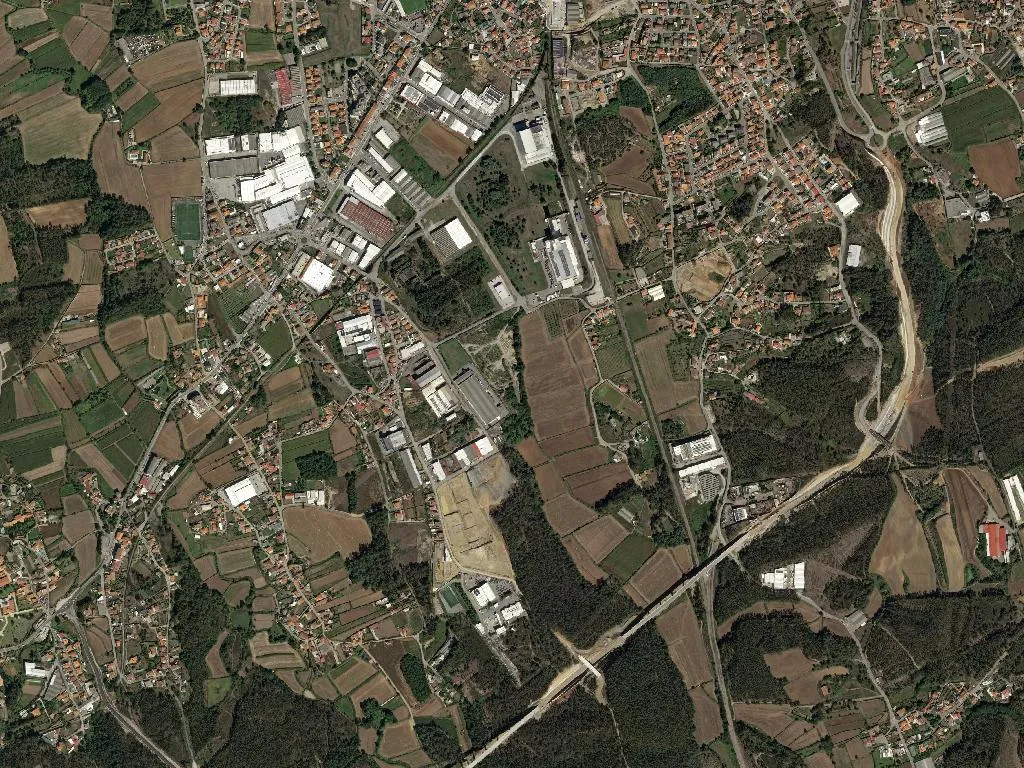
The river speaks first. Before you see the valley you hear the Trofa sliding between moss-slick stones, a low hush under the alder canopy that makes the morning air feel heavier than the 49 m altitude would suggest. Stand still and the parish unscrolls slowly: the metallic tang of turned soil drifting up from market gardens, a 19th-century mill chimney scratching a line across the Minho sky, the faint iodine note of granite cooling after night rain. Bougado does not announce itself; it leaks into consciousness, layer by layer.
The road Constantine knew
In the local culture centre a knee-high block of granite re-calibrates the whole place. The milestone — National Monument, still bearing the name of Emperor Constantine — was levered from the bed of the old Via XVI, the Roman highway that once marched from Braga to Portus Cale. Its discovery beside the modern N14 is no accident: the northbound lane of the Portuguese Coastal Camino still rides the same low watershed, and today’s hikers tread the same gravel that once met Roman sandals. Walk 300 paces east of the milestone and you can finger the ruts the carts left; the earth remembers even when the guidebooks forget.
Rococo that slipped downstream
Few expect baroque theatre in a potato parish, yet the parish church of Santiago throws open its door and floods the nave with gilt. The carving is attributed to Nicolau Nasoni — the Tuscan architect who gave Porto its Clerigos Tower — and was paid for by 18th-century flax money when the Vale de Bougado was one of the region’s bread-baskets. Farmers who spent their days ankle-deep in alluvium came here to watch candlelight riot across twisted columns and cherub wings. The façade is plain granite, so the first-time visitor still gets the same intake of breath.
Across the fields, the older sibling, São Martinho, was already listed in the 1258 inquiries of Afonso III as a dependency of Santo Tirso Abbey. Re-dressed in the 1700s, it keeps its Romanesque bones: narrow slit windows, a bell-cote whose stones are welded by lichen. Between the two churches a constellation of granite crosses — Carvalhinhos, São Martinho — marks crossroads where evening light strikes sparks from quartz veins.
The chimney and the flax
Where the valley narrows, a 28-metre cylinder rises like a exclamation point: the 1903 steam chimney of the Trofa Linen Mill, now a listed municipal landmark. When the plant was humming, local smallholders brought their retted flax down the river in flat-bottomed boats to be beaten, scutched and spun. The chimney has been silent since 1975, but look hard and you can still read “Fábrica de Linhas” in faded white paint, and on humid days the wall gives off the ghost of boiled stalks.
Mills off the map
The Trofa water trail is the parish at body-level. Follow it south from the stone weir and you reach the Sena mill, its overshot wheel intact but petrified, the race choked with pennywort. Kingfishers stitch the reflection of eucalyptus plantations; in late summer the air smells of hot pine and fermenting apples. The path is only 5 km but it shrinks the world to the sound of your own footfall and the river’s metronome.
At the end, hunger points you to the village taberna. Order rojões — pork collar flash-fried then braised in cumin-laced wine — and a bowl of papas de sarrabulho, the blood-enriched cornmeal that separates Minho from the rest of the country. Finish with bilhares, brittle pastry cigars of egg yolk and sugar, and a glass of Loureiro Vinho Verde sharp enough to make your molars sing. Everything on the plate except the salt has a postcode starting 4785.
Twenty-one thousand souls, one parish
Bougado’s 21,000 inhabitants give it a density that hums rather than throbs. Smallholdings survive between 1980s apartment blocks, and the Saturday market still weighs produce on cast-iron scales older than the republic. Mid-September belongs to Nossa Senhora das Dores: processions, brass bands, and a fairground that smells of diesel and cinnamon. On 11 November the new-wine fireworks of São Martinho send sparks over the old flax-drying fields, while Santiago’s late-July pilgrimage keeps alive the memory of two parishes forced into marriage by the 2013 administrative reforms. Walk the estates of Mosteirô or Real at dusk and you will see vernacular granite cottages with wooden balconies draped in ivy — the slow negotiation between past and present made visible.
Morning fog lifts off the Trofa like a silk sheet. Where the Carvalhinhos cross stands sentinel, a dew-drop loosens from the granite cross and falls, soundless, into lichen. Bougado offers no postcard moment; it releases itself drop by patient drop to anyone prepared to stand still long enough to listen to stone.