Full article about Alfena: Tin Toys, River Mist & 7-Arched Echoes
Porto’s toy-making valley where the Leça glides past Roman bridges and clattering tin-dove workshops
Hide article Read full article
Tin, River and Time
The first thing you hear is a metallic heartbeat: tap-tap-tap, light, precise, echoing from a workshop that smells of wet paint and iron filings. In Alfena the sound has been repeating itself since 1921, when 19-year-old José Augusto Júnior began hand-cutting Flemish tin on a kitchen table and unwittingly founded Portugal’s largest tin-toy industry. Between 1940 and 1970 sixty per cent of every metal tricycle, wind-up dove and miniature Singer sewing machine sold in the country came out of this valley. Bruplast still keeps the dies oiled; every Saturday the new Oficina do Brinquedo invites visitors to stencil their own red-winged dove and leave it drying on the river wall while the Leça slides past below.
A name no one else has
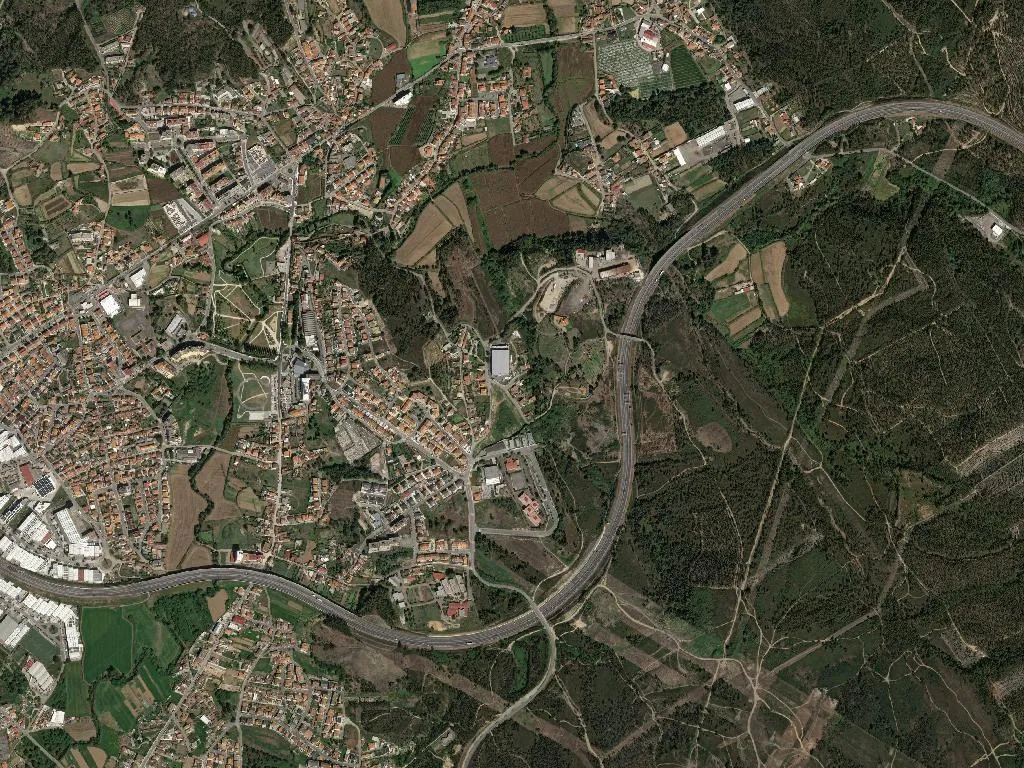
Alfena is the only parish in Portugal that answers to the word. Linguists split its origin in two: either from the Arabic al-henna, the Lawsonia shrub whose crushed leaves once dyed hair and textiles here, or from alfella, a field of combat, hinting at a forgotten medieval skirmish. Until 30 June 1989 the place was simply the ecclesiastical parish of São Vicente de Queimadela; elevation to vila required a signature from Armando Gonçalves Merêncio, then president of the parish council. The settlement sits 116 m above sea-level, twelve kilometres north-east of Porto, in a long trough where the Leça enters at sunrise and leaves at dusk, hauling willow scent and winter fog behind it like wet cotton wool.
Granite that remembers
Stop on the single-lane span of Ponte de São Lázaro. Classified in 1982, the bridge carries a pavement of Roman blocks re-laid in the fifteenth century—stone on stone, empire on empire. The adjoining chapel, built 1623, keeps its walls lime-white and July-cool, the air inside tasting of beeswax and centuries-old incense. Five minutes downstream, Ponte dos Sete Arcos throws a perfect seven-eyed reflection on the water, too deliberate to be merely functional. Capela de São Roque, on the southern approach, doubles as a way-stone on the Portuguese Central Route of the Camino, anchoring Alfena in a pilgrim grid that stretches across the Entre-Douro-e-Minho.
The parish church, inaugurated 23 August 1964, replaced successive medieval structures eroded by Atlantic storms. Ask the sacristan for the key and climb the bell-tower: the view tilts 360 degrees across granite roofs, smallholdings and the quartzite ridge of the Serra de Valongo. Descend to the Ethnographic Museum—housed in the post-war social centre rebuilt under Father António da Silva Pereira—and you’ll find ox-yokes, threshing boards and processional banners arranged with the uncurated tenderness of someone emptying a grandmother’s trunk.
Blood pudding, bonfires and a river procession
Local tables start with rojões—cubes of marinated pork shoulder—served in a clay bowl that scorches your fingers. Beside them arrives papas de sarrabulho, a thick, mahogany porridge scented with cumin and thickened with pig’s blood; nothing of the animal is wasted. Rice is cooked in the same broth, kid goat roasts in a wood-fired oven until the skin crackles, and caldo verde carries a faint smoke from the Leça’s reed beds. Finish with Alfena’s sponge cake—moist-centred, golden-crusted—and almond suspiros sold at the monthly fair on the first Sunday.
June belongs to Santa Rita: a fluvial procession escorts the statue downstream while riverside bonfires spit fat from grilling sausages and the São Vicente brass band, founded 1958, strikes up “A Alfenense”. In July Nossa Senhora do Amparo blesses the fields and fills the streets with a three-day agricultural fair. The Sunday after 22 January is São Vicente’s turn—procession, sung mass and a parish dance that needs no tourist audience to justify itself. The local folk group keeps the Entre-Douro-e-Minho songbook alive; you feel the wooden-soled tamancos strike the floor in your chest before the sound reaches your ears.
Eight kilometres at water level
The Leça Greenway runs eight flat kilometres from Alfena to Ermesinde, part of the wider “Rio Leça+Verde” project. Cyclists share the path with grey herons lifting at eye-level and blackbirds trading phrases across the hawthorns; if you’re lucky a kingfisher arrows past in a flash of electric blue. The cycle track continues to Água Longa—twelve kilometres out and back—ending at São Lázaro’s riverside park where the dominant soundtrack is water rolling over granite pebbles. North of the village smallholdings persist: citrus trained on trellises, vines draped on high wires, maize plots that have followed the same July-to-October rhythm since the sixteenth century.
Alfena numbers 14,438 inhabitants, nearly 3,000 of them over 65; the 2021 census recorded a 5.1 per cent population loss, the steepest in Valongo. Yet on any given Saturday you will still find someone in the old Bruplast atelier cutting a tin silhouette, spraying it scarlet and setting it on the wall to dry. When the paint sets, the dove weighs no more than a handful of river air. That is Alfena’s exact mass: a palm-sized toy carrying inside it the entire metallic pulse of a village that refuses to stop humming.