Full article about Campo, Valongo: slate roofs echo to grape-stomping drums
Campo, Valongo keeps 19th-century slate quarries, riverside foot-trod granite lagars and fizzing Vinho Verde inside Porto's green north.
Hide article Read full article
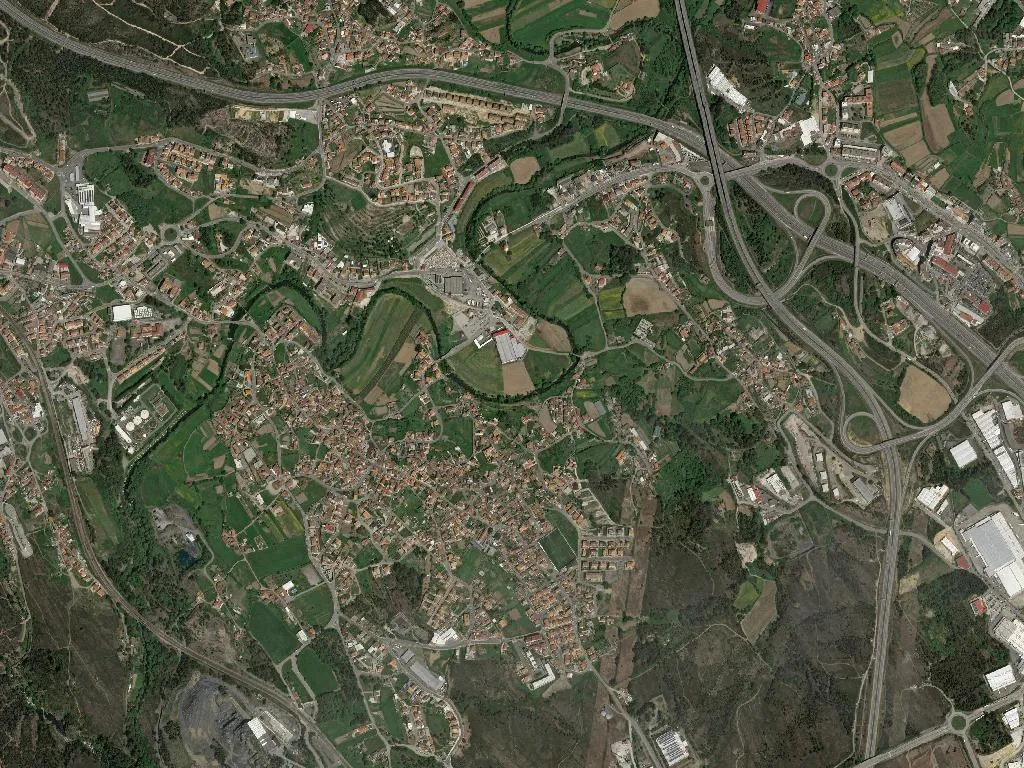
The first thing you hear at dawn in Campo is not a bell but water. The Ferreira river slides westward between polished granite banks, its hush mixing with the low rustle of white poplars that edge the maize plots. Night moisture still hangs in the air; the smell of damp soil drifts up from chestnut groves that quilt the lower slopes. Oblique light stretches long shadows over roofs of charcoal-grey slate – the same slate that was prised from these quarries in the 1850s to sheath Porto's Crystal Palace. Walk further and the Latin root of the place-name becomes obvious: campus, a working field. Twenty-eight per cent of the resident population still earn their living from the land, a proportion triple the national average.
Granite troughs where grapes are still trodden
The parish church, São João Baptista, stands in the village centre with the unflinching modesty of something that has watched three centuries pass. Built in the 1700s and tweaked the following century, it offers a plain pediment and a single bell whose bronze voice marks both the hour and the procession season. Yet the real liturgy happens behind houses and down lanes, where granite wine-lagars – hulking, ink-dark troughs – remain in weekly use. Each September a handful of locals still foot-tread bunches of Loureiro grapes; the juice glugs into stone vats with the same throaty gurgle heard two centuries ago. In family cellars such as Quinta do Vale do Ferreira the resulting vinho verde is sharp, cool and faintly mineral, the grape's signature chill preserved in every glass. Campo also falls inside the Vinhos Verdes demarcation, so the same smallholdings produce bottle-fermented sparkling wine – a quiet, apple-scented surprise that tastes best with a slab of wine-smoked chouriço hacked off the loop and eaten while the communal bread oven in Sobrado is still radiating resinous heat.
When Christians and Moors dance on the same street
At dusk on 23 June the lanes of Sobrado become an open-air stage for the Bugiada e Mouriscada – Portugal's only surviving street performance of its kind, licensed as municipal heritage since 2017. 'Bugios' in harlequin yellow and 'Mouriscos' in crimson pantaloons advance to the thud of bass drums and the wheeze of a single gaita, replaying a stylised eighteenth-century clash between Christians and Moors. The ground vibrates; gunpowder drifts in blue ribbons; sardines char on makeshift grills. The energy is almost viscous – you feel it on your skin before your eyes work out what is happening.
Campo, however, does not live from a single night. On the first Sunday of May the Romaria de Santa Rita pulls thousands of pilgrims up the hill to a nineteenth-century chapel where roses are blessed and slices of Campo's own sponge are handed round – airy, moist, smelling of burnt sugar and egg yolk. Legend says the stone rose carved on a tomb inside the chapel "opens" when a marriage proposal is made on that day. In August the Romaria da Senhora do Amparo adds an outdoor mass, bonfires and the "field supper" – grilled sardine, kale soup and vinho verde served at long tables while the sun slips behind the valley. November belongs to the Chestnut Cycle: community magustos, nuns' convent sweets, and the scent of roasting chestnuts mixing with fog rolling off the Serra de Valongo.
Under the broom, my girls are sleeping
The PR6 "Miners' Trail" uncoils for eight kilometres between Campo, Sobrado and Jancido, threading former slate quarries that once employed half the parish. The galleries are silent now, but walls of damp schist still glisten and discarded blocks lie stacked like pages from a geology primer. Allow two and a half hours for the steady circuit: you will pass restored water-mills, weirs and fishing weirs along the Ferreira, then climb to the Serra de Valongo viewpoint where the valley spreads into a patchwork of vines, pear orchards and native oak. The entire municipality lies within the Natura 2000 network for its gallery-forest habitat; roe deer, wild boar and kingfishers are routine sightings. In summer the trail ends at the Lagoas river-beach where the old Poço das Lagoas – once the parish's only source of drinking water – keeps a year-round temperature of 14 °C. Locals treat the first plunge as an informal baptism: no fuss, just a sharp intake of breath and a laugh.
A table that follows the season
Campo's kitchen obeys the calendar. Between October and March chestnut soup with smoked belly-pork warms the evenings; on pilgrimage days the sarrabulho rice – dark, glossy, thickened with pork blood – appears in heavy terracotta bowls. Bacalhau à moda de Campo is baked in a wood-fired oven with potatoes, onion and a splash of the same white wine that moistens the clay floor beneath the embers. Rojão à minhota, a casserole of spare rib, paprika and pig's blood, is field-workers' food – dense, direct, ungarnished. Buy salpicão and rice-black pudding straight from the producer, and finish with fatias de Campo, a rolled egg-yolk sweet so shy of its own sugar it tastes almost apologetic. At O Campense restaurant the sponge arrives at the table still trembling, lifted from the oven seconds earlier.
What lingers
By late afternoon, sitting on the granite outcrop above the Ferreira valley, the sound that stays with you is not water or wind but the phantom echo of the Bugiada drums – a muffled, subterranean thud, as though the very slate beneath your boots continues to vibrate with every Saint John's Eve it has ever known. That is the pulse of this parish of 7,638 souls: invisible, but unmistakable underfoot.