Full article about Fajozes
Waterwheels beat 19th-century time between Roman ditches and cobalt-tiled chapels
Hide article Read full article
The thud of maize on stone
At Moinho do Pego the maize hits the granite runner stone with the hollow thud of a muffled drum. It isn’t music, yet on feast days the beat arrives half a bar late, like a congregation clapping on the off-beat. Below, the wooden waterwheel keeps nineteenth-century time: one revolution for every sack of grain, long before minutes were measured in Instagram likes.
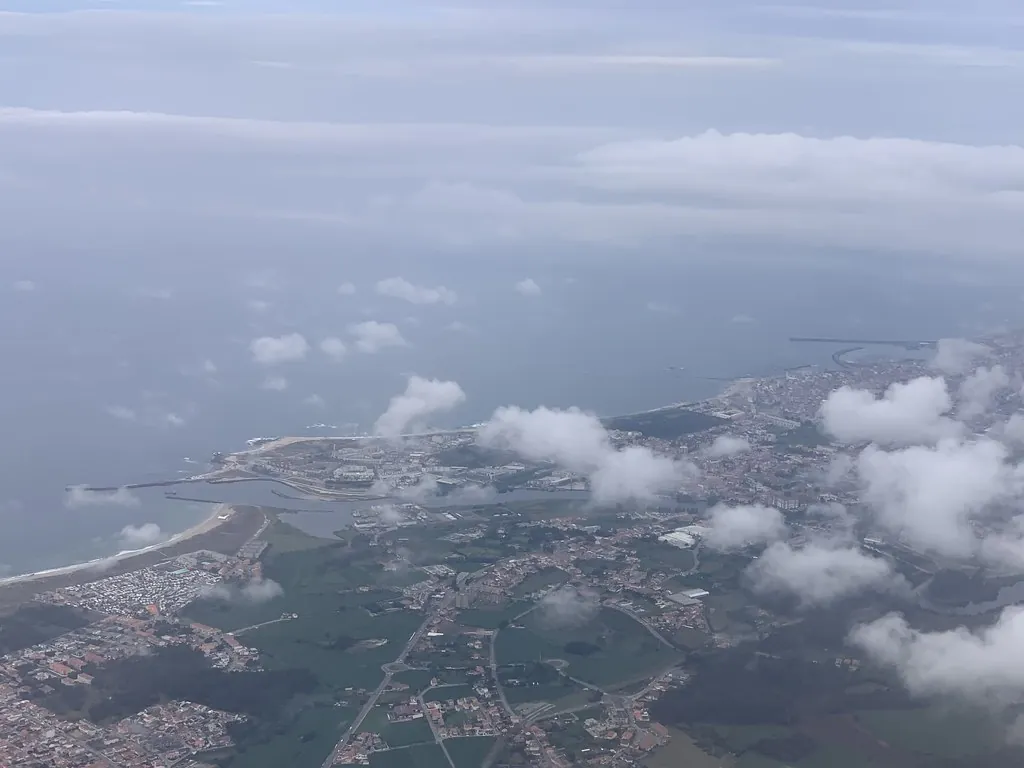
Fajozes—population 1,637, altitude 39 m—lies between the Ave and Mau rivers on a flood-plain the Romans would have recognised. Allotments of white cabbage, dwarf beans and yellow maize alternate with irrigation ditches so straight they might have been laid out by a surveyor from the XIV Legion. The name comes from the Latin fagus, beech; the trees have gone, but the syllable survived the Reconquista, the 1755 earthquake and the arrival of fibre-optic cable.
Stone, carving and azulejo
The parish church squats in the geometric centre of the village, Manueline lace pressed up against baroque muscle. Inside, the gilded retable glints like bullion in a Bond-street window, while 1690s blue-and-white tiles give the illiterate a comic-strip Bible: Jonah spat out by a whale the colour of Wedgwood, Daniel amid lions that look remarkably like the ones on the Braganza crest. Stand at the altar rails and you can read the Counter-Reformation in cobalt.
Upstream, the chapel of Nossa Senhora da Guia was the original coastal lighthouse. On foggy nights the parish priest lit oak-branch bonfires in the forecourt; fishermen on the sandbar at the mouth of the Ave saw the glow and corrected their bearings. The medieval pack-horse bridge over the Mau still changes timbre according to your gait—hoof-beat, bicycle tyre, stiletto panic—because the parapets are only one stone wide and vertigo is part of the design.
Pilgrims, mills and kingfishers
The coastal Camino cuts straight through the parish for four kilometres, yellow arrows painted on electricity boxes. Cyclists prefer the Ecopista do Ave, an eight-kilometre rail-trail that unspools to the Atlantic like a black ribbon. For walkers there’s the circular Trilho dos Moinhos: six easy kilometres that take in Moinho do Pego and the Mau bird hide. Grey herons stand motionless in the reeds; kingfishers flare turquoise above the water; the local octogenarian who can identify every warbler by call holds court on the bench, dispensing knowledge and home-distilled medronho in equal measure.
At dusk climb the chapel lane. The sun slips behind the coastal dunes and the alluvium turns the colour of melted butter—an edible light that makes even cabbage look desirable.
Irrigation and smoke
What the market garden gives, the smokehouse preserves. Caldo verde arrives emerald and steaming, garnished with a chouriço so thin it could have been sliced by a scalpel. Rojões—pork shoulder seared then braised in white wine and bay—cancel January detoxes without negotiation. The blood-rice known as sarrabulho is dark enough to make a vampire blink; the house-cured ham spends forty days under chestnut-wood smoke, emerging lacquered like antique mahogany.
Dessert is a local dialect: pão-de-ló as airy as a Jane Austen sigh; São João cake stuffed with ovos moles that ooze like custard lava. Almond suspiros and Vairão milk-cheesecakes are smuggled home in handbag handkerchiefs, never reaching the motorway.
Wine comes from the Cávado sub-region—light, spritzy Loureiro or a pale rosé from Quinta do Grinaldo, whose granite press was last mended in 1932. On feast mornings the miller’s wife brings still-warm broa to the square: corn-bread with a crust thick enough to tap and a crumb that tastes faintly of river water and smoke.
Calendar of devotion
Fajozes keeps time by the breviary and the harvest. Nossa Senhora da Guia (first September weekend) begins with a procession and ends at the fun-fair where cousins who emigrated to Lyon in 1997 pretend they never left. São João (23–24 June) turns the lanes into a Catherine-wheel of basil plants, bonfires and dancing till the azulejos rattle. Senhor dos Navegantes (first August Sunday) recalls when the river was the A28 and every family kept a boat moored to the hawthorn.
In even-numbered years the Festa do Milho re-enacts the grinding cycle—children tip golden cobs into the hopper while their grandparents explain how engenho once meant both machine and wit. At Easter the village godmothers swap folar cakes like state secrets, confident the recipe will return next spring, unchanged as the tide.
When the water is diverted and the wheel stops, the smell of fresh flour hangs in the air—earthy, faintly sweet, attaching itself to clothes and memory without permission. It is the scent Fajozes keeps when no one is watching: grain become bread, gesture become ritual, time persuaded to slow if you know how to ask.