Full article about Junqueira: Where Harvesters Wake Benedictine Ghosts
Explore Junqueira’s 11-km PR5 loop, 5,000-year-old Folão mamoas, free Sunday art in cloister ruins & €15 pilgrim bunk.
Hide article Read full article
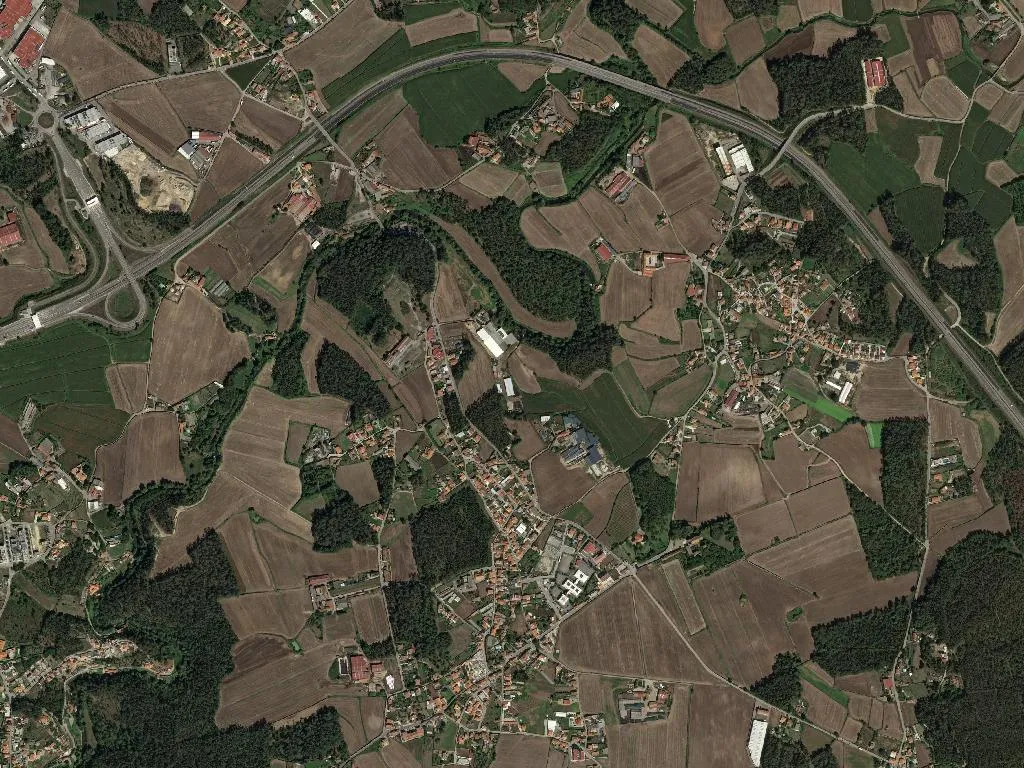
The first sound of the day is the mechanical cough of a combine harvester at seven sharp. Junqueira, a scatter of granite houses set 34 metres above sea level between the Ave and Este rivers, measures its mornings by that engine note. Fewer than 2,000 people live here, and even fewer remember that the parish owes its name to the rushes—juncos—still rooted in the water meadows below the village.
What remains of the monastery
All that is left of the Benedictine Mosteiro de São Simão is a three-arched wall and the discreet plaque “Property of Public Interest”. Founded in 1084, suppressed in 1770, the site now hosts the Casa do Claustro, a pocket-sized gallery for rotating art shows (Sunday mornings only, no charge). Adjacent, the chapel of Nossa Senhora das Graças keeps its 11 o’clock Mass; inside, 17th-century gilded carving frames 18th-century azulejos restored in 2019.
Half a kilometre north of the N205, a dirt track leads to the Folão mamoas, three Neolithic burial mounds raised 5,000 years ago and excavated by archaeologist Martins Sarmento in 1880. Interpretation boards explain the ritual, but the picnic tables under the pines feel more recent—and more alive.
Where to walk
The PR5-VCD loop starts at the monastery gate, threads 11 km through eucalyptus and smallholdings, and takes roughly three-and-a-half hours if you resist counting yellow-and-red blazes. Detours include the Romanesque chapel of São Bento de Vairão—unlocked only in August—and three fords over the Francelos stream. The high point is Monte do Pilar, an Atlantic-facing bluff where gorse perfume competes with salt air. Bring water; there is no café en route.
Yellow scallop shells confirm you are on the central Coastal Caminho, the Portuguese pilgrimage detour to Santiago. The village’s sole private albergue opens from April to October (ten bunks, €15).
Where to eat
“O Moinho” sits on the lane to Vairão and doubles as the social heart of the parish. Wednesdays and Fridays mean rojões à minhota—cumin-scented pork belly—served with papas de sarrabulho, a blood-rich cornmeal stew that divides the table. The house wine is Quinta da Lixa’s crisp vinho verde; ask for the white at €4 a bottle. Dawn caffeine is dispensed at “Pão Quente” beside the bus stop: milky galão arrives in chunky clay mugs from six o’clock.
When the village parties
- 15 August: Nossa Senhora da Guia. A 4 pm procession circles the churchyard before charcoal-grilled sardines are handed out under the plane trees.
- 24 June: São João. Midnight fireworks arc over the cornfields; unlike Porto's riverside, there is no all-night street dance, only the scent of gunpowder on cut grass.
- Second Sunday in September: Senhor dos Navegantes. An open-air Mass on Monte do Pilar precedes a communal roast-lamb lunch; reserve plates at the parish council office.
The council meets in an unmarked granite house, open 9 am–noon on weekdays; here you can pick up walking leaflets and add your name to the feast-day head-count.
Arrival
AV Minho bus 33 departs for Vila do Conde at 7:15 am, 12:30 pm and 5:45 pm (journey time 20 min), where the metro whisks you into central Porto in another 35.