Full article about Malta, Vila do Conde: maize scent & pilgrim footfalls
Fields of vines and maizelands watch over the Camino above Vila do Conde’s Atlantic edge
Hide article Read full article
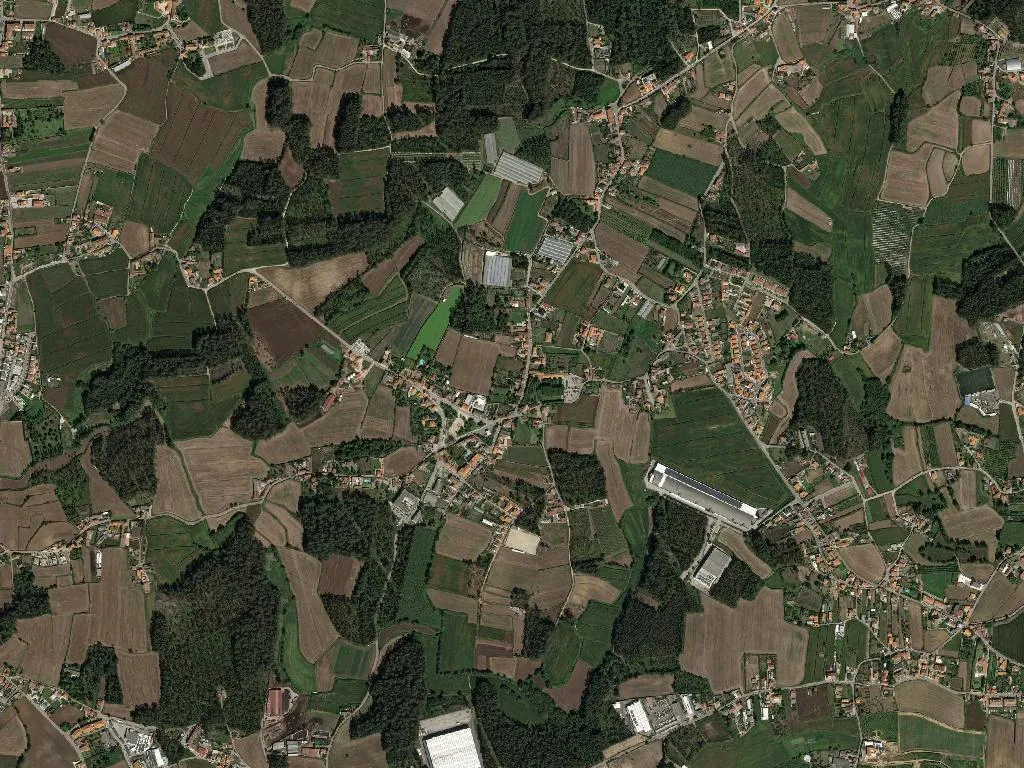
The lane climbs gently between bottle-green fields and pockets of umbrella pine, Atlantic air softening every breath. At 68 metres above sea level, Malta is the hinge between Vila do Conde’s Atlantic front and the market gardens of the Ave valley: low granite walls plot smallholdings that still hold out against commuter pressure. Houses stand far enough apart for vegetable plots and pear trees, for dawn silence to be broken only by a neighbour’s cockerel.
On the pilgrims’ trace
The Coastal Camino slices through the parish like an old vein, funnelling walkers north to Santiago. There is no grand albergue or selfie-board, just a hand-painted yellow arrow on stone that nudges ramblers along lanes where tarmac occasionally surrenders to uneven granite setts. Footsteps sound different with the season: brisk and dry in July, muffled by February drizzle. Locals no longer turn at the sight of a backpack; they answer “twenty-five kilometres to the Spanish border” in the same flat tone they use for the price of courgettes.
The entire parish lies within the North Coast Natural Park, yet drama is in short supply. This is farmland first, nature second: maize for the cattle, low-slung vines of the Vinho Verde demarcation (the disappearing “enforcado” pergola system), eucalyptus that shoots up faster than regulations can curb. Protection here means containment – a check on concrete, a hedge left uncut so genets can slip between coast and interior at night.
A calendar of bells
Feast days still organise life. On 15 August the procession of Nossa Senhora da Guia – Our Lady of the Safe Passage – circles the main streets before an open-air mass in the churchyard. For three nights the square becomes an arrarial: sweet-roasted chestnuts from the Conceição bakery, plastic cups of sharp white wine from the couple who keep 200 vines behind the cemetery.
21 March belongs to São Bento de Vairão, a name that recalls a long-vanished Benedictine monastery whose estates once stretched across these fields. No ruins remain, yet the liturgical entry persists, inked into parish diaries and into the memories of octogenarians who can still picture hooded monks riding in from Vairão to collect tithes of grain.
Between generations
155 children under fourteen live within two square kilometres – a figure that confounds the national narrative of rural greying. They attend Malta’s primary school, then bus into Vila do Conde for senior years, returning each afternoon to gardens large enough for football, for scrambling up 200-year-old fig trees that shade the village cross.
At dusk, when low light gilds the terracotta and the wind carries the smell of newly-turned earth, Malta shows its bargain: tradition weighed against the pull of a city whose lights are visible from the bell tower. The single church bell rings without competition, marking time for a parish that measures distance not in kilometres but in continuity.