Full article about Retorta: pine hush, river light, salt memory
Where Vinho Verde vines meet pilgrim boots and Ave’s tidal gleam
Hide article Read full article
The hush of pine needles
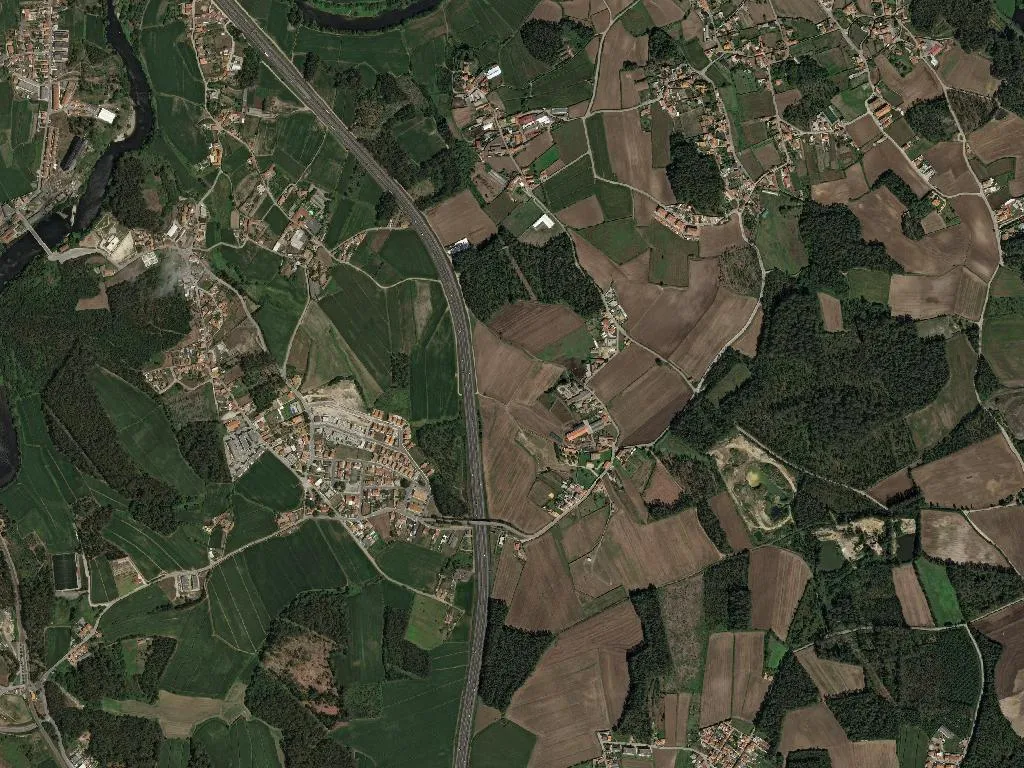
A low sough of pine is Retorta’s permanent soundtrack. Atlantic air travels the eight kilometres from the coast, threads through the canopy and settles over 320 hectares of iron-red fields squeezed between the forest and the River Ave. From the ridge you look south across vineyards that qualify for the Vinho Verde demarcation yet are rarely mentioned on labels; north towards the dunefields protected by the Parque Natural do Litoral Norte. Green is not a slogan here—it is the measurable colour of low-trained vines, loam footpaths and freshwater marshes.
Footsteps, footpaths, faith
Each season 3,000-odd pilgrims on the coastal branch of the Caminho de Santiago cut across the parish. They arrive with tidal regularity, rucksacks salted by the same breeze that dries laundry in the lanes. Retorta greets them with one modest albergue, a single café that opens when the owner hears boots on the cobbles, and the Igreja de Nossa Senhora da Guia. Inside, limewashed walls and a single stained-glass roundel filter the glare to a stillness that feels older than the 1760 rebuilding. People pause automatically; even atheists lower their voices.
Saints, sardines and salt memory
Between June and September the calendar is a relay of festas. São João on the night of 23 June sends the smell of grilled sardines drifting through open windows; Nossa Senhora da Guia’s procession on the last Sunday of August carries the 17th-century statue through maize-stubble fields; São Bento de Vairão extends summer with makeshift taverns under plane trees. The emotional summit is the Festa do Senhor dos Navegantes in early September. Retorta has no shoreline, yet every household once supplied crew for the cod fleets of Newfoundland; the liturgy still ends with a crown of flowers carried to the river and launched toward the sea.
Glasses of acidity, plates of Atlantic time
No product carries the village name on a label, yet the kitchen is eloquent. Caldeirada arrives at table still trembling—monkfish, spider crab and potato in saffron liquor ladled over yesterday’s broa, the dense yellow maize bread that coastal Minho refuses to do without. The wine poured into chunky clay bowls is Loureiro or Arinto drawn from the same quintas you walked past an hour earlier; its razor-edge of acidity is designed for the iodine sweetness of prawns that left Vila do Conde dock at dawn.
Trails that taste of resin and tide
The parish is laced with unsigned paths. One tracks the river past kingfisher perches and saltmarshes where Atlantic tides nudge freshwater upstream. Another tunnels through umbrella pines, needles muffling every footfall until you emerge onto open farmland the colour of terracotta. Add a tide timetable and you can loop south to the ocean at Azurara, finishing with a beer on the wooden deck at Surfivor Porto while Atlantic rollers erase your footprints.
Retorta yields itself reluctantly. Stay long enough to drink one glass, hear one pine bough rub against another, and the place starts to speak—in the metallic call of a cattle egret, in the aftertaste of resin that lingers on the tongue. You leave with red dust on your shoes and an unregistered wine staining the memory, souvenirs too modest for postcards yet impossible to shake off.