Full article about Tougues: where Atlantic wind folds into vine rows
In Vila do Conde’s forgotten parish, salt air, Touriga Nacional and 1,022 first-name neighbours
Hide article Read full article
The scent that isn’t quite sea
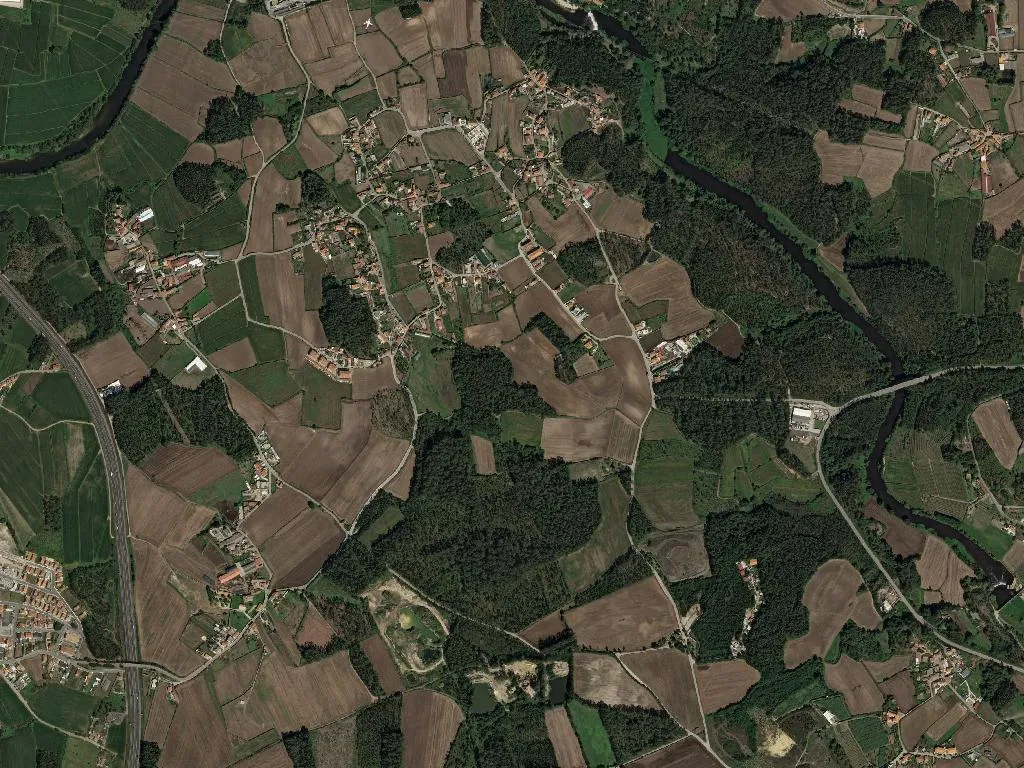
Atlantic air climbs the low ridge at Tougues carrying more than salt: it drags the iodine sting of sun-bleached wrack and the hesitation of gulls that can’t decide whether the next field is a beach. The parish isn’t village, isn’t ocean—just 334 hectares where the N13’s tarmac loosens into ochre tracks and the north wind rehearses origami on maritime pines. Spend a morning here and you’ll cover the map in footsteps; spend it talking to the man pruning Touriga Nacional or the woman thinning dwarf beans and the day quietly slips through your fingers.
Between passing through and staying put
What shelters Tougues is not a heritage label but the absence of urgency. All 1,022 residents are on first-name, second-name terms; 144 still queue for the school bus, 182 collect their pension at the bakery before seven, when Tia Alda’s wood oven releases the first loaves. Maize has almost vanished from the crop registers, yet a few kitchen drawers still hold grandma’s seed: tiny cobs once destined for Christmas-fattened pigs and winter broth. The Coastal Camino punches through, yet most pilgrims pause only to refill bottles at the Calvary street fountain and ask, “How far to Rates?” Those who remain know the blackbird starts at 5.15 a.m. even when the sky is leaking rain.
Calendar of small detonations
Our Lady of Guia, 15 August: mass at nine, procession whenever the priest decides the sun has dropped enough to spare the brass band. Before the statue moves, the sisterhood hands out slices of orange loaf and thimbles of crisp white that no one refuses. The philharmonic strikes up marches indistinguishable from 1970 recordings—same cornet, same bombardino, same Aguda boy now 45 with a mortgage. On St John’s Eve the lads hoist a rope up the church tower to launch a single hot-air balloon: diesel is dear, but three minutes of amber trembling overhead still feels like revolution.
Vine rows that refuse to be a tourist route
The vineyards don’t do tastings. They belong to farmers who inherited a hectare and still coax 600 bottles a year—mostly white, sold at the kitchen door for €3. Between 20 September and 5 October the scent of bruised grapes hangs like fog; families lunch under plastic-sheet arbours and grandchildren learn to tread skins barefoot. No shop, no ticket, no souvenir cork key-ring. Knock on Sr Joaquim’s gate: he appears in slippers, wipes the bottle on his T-shirt and throws in two backyard lemons for good measure.
Listening to water and to silence
The only listed monument is the granite cross at Encruzilhada, 1892, etched with typhoid victims no one can now name. Everything else is heard: the Friestas stream gargling beneath the old bridge, the barn door António hasn’t closed in 30 years, Sr Albano’s dog auditioning for the school bus at four. When night fog folds over the fields, silence becomes so dense you catch the neighbour’s kitchen clock. In that hour Tougues stops being a dot on the Michelin map and becomes a place where you can simply exist—no caption, no comment, no need to speak.