Full article about River-scarred granite & vines between Touguinha e Touguinhó
Touguinha e Touguinhó hides Roman bridges, riverside vineyards and granite ovens baking cornbread scented with crushed mint.
Hide article Read full article
River, Stone and Vine
The sound arrives before the sight: water scuffing over stone worn silk-smooth, a low conversation that follows every footstep across the single-lane Romanesque bridge at Touguinhó. Look down and the slabs carry parallel scars – pilgrims’ cart-ruts, local lore insists, though no one can prove whose plough first scored the granite. Beyond, the Este coils between pollarded willows and reed beds, mirroring a sky so wide you can already taste Atlantic salt ten kilometres away. The light here has a maritime clarity, as if the ocean has lent the inland air its polished glass.
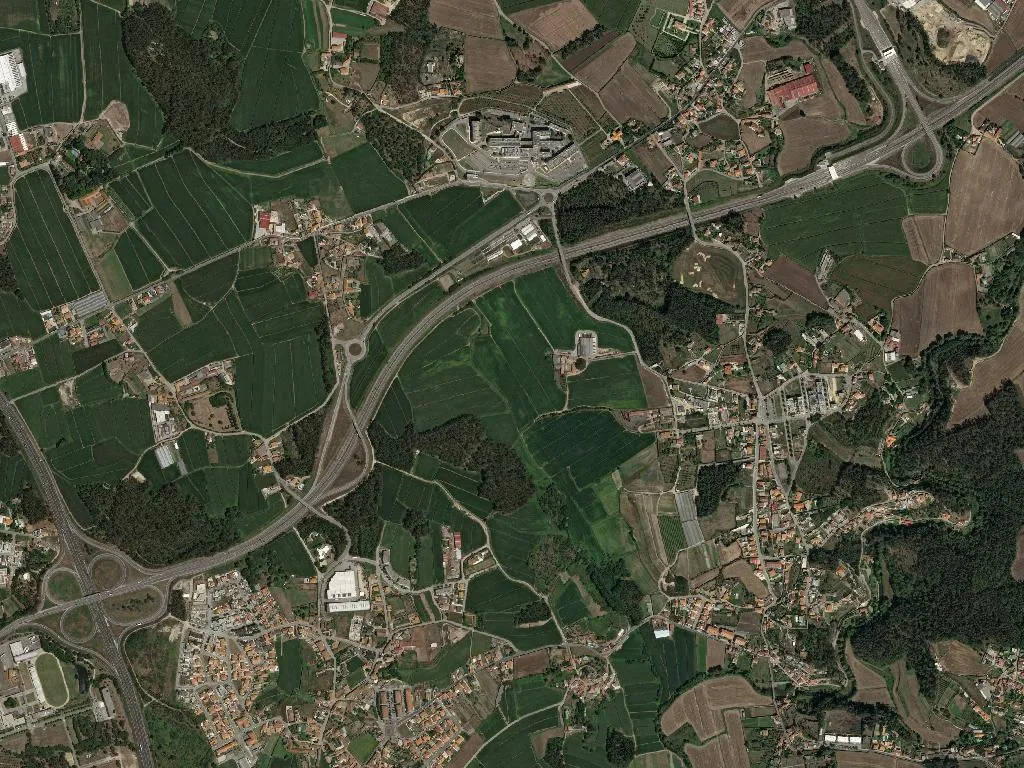
Touguinha and Touguinhó were yoked into one civil parish in 2013, yet the union merely formalised a relationship fixed in the thirteenth century. A 1238 charter records Dom Sancho gifting these lands to the Archbishop of Braga; the name Touguinha itself derives from touga, the old vernacular for hillock. Walk the ridge between the two settlements and the topography obliges – a gentle swell of fields that dips abruptly into the Este valley. Beside the mother church at Cividade, every spade of soil still turns up orange Roman roof-tile; the present parish church of Nossa Senhora da Expectação sits squarely on what was probably a villa rustica, converted as the Empire exhaled its last breath. No flashy ruins, just a hush in the nave walls and a churchyard aligned to an older cardinal axis.
Water, stone and vine
The Este is the parish’s invisible spine. In Touguinhó, the granite church of São Salvador – once a priory beholden to Braga’s archbishop – stands almost on the riverbank, supervising the current. Two bridges serve it: the medieval pack-horse span, barely two metres wide, and its nineteenth-century neighbour that finally allowed carts to cross. Between them runs the River Este Trail, a five-kilometre loop where herons clatter overhead and the smell of silt and crushed mint drifts with wood-smoke from the communal bread-ovens. Cornbread still bakes inside stone domes shared by several households; the crust emerges the colour of burnt sugar and cracks like thin ice.
Beyond the willow hedge the landscape unrolls into pergola vineyards, the characteristic ramadas of the Vinho Verde demarcated region. Vines climb wooden trellises and galvanised wire, forming green tunnels that shade the lanes each August. The wine is white, low in alcohol, brisk enough to slice through an eel stew thickened with maize bread and garden herbs. In winter the dish becomes papas de sarrabulho, a blood-and-cinnamon porridge served in deep bowls with shards of crackling bread to soak up the sauce.
Pilgrims and processions
The coastal route of the Caminho de Santiago cuts straight through both villages, following hoof-polished cobbles between waist-high walls. Yellow arrows appear sparingly; walkers dawdle anyway, tempted by every stone crucifix or vine-covered arch that frames a photo. In September the traffic reverses. Parishioners leave the mother church at dusk and climb to the hilltop chapel of Nossa Senhora da Guia for the annual romaria. From there the Atlantic glints above the Ave estuary; the liturgy is outdoors, but the moment everyone waits for is the procession itself, the Virgin’s palanquin swaying to the bearers’ footfall while the breeze carries salt and burnt rosemary.
August belongs to the Lord of the Navigators: a flotilla of decorated boats drifts downriver before the statue is carried ashore for benediction. June brings São João’s bonfires on the sandbanks, July the fair at neighbouring São Bento de Vairão – sardines blistering over coke barrels, stalls selling linen clogs and wicker creels. On Easter Sunday children parade with wooden rattles, collecting eggs and sugar-dusted folar cakes in exchange for the clatter.
Where river meets wind
The parish lies inside the buffer zone of the North Littoral Natural Park, a slip-stitch between farmland and coast. Eucalyptus plantations thin out into smallholdings; white storks still over-winter here, nesting on telegraph poles rather than church towers. The old olive press at Touguinha has been turned into an interpretation centre whose maps trace ecological corridors linking the Este to the Ave, explaining why otter prints sometimes appear beside tractor ruts.
Memory fixes on a late-September evening by the Romanesque bridge: water low enough to expose emerald weed, stone still warm from the day, a heron poised like a comma on the opposite bank. The church bell strikes six and the note rolls down-valley unhurried, certain no one here is in a rush to leave.