Full article about Vairão: bells, vines & monastic time
Granite lanes, Romanesque church and vineyard terraces quietly pulse under São Bento’s gaze.
Hide article Read full article
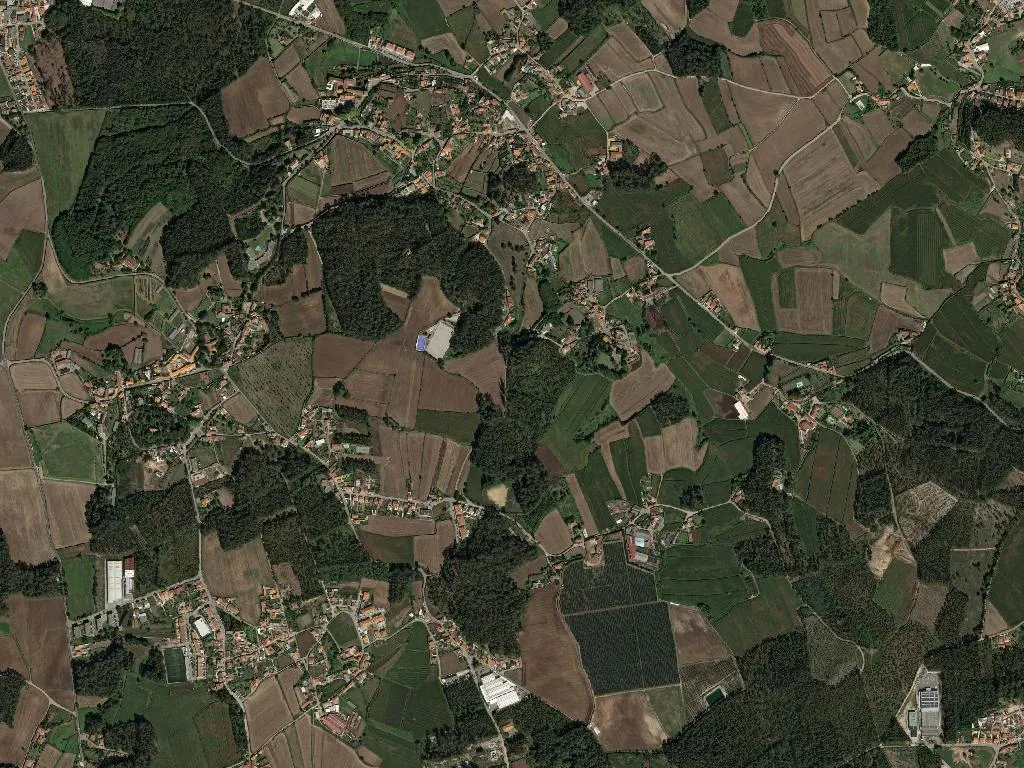
The bells cut through the July-morning hush of vineyards and small plots of maize, summoning a congregation that still answers. Moist earth and the faint tang of vine leaf ride the breeze; this is Vinho Verde country, where the modest elevation of 117 m knits Atlantic salt into every grape. Vairão, a thumbprint of terraced fields and granite houses, slips between the coastal ridges of northern Portugal, shielded from the beach crowds by the pine and dune armour of the North Coast Natural Park. Walk its lanes and you feel the gravitational pull of eight centuries of monastic time, yet the place is alive with the quieter rhythms of neighbours who still hoe their own rows.
Stones that still murmur
The Benedictine church of São Salvador surveys its valley with the unruffled confidence of something that has outlasted kingdoms. Romanic blockwork shoulders up to gilded baroque as if centuries were merely wallpaper; inside, high windows fling lattices of light across worn limestone, coaxing even the most reluctant visitor into silence. Listed in 1977, the building anchors devotion to São Bento, patron not just of the parish but of an entire agrarian calendar first set by the monks who arrived in 1220. The name itself—Vairanum—appears in King Sancho I’s charter to Abbot Egas, granting the monastery lordship over these slopes and, by extension, over the souls who worked them. Dry-stone walls and low schist terraces still follow the mediaeval strip system; footpaths that once echoed to the tread of sandal-clad brothers now serve tractors and the occasional trail runner.
A year measured in saints
Four dates still dictate life here. On the Sunday before Candlemas (2 February) the parish lights candles to Nossa Senhora da Guia while fields lie fallow. Midsummer brings São João on 24 June—bonfires snap, sardines blister over makeshift grills, and children swing jump-ropes of flaming straw. The emotional high-water mark is 11 July, São Bento’s day: images shoulder-borne through lanes barely two metres wide, fishermen from Vila do Conde swelling the ranks in memory of 1367, when the monastery ceded them riverbank plots beside the Ave estuary. The cycle closes on 6 August with Senhor dos Navegantes, when a flower-decked boat is hauled up the slipway at neighbouring Vila do Conde and the same families who processed in July now pray for the Atlantic’s mercy.
Way-marked with scallops
The Coastal Camino stitches Vairão into its final Portuguese stage before Spain. Yellow arrows appear on the old primary-school wall, a bronze scallop is nailed to a gatepost outside Café Central, and hikers with birch staffs clack past the war-memorial fountain. Since 2019 the parish has offered refuge in a converted stonemason’s house: eight bunks, a communal kitchen, and total darkness once the lights go out—night-jars and distant surf instead of hostel chatter. From the albergue door it is 24 km to Porto’s cathedral square and another 190 to Santiago; many walkers linger an extra day simply to taste the local loureiro straight from the tank.
Holding the line
Population density sits at 222 souls per km²—enough to keep the primary school humming with 155 pupils, yet low enough that every face is known at the Thursday market in Vila do Conde. Between 2013 and 2021 the parish lost 208 residents, a slow leak that finally claimed its last grocery in 2021. Still, 268 retirees guard the oral archive: how the grapes were trodden in open stone lagares, how Latin responses once drifted across the cloister. Evening slants honey-coloured light over vines and whitewash; at six o’clock the bell tolls three unhurried times, a sound that folds itself into pine and dune and, for a moment, holds the 21st century at arm’s length.