Full article about Mosteiró’s Thursday market & Vilar’s megalithic dolmen
Soil-scented stalls, 1756 granite cross, Bronze-Age stones above the Douro glimpse
Hide article Read full article
A Thursday morning in Mosteiró
The first Thursday of the month begins with the murmur of voices in Largo da Lameira. Before eight o’clock, wooden boards are unfolded, cabbages and turnips still clinging to soil are laid out, and hens are arranged in wire cages. The Mosteiró market has always been like this — a choreography of repeated gestures, hands weighing potatoes without scales, conversations that last longer than the transaction. The scent of freshly baked bread drifts from Padaria Silva, open since 1952, mingling with coffee dripping at Dona Rosa’s tasca, where the galão still arrives in a ceramic mug. The granite cross of Cruzeiro da Lameira, erected in 1756, watches it all with the patience of something that has seen 268 years of mornings both identical and changed.
Stones that speak Latin
The Roman presence left more than buried tile fragments here. Beneath the Igreja de São Gonçalo, the ground holds ceramics and roofing tiles from when these hills formed part of the route between Portus (present-day Porto) and Bracara Augusta (Braga). In Vilar, history reaches further back: the Mamoa de Ínsua is one of the most significant megalithic monuments in the Vila do Conde area, with evidence of reoccupation during the Early Bronze Age. The dolmen’s lichen-covered stones stand on a rise where, on days when the north wind blows, you can hear the sea — 44 metres above sea level, high enough to glimpse the Douro on those crystalline January days that only happen after rain.
Vilar appears in a charter of 908, its name derived from the Latin villare, meaning a small settlement. Mosteiró is documented from 1059, linked to the long-vanished Ave-Maria Monastery in Porto. Both parishes remained autonomous until the 2013 administrative reform merged them. The Igreja de Santa Maria in Vilar retains the sobriety of buildings that have endured centuries without fuss — whitewashed walls repainted every two years, an arched doorway where children play tag, an interior silence broken only by light filtered through stained glass replaced whenever the parish can afford it.
Copper wires and memory
In the Manual Telephone Exchange Museum, opened in 1983 and maintained by Portugal Telecom, time is measured in copper wires and obsolete switchboards. Machines fill entire rooms — relays and commutators now silent, Bakelite panels where Aunt Albertina connected calls to Porto for decades. It is one of the region’s most singular spaces, dedicated to technology that seems prehistoric to anyone who has only known smartphones. Children stare at the apparatus with the same bewilderment they’d reserve for the Mamoa de Ínsua — both, after all, are ruins of communication systems that no longer exist.
A path that won’t be rushed
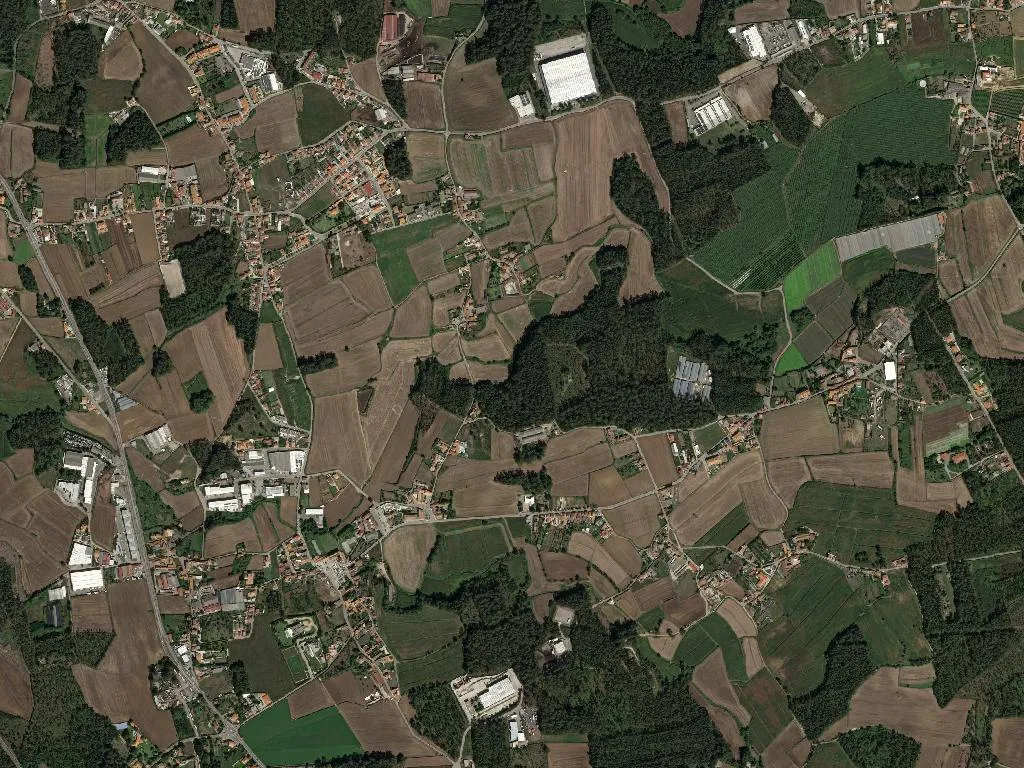
The Coastal Way of Saint James crosses the parish, bringing pilgrims from Porto to Santiago de Compostela. Here, the trail lacks the drama of coastal cliffs or urban grandeur — it winds through agricultural fields where farmers still water by hand, loose-stone walls that collapse in heavy rain, packed-earth tracks that raise fine dust in dry weather. Integration into the North Coast Natural Park ensures this rural landscape remains protected, with small streams running between vegetable plots where maize is still grown for soup and beans for winter stews.
Religious festivals punctuate the calendar: Nossa Senhora da Guia in August, when caldo verde is served with cornbread; São Bento de Vairão in July, with folk bands playing in the avenue; São João in June, with bonfires smelling of charred sardines; Senhor dos Navegantes, when a boat carries the shrine downriver. Celebrations fill the streets with one-tonne processional floats, rockets that make ears ring for three days, long tables where grilled chouriço is eaten with pão de caco and vinho verde from the Vila do Conde cooperative. In Mosteiró, Portugal’s oldest continuously operating pharmacy still serves the parish’s 2,398 residents — 585 of them over 65, who come for blood-pressure drops and stay to discuss how the weather isn’t what it used to be.
Evening light falls obliquely on the Cruzeiro da Lameira, illuminating the numerals carved in granite: 1756. A tractor passes slowly along the road, leaving a scent of diesel and overturned earth. The market has ended, the boards packed away, but Largo da Lameira retains traces of trodden cabbage leaves, a forgotten wooden crate belonging to Zé the greengrocer, the echo of a morning repeated every Thursday since my grandmother led me by the hand to buy day-old chicks.