Full article about Gulpilhares: rink-hockey roar above Atlantic wrack
Teenagers duel on a federation-gold rink while Atlantic brine drifts through Seventies balconies.
Hide article Read full article
Gulpilhares, where the tarmac still tastes of salt
The clack of hockey sticks on resin arrives before you open the door — like the upstairs neighbour dragging furniture at dawn, only faster and rehearsed. Inside the Pavilhão Municipal the rink gleams under cold tubes, a surface the Portuguese federation holds up as the gold standard. On a Tuesday night the stands are half-empty, yet locals still come to watch teenagers train, cradling 50-cent espresso from the corridor machine. Here rink hockey is not a minority sport; it is parish small-talk, as routine as commenting on the price of hake.
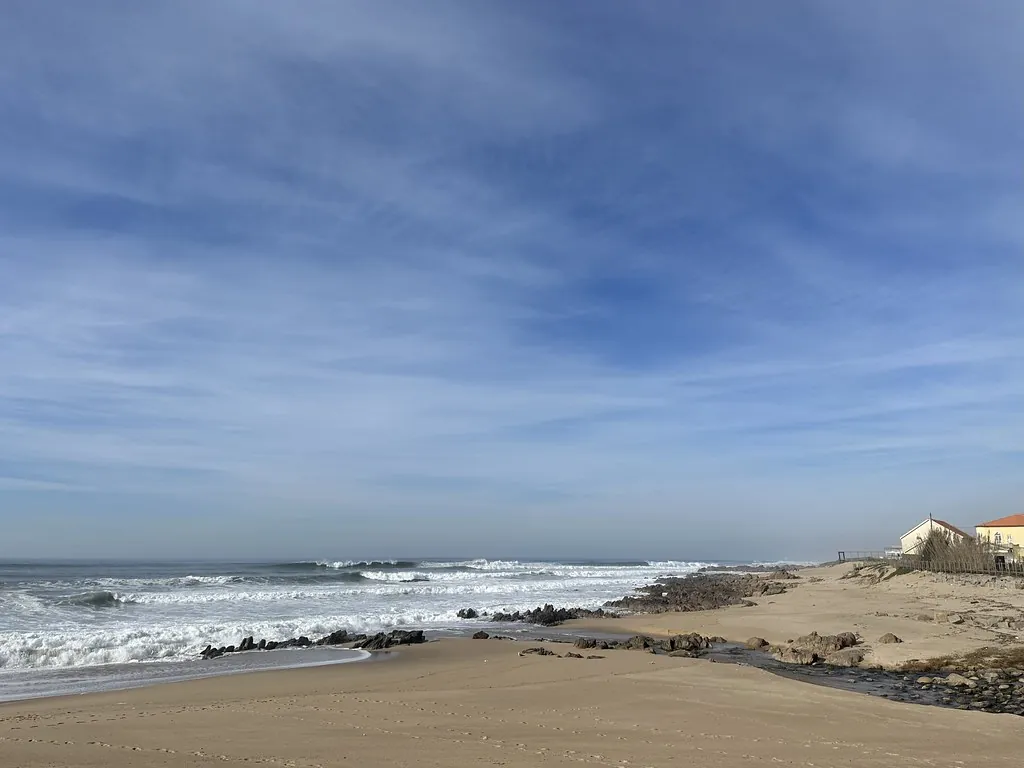
Step outside and the Atlantic slaps you awake. We are less than thirty metres above sea-level on Gaia’s coastal strip, close enough for the air to carry the sour-sweet reek of wrack. Eleven-thousand people occupy barely five square kilometres, a density you feel in the Seventies estates where farmers once swapped a hoe for a two-bed flat and a balcony too windy to sit on.
Two parishes, one unpronounceable name
Gulpilhares was stitched together in the nineteenth century from Santa Maria and São Pedro. Ask three residents how to say it and you’ll get four answers — “gul-pee-lyar-sh”, “gool-pih-lar-esh”, or simply “that bit before Valadares”. In 2025 the civil parish merged administratively with Valadares, yet road signs refuse to surrender the old name; childhood nicknames die hard.
The rebuilt Igreja Matriz sits on medieval footings. When the west doors swing open, a gilded baroque altarpiece flashes amber like a struck match. Outside, exhaust pipes remind you the year is 2024, not 1624. One block away the chapel of Nossa Senhora da Saúde wakes up every August bank-holiday weekend: procession, rockets, makeshift arraial that commandeers the streets much as football fans might downtown Porto when the title is won.
Where pilgrims, cyclists and Sunday drivers meet
Gulpilhares is the pin in two Camino maps. The Central and Coastal routes of Santiago funnel through the main crossroads, backpacks colliding with handlebars. Cyclists follow the Atlantic lane that threads Espinho to Porto — essentially the A5 for bikes: pine scent instead of speed cameras, sand drifts instead of toll booths. Francelos beach, technically in Valadares but claimed by everyone here, flies a Blue Flag above a boardwalk that creaks like grandmother’s floorboards.
Eel stew, sponge cake and back-seat blessings
The parish palate is saline. Caldeirada de enguias — eel stew thick with tomato and bell-pepper — is obligatory, the coastal answer to Porto’s francesinha. Sardines grilled over pine needles give off a resinous smoke no Weber can counterfeit. During romarias you’ll find pão-de-ló baked in wood-fired tins: the centre stays wobbly, the sugar crust cracks like meringue. Outside festival weekends the custardy “fatias de Gulpilhares” are as rare as free parking in Matosinhos on a Saturday night.
São Pedro’s eve, 28-29 June, brings the fishermen’s rusga: a lantern parade that smells of charred mackerel and gunpowder. July’s “bênção dos automóveis” queues cars around the block for holy water and a slice of sponge, a drive-through benediction IKEA would envy. Meeting instructions are always the same: “Find the São Gonçalo statue on the roundabout — our version of the city-centre McDonald’s.”
The 07.40 to São Bento
The 1864 station, long since absorbed into the Aveiro line, still has its slender platform and iron roof furred with sea-rust. The ride to Porto takes twenty minutes, quicker than hunting for a parking space near Clérigos, cheaper than the petrol you’d burn crawling down the VCI. After the last train the Urban Park reverts to pine-hiss: four hectares of root-rippled trails where Atlantic winds sound like distant crowd noise. You can’t record that hush on a phone; you carry it home on your clothes, the way your coat used to smell of Sunday-morning bakery when the bread run meant a coin and a promise to be quick.