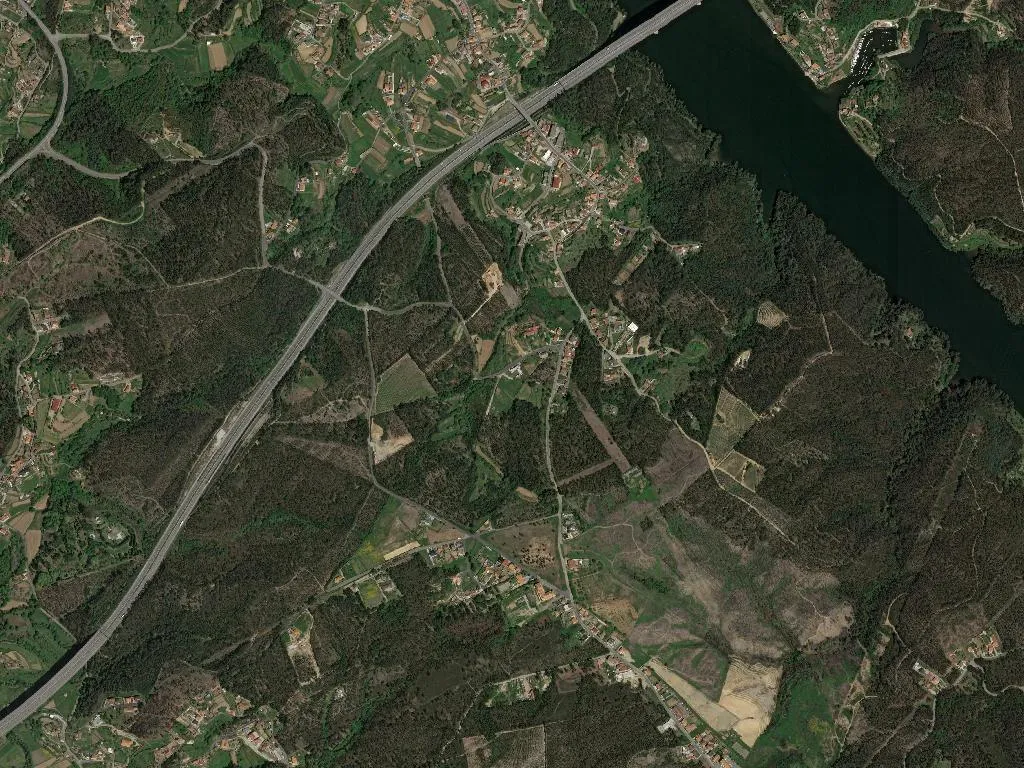
Full article about Lever
Lever, Vila Nova de Gaia, hides above the Douro—join sardine-fuelled romarias, follow mossy Jacobean lanes to manor guest rooms
Hide article Read full article
The granite steps climb unevenly, their edges softened by moss that blooms in dark, velvety patches. Woodsmoke drifts downhill, mingling with the scent of damp earth—someone uphill has lit their hearth early. At 129 metres above the Douro, Lever sits folded between ridges and river terraces, far enough from Vila Nova de Gaia’s coastal sprawl that time still answers to the liturgical calendar rather than the railway timetable.
Three feast days, three heartbeats
Lever’s year pivots on three weekends. First comes Nossa Senhora da Saúde in early September, when the parish hall becomes a production line of sardines and peppery chouriço. Late June brings São Pedro, its evening parade lit by paper lanterns that bob down the hill like low stars. Mid-August belongs to the joint romaria of São Gonçalo—Porto’s beloved matchmaker saint—and São Cristóvão, patron of travellers. None are billed in guidebooks; they are logistical operations that requisition every back-garden table and enlist every teenager to carry scaffolding for the churchyard bandstand. Brass sections rehearse in the field club, grandmothers guard their recipes for filhós dough, and by Sunday night the stone baptismal font is sticky with spilled vinho tinto.
Where two Jacobs ways meet
Lever is a waypoint on two Santiago routes: the Central Portuguese and the Coastal. Pilgrims arriving from the granite chaos of Porto’s cathedral quarter find the pace slackening here. Beyond the Largo do Cruzeiro, the cobbled lane dissolves into packed earth scented with eucalyptus. Yellow arrows appear on gateposts, but directions are more often given by a woman hanging laundry who wordlessly points her chin toward the next bend. There is no municipal albergue, only the three guest rooms at Casa da Levada, a 19th-century manor restored in 2018. The absence of infrastructure is the infrastructure: walkers share the road with tractors hauling produce to the Friday market in Canidelo, and the soundtrack is someone’s radio playing fado through a kitchen window.
A parish breathing on two speeds
Demography tells its own story: 490 residents under fourteen, 938 over sixty-five. Weekday mornings belong to retirees who drift into Café O Lima for a bica and gossip under the plane trees of Praça da República. Children materialise twice a day—8.15 a.m. and 5.30 p.m.—when the school bus churns up dust on Rua da Igreja. Weekends redraw the map: sons and daughters who work in Porto or Matosinhos return to fire up the churrasqueira, and suddenly every quintal echoes with the hiss of meat meeting grape-vine embers.
Granite, eucalyptus, maize
Lever’s 784 hectares roll like a crumpled green counterpane. Dry-stone walls divide smallholdings where maize stands higher than a man. There are no listed monuments, no designated viewpoints—just the 18th-century parish church, its bell cast in 1727 still sounding the Angelus across the valleys. Late-afternoon light ignites the maize rows and the trellised vineyards of Quinta do Monte, turning the foliage almost phosphorescent against the grey outcrops where villagers once threshed wheat. Downhill, the Ribeira de São Pedro threads through bramble and alder until it surrenders to the Douro at Sandim.
The bell strikes six. The note travels along Rua do Calvário, reaches the last farmhouse where Dona Amélia has paused, trowel in hand, between her rows of lettuce. Washing flaps on varandinhas of painted timber; the bakery’s last pão de mistura is already wrapped in paper; two neighbours pause at a gate to compare the day’s yield of courgettes. Lever measures time in these small, completed gestures—no adjectives required.