Full article about Madalena: Douro’s salty exhale before the ocean
Coffee, crates and 10,551 neighbours in Gaia’s riverside parish
Hide article Read full article
Madalena: Where the Douro Breathes the Atlantic
The bus wheezes to a halt and the air changes. A briny updraft rides up from the wide trough where the Douro finally slackens before surrendering to the Atlantic. It mingles with diesel, roasting coffee, and the drag of a fruit crate across hot asphalt. Madalena doesn’t arrive in hush; it announces itself at 29 m above sea level with the steady pulse of a place that never quite closes its eyes.
10,551 neighbours in under five square kilometres
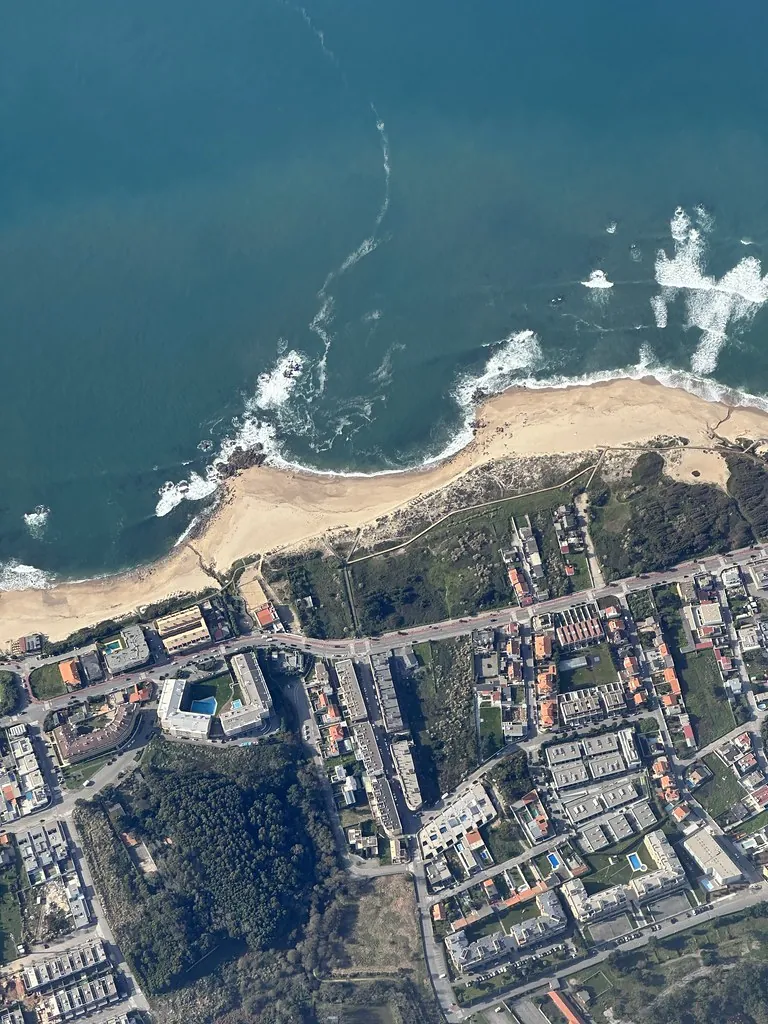
Density first, adjectives later. The parish packs 10,551 residents into 469 hectares – roughly 2,250 people per square kilometre. Three- and four-storey apartment blocks shoulder up to century-old cottages, and the tarmac still radiates midday heat long after the sun has slipped behind the ridge of Gaia’s southern sprawl. Census data tell the rest: 1,410 children under fifteen, 2,360 over sixty-five. Morning benches are colonised early; lace curtains twitch above first-floor sills; crossings are negotiated at the pace of people who recognise the drivers passing by.
Yet childhood still ricochets through the grid. Fluorescent rucksacks swing into school gates; bikes lean against lamp-posts; the playground behind the church fills with the hard consonants of kids who have never heard the phrase “property ladder”.
One monument, two pilgrim paths
Officially, Madalena’s heritage ledger lists a single entry: the parish church, erected in 1776 over a medieval chapel dedicated to Mary Magdalene. Inside, a gilded baroque retable survived both the Liberal Wars and the property grabs of the Estado Novo. In a territory this short on square metres, the building functions as time-keeper and meeting point rather than mere backdrop.
Outside, arrows painted in egg-yolk yellow streak across concrete walls. These are the Central Portuguese and Coastal routes of the Camino de Santiago, converging here before splitting again for the final push north. On any spring or autumn morning you’ll spot the tell-tale gait: backpack, worn boots, phone held at arm’s length to judge the next marker. No albergues, no medieval hospices – just Café Avenida, serving milky coffee for seventy cents since 1983, and the unspoken certainty that the path continues.
Three festivals that mark the year
The calendar is anchored by three eruptions of bunting and brass. Our Lady of Health (first weekend in September) brings sardine smoke that clings to cotton shirts and fairground bulbs strung so low you duck beneath them. Saint Peter on 29 June repeats the formula – procession, fireworks, paper plates sagging under fried green beans. Oldest is the May pilgrimage to Saints Gonçalo and Christopher: shoulder-borne litters shuffle from the mother church to São Gonçalo’s terrace, tracing a route where goats still grazed in 1908. During these weekends population density stops being a spreadsheet figure and becomes shoulder-to-shoulder fact.
Sleep where the freight lorries wake you
Accommodation runs to 45 units – mostly modest apartments and terraced houses rented through local agencies. Expect tiled floors, net curtains, a kitchen that opens onto a balcony just above the 7 a.m. refuse truck. Prices stay south of riverfront Porto, which makes Madalena a staging post for families visiting the cellars across the water or for pilgrims who prefer a proper mattress before the coastal stretch. You can walk to the Douro in twenty minutes; buses to central Vila Nova de Gaia and on to Porto run every twelve minutes at peak. No map gymnastics required – the land is flat, the blocks are numbered, the river always smells of salt.
The soundtrack of 10,551 dinners
Come late afternoon the traffic thins and the place reveals its audio fingerprint. It isn’t silence – silence doesn’t exist at this population pressure – but a layering of domestic noise leaking through cracked panes: the eight o’clock news, cutlery on porcelain, a tap left running while someone shouts across the hallway. It is the collective clearing of plates by ten thousand people separated by twenty centimetres of brick, and it is as specific to this low-lying fold of Gaia as the estuary tang that rides every breeze.