Full article about Mafamude
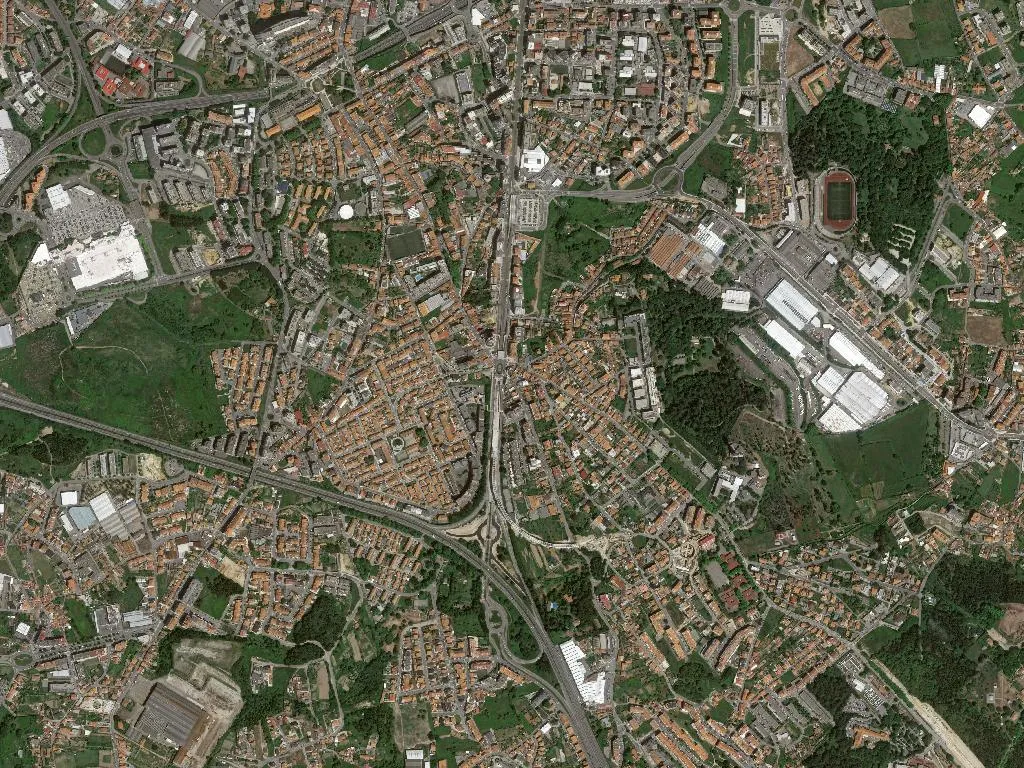
Mafamude, Vila Nova de Gaia’s hill-top parish, packs 26,000 souls into five square km of granite alleys, baroque azulejos and Douro panoramas.
Hide article Read full article
The nine o’clock bell over the Douro
The bell of São Cristóvão strikes nine and the note ricochets down the granite canyon of Rua da Igreja, slips between laundry-fresh balconies, and dissolves among the oaks that spill towards the Ribeira de Aldoar. At 156 m above sea level, Mafamude is high enough that the river is only a glinting suggestion until you reach the Miradouro da Senhora da Saúde. There the Douro suddenly unfurls, Porto’s zinc roofs and baroque towers compressed into a single, over-saturated postcard that refuses to fit any frame.
With 26,000 people squeezed into barely five square kilometres, this is Vila Nova de Gaia’s most densely populated parish, yet silence still pools in pockets. A 1248 charter from Dom Afonso III first named it “Mafamude”, and the place has been trading, baking and reinventing itself ever since.
Crossroads that once wore a collar
Opposite the parish church stands the Cruzeiro de Mafamude, a 1741 granite block classified as a building of public interest. For two centuries the stone served as an open-air pillory: edicts were read aloud here, spoken words given the weight of law. Today elderly men in flat caps occupy the iron benches, watching scallop-shelled pilgrims pass beneath yellow and blue arrows. Within a six-kilometre perimeter two separate Caminos – the Central Português and the Coastal – intersect, turning garden walls into way-marked calligraphy.
Inside the sixteenth-century church, candlelight slips across a baroque altarpiece paid for in 1847 by Canon José Joaquim Pinto de Andrade. His 800,000 réis funded the gilded carving that still catches the light; 18th-century azulejo panels narrate saints’ lives in cobalt and milk-white, while the scent of melted wax hovers just above the chill granite.
Down the valley, where cork meets conveyor belt
Five minutes on foot the land tips into the Ribeira de Aldoar valley. The riverside park threads three kilometres beside water that once powered wine presses and watermills. Cork oaks and gall oaks sieve the light; kingfishers stitch the air above the stream. Moss-covered stone walls betray the footprint of nineteenth-century factories: in 1883 António da Silva Alves opened a cannery that employed 350 locals and filled the evening air with steam and sardine oil. Between numbers 48 and 52 on Rua da Estação you can still pick out tram rails of the Porto–Póvoa line, abandoned in 1930 and half-digested by asphalt.
Rice blood, sponge cake and a 320-kilometre sweet
Mafamude’s kitchen borrows from both sides of the Minho–Douro marriage. Sundays bring wood-oven kid goat at O Molejo, flanked by Vinho Verde from the Sousa sub-region. The local sarrabulho is a dark, clove-scented rice stew thickened with pigs’ blood; it arrives with rojões (cubed pork) and a side of the same porridge set into slices. At Pastelaria Cristóvão the pão-de-ló de Mafamude is baked in a tall hoop so the centre collapses into a damp, lemon-scented crater; the queijadas de São Cristóvão wrap dense requeijão custard in whisper-thin pastry.
September’s Festas da Senhora da Saúde see a 320-kilogram bolo de arroz – essentially a sweet rice omelette – cut into 2,000 pieces and given away free on the night of the 8th, a tradition begun in 1952. At the end of June, manjerico pots of flowering basil are exchanged between sweethearts during the São Pedro bonfires, and on the last Sunday of May the Romaria de São Gonçalo e São Cristóvão sets 12 km of pilgrims walking to Amarante, accompanied by the Rancho da Madrugada and a squeeze-box choir.
Two arrows, one direction
Follow the coastal Way from Mafamude to the iron-arched Maria Pia bridge and you cross the parish’s entire syllabus in four kilometres: the high-density plateau, the wooded ravine, the moment when the Douro widens into estuary and the Atlantic light turns the water pewter. Descend slowly; the air warms, the river becomes a mirror, then a sheet of beaten metal. By the time you climb back, the granite cross lies in short late-afternoon shadow and the smell of wet earth from the Aldoar valley has already settled into your clothes – a green, mineral signature that will travel home with you, long after the bell has stopped ringing.