Full article about Pedroso’s granite lungs breathe Atlantic mist
Walk eucalyptus-scarred terraces where coffin-worn stone lanes tilt to the Douro mouth
Hide article Read full article
Pedroso: stone keeps the pilgrim’s pace
The dog barks before you see it, the sound rolling through eucalyptus that still smell of the 2017 wildfire. At 130 m above sea-level the air is thinly sliced—Atlantic-cold even in June—while the Aldoar stream sleeps folded in mist. Underfoot is a ribbon of compacted earth flanked by loose-granite walls, the same stone the earth-movers keep peeling off the hills. Locals call the place Pedrosus—“endless rock”—and you realise why before you’ve finished a cigarette: it tiles every threshold, shoulders every crossroads, feeds every village fountain. Even the dead descend through it; coffins have knocked against the same seam of granite for three hundred years.
Pedroso spreads across almost 2,000 ha, but size is irrelevant. On a clear noon you watch the Douro slip into the ocean while, behind you, the suburbs of Vila Nova de Gaia strain like a tight tie-knot. Ten thousand people are registered here; more than half are over fifty, the census insists. Walk the lanes on a Friday evening and you’ll see the arithmetic corrected by grandchildren back for caldo verde and grandmother gossip.
Stone upon stone, faith upon faith
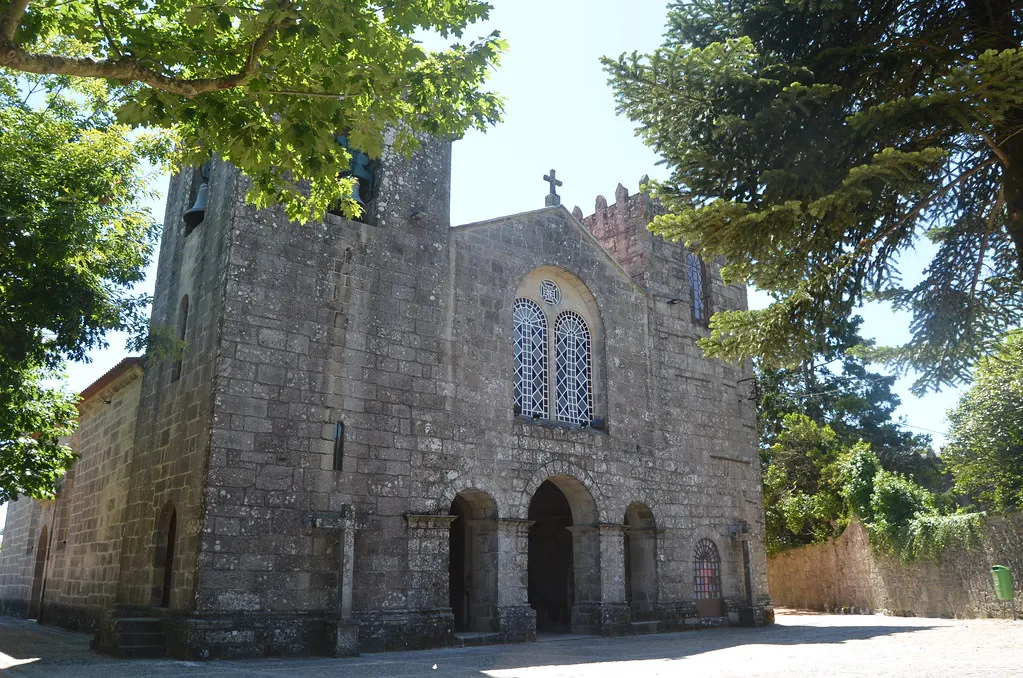
The parish church of São Pedro has no baroque swagger, only a side door that spills worshippers onto a porch where cigarettes are lit after the ten-o’clock mass. The priest still hurtles down the front step to break up Benfica-Porto arguments in Aldoar café. Smaller chapels act like rural post boxes: Nossa Senhora da Saúde—“the Health” in village shorthand—receives the promises of those told they have three months and decide three rosaries might be stronger than three cycles of chemo. Walls are the same ash-grey granite as the houses, roofs the same narrow terracotta. Anyone wanting gold leaf heads to Porto cathedral; anyone wanting belief stays here.
Romans probably detoured through, but memory is shorter than archaeology. My great-grandfather planted potatoes on the same river terrace I do now. The parish was only paper-stamped in the nineteenth century; the settlement began the moment someone shouldered a hoe and decided the Aldoar’s mud would irrigate cabbages.
Two paths, one north
When we see a backpacker staring at the ground we know: another lost yellow arrow. Both Santiago routes—the Central and the Coastal—thread through like slow trains crossing at Crestuma lock, only without carriages. Pilgrims appear at dawn, faces creased from a night in Vila do Conde campsite, desperate for an espresso and the parish-council lavatory. Two years ago an honesty-box water dispenser stood on the Alameda; copper piping was stolen the same winter. Now you knock on Dona Rosa’s gate. If she’s in she’ll turn on the garden tap and, if the season allows, hand you a ripe fig. Some stop, some fear breaking rhythm. What matters is that no one leaves without knowing Crestuma lies ahead, Santa Marinha behind, and that forward is the direction until Compostela—or life—decides the journey is done.
A calendar you can eat and dance to
Festivals are what’s left after the rent. June belongs to São Pedro: rockets that José Manuel imports from Galicia because “Portuguese ones are wimps”. August is the Saúde procession, inching down Rua da Igreja until traffic on the EN507 stalls—three cars and a GNR van. The romaria to São Gonçalo and São Cristóvão is for the fit: walk to the chapel, eat charcoal-grilled sardines in Tabuão bread, wash it down with a “little white”, sing your way home.
The table follows the year. Cabidela made with Loureiro wine vinegar—the red sort darkens the sauce too much. Cozido enriched with Mondim farinheira, fatter than the supermarket version and twice as generous in the broth. Rojões with sea-kale picked along the same terraces sold every Saturday at Crestuma market. Outsiders get caldo verde thickened with beef chouriço; the blood version is for locals who’ve proved they can handle it. Finish with toucinho-do-céu from Padaria Silva—recipe borrowed from Ovar, perfected here since 1978, never complained about yet.
Tracks between field and city
For the best view take the municipal road 1047 and park before the Gandra turn-off. An iron gate always stands open—Sr António’s philosophy applies to cows and people alike. The path shadows the stream, ducks under a 2013 storm-felled poplar, then climbs to the Aldoar levada. The altitude won’t trouble your lungs, yet from the ridge the Arrábida bridge deck hovers like a model and you remember that in thirty minutes you could be in Porto ordering coffee at Café Piolho.
Back in the village, Booking lists five properties; three are childhood homes whose emigrant offspring rent rooms so their parents can pay the pharmacy bill. There is no reception desk—just a key under the casserole and a note: “hot water takes a minute”. Fair exchange in a place where sat-nav still confuses granite walls with driveways.
The exact weight of stone
At dusk, when the sun slips behind Monte da Virgem, the rocks exhale the day’s heat and the scent of schist drifts upwards. The church bell tolls three times—Sunday mass tomorrow—and the sound ebbs like a tide. You rest a hand on a wall warmed by centuries of palms. Pedroso offers no Unesco plaque, no audio guide. Only the weight of stone through a boot sole, cold climbing your shin, and the certainty that when you return the wall will be exactly here—perhaps wearing one extra lichen, the parish’s quiet way of dating time.