Full article about Perosinho: where the bell greets every stone
In Vila Nova de Gaia, a parish wakes to baroque gypsum, olive groves & iron quoits
Hide article Read full article
The morning bell still answers to Pedro
At eight o’clock the chapel bell at Sameiro tolls once, sending a single note downhill. It skims the curved terracotta tiles, slips through the Portuguese oak leaves that fringe the Rio da Vila, and dissolves before it reaches the valley floor. Nobody hurries. Beside a granite cruzeiro carved in 1737, two men chalk distances on a packed-earth pitch where iron quoits thud against a wooden peg. The crack is sharp enough to echo along the plane-tree avenue. Perosinho wakes like this: quietly, on first-name terms with every stone.
The boy who baptised the parish
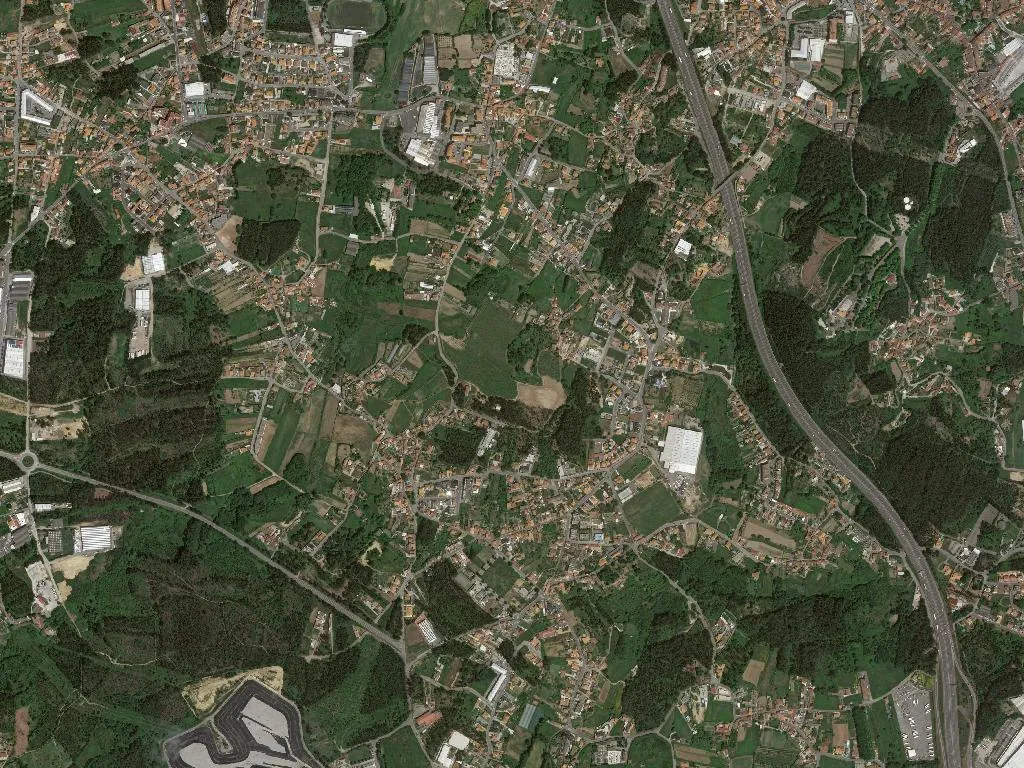
“Pero Sinho” – Little Peter – appears in a 14th-century foral, probably a small land-owner or chapel clerk whose holdings clustered on the eastern slope of Monte Murim. The face is gone; the nickname stuck. After the liberal municipal reforms of 1836 the scattered hamlets were fused into one civil parish, and the name was formalised. For centuries the economy rode on vines, olives and rye until phylloxera arrived in the 1880s and stripped the hillsides bare. Parish priest-cum-chronicler José Joaquim Pinto de Sousa wrote of the devastation in ledgers that still read like open wounds. Replanting was patchy; instead, the 1950s brought bricklayers and small textile workshops, nudging Perosinho towards suburbia while leaving the hedgerows and schist terraces intact. Today 6,872 people share 5.29 km², close enough to Porto’s A20 to clock fifteen minutes door-to-door, far enough out to keep century-old olive groves and dry-stone walls free of concrete.
Plaster, tile and a Brazilian IOU
The parish church, listed in 1982, rewards anyone who remembers to look up. A single-nave interior explodes into a baroque high altar carved not from gilt wood but from local gypsum. The white plaster drinks in the sidelight like linen, softening every fold of drapery and curl of cherub wing. Around the nave, 18th-century azulejos narrate the life of St Peter in cobalt on a biscuit ground. Part of the bill was paid by António da Silva Ribeiro, a Perosinho emigré who made his fortune in Santos and sent money home for the restoration. Returned-brazilianos also financed the 1892 bandstand on the main avenue – a filigree of cast-iron lacework that groans gently whenever the north-west wind arrives off the Atlantic.
Higher up, the hilltop hamlet of Sameiro guards the chapel of Nossa Senhora da Saúde. Beside it, the sulphur spring that once drew invalids from Porto still smells faintly of struck matches on damp mornings; grandmothers insist the water will settle both liver and heartbreak.
Four mills and a river that remembers
The PR7 GAI footpath follows the Rio da Vila for five kilometres, curling through slate terraces where moisture beads on maidenhair ferns. Four water-mills interrupt the route; one has been restored as an interpretative centre, its millstone still grinding local maize for visiting schoolchildren. The thud is low enough to feel in your ribs. A linear park continues another three kilometres to the Douro, perfect for kingfishers, little egrets and the occasional shy otter. Climb the spur to the Pereirão lookout at 123 m and the estuary unrolls like molten pewter between green banks.
Bonfires, sardines and kid stew that refuses to hurry
Perosinho keeps the liturgical calendar with smoke and percussion. On Easter Saturday the Facho de Sameiro – a twelve-metre pyre of gorse and pine – is lit at dusk; sparks drift over the valley until dawn. The third Sunday of May belongs to Nossa Senhora da Sãoide: a 6 a.m. brass band procession followed by folk dancing that spills into Monday. The night of 28–29 June, however, is the one locals clear their diaries for. São Pedro’s festivities send the statue down to the riverbank where bonfires crackle, sardines spit on cane grills and the drums of bombos rusga reverberate through ribcages. In July the eight-kilometre pilgrimage to the hilltop monastery of Serra do Pilar leaves at first light; the return leg ends in a parish hall scented with chanfana – kid goat slow-cooked overnight in red wine, paprika and bay, served with wood-oven cornbread from Sameiro. Dessert is either pumpkin-and-butter-bean pap or a slab of toucinho-do-céu, the almond-and-egg-yolk “bacon from heaven” that dissolves on contact with coffee.
The last stop before the Douro
Way-markers for the Central and Coastal Portuguese Caminos both pass through the village. Perosinho is the final chance to refill water bottles before the metal bridge over the Douro into Valbom; many walkers overnight in Sameiro’s spare rooms, waking again to the chapel bell. Stay an extra day and you can taste vinho verde at Quinta do Espinhal, whose 18th-century manor still displays its coat-of-arms above the threshing floor, watch ceramicists reproduce the church’s 18th-century tiles in a back-street workshop, or cycle the riverside path to Canidelo’s tiny pontoon.
The memory you leave with is neither monument nor view. It is the metallic clack of iron on wood beside the granite cross, repeated at slowing intervals as afternoon light stretches across the pitch and, somewhere down the avenue, the first charcoal brazier of the evening sighs into life.