Full article about São Félix da Marinha: Atlantic hush beyond Porto’s glare
Butter dunes, sardine winds and two Caminos meet where Gaia keeps its last empty horizon
Hide article Read full article
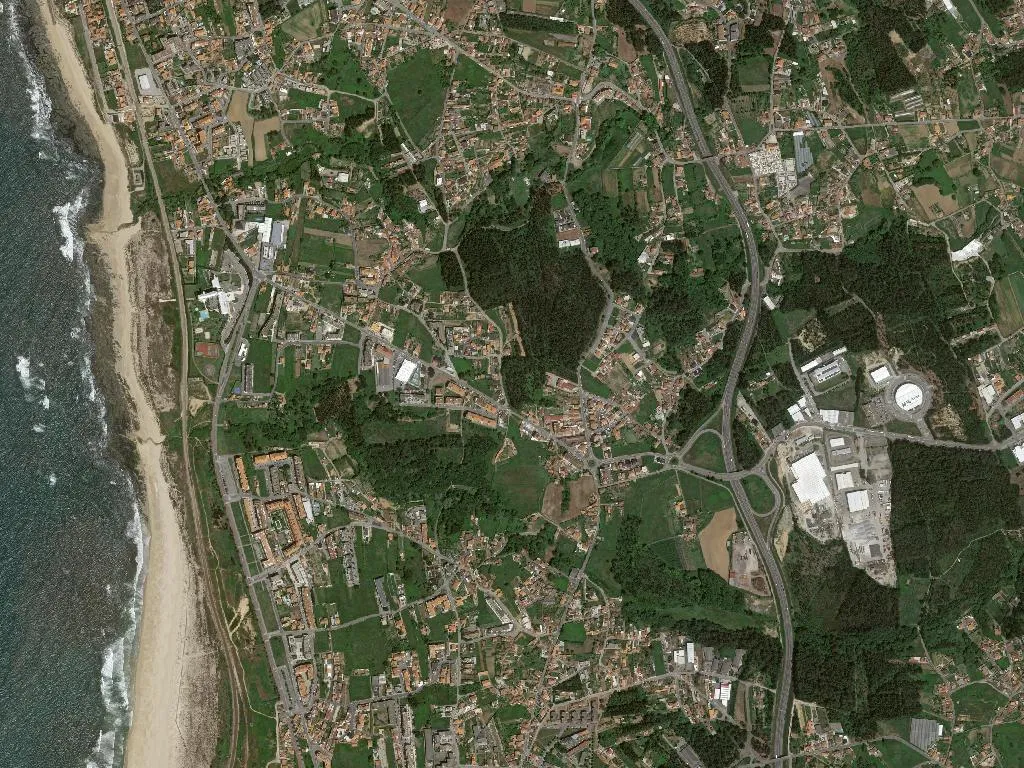
The Atlantic announces itself long before you see it: a briny film on your forearms, a low bass-note rumble that gets inside the ribs. Then the dunes part and the whole 3 km sweep of São Félix da Marinha opens – butter-yellow sand ribbed by the retreating tide, the horizon salted with late-May haze, and not a single red-and-white parasol concession in sight. This is the southern lip of Vila Nova de Gaia, only 12 km from Porto’s Ribeira but stubbornly allergic to the city’s weekend-beach swagger.
A parish that keeps its distance
Elevation: 53 m. Population: 13,560 spread across 800 hectares of dune, gorse and low-rise villas. The arithmetic suggests suburbia, yet the feeling is horizontal, unhurried. Streets are still named for farm gates long since built over – Caminho do Sobreiro, Rua do Moinho – and the parish council plants sea daffodils each winter to knit the fragile dunes together. Walk 200 m inland and you hear blackbirds where, moments earlier, only gulls competed with the surf.
The name they stitched to the wind
“São Félix” first appears in 18th-century ledgers; the saint was a 3rd-century martyr believed to protect against shipwreck and fever. “da Marinha” came later, appended by fishermen who wanted the ocean written into the very address. The 1758 Parochial Memoirs – Portugal’s equivalent of the Domesday survey – list 90 households, a chapel, vineyards and “good sardine fishing”. By 1890 Port wine brokers were building timber-framed summer houses among the pines, bringing with them gas lamps, tennis lawns and the notion that salt air cured everything from gout to gossip.
Between two Jacobs
Very few places in Europe can claim two separate St James pilgrimage routes, but São Félix is crossed by both the Central and the Coastal Portuguese Caminos. Way-markers stencilled with the yellow scallop send hikers either along the beach boardwalk – Atlantic on the left, kite-surfers punctuating the middle distance – or up the asphalt lane where washing flaps between eucalyptus. In July you share the path with Basque school groups, Korean bloggers and local grandfathers walking the dog, everyone nodding the abbreviated camino greeting that needs no shared language.
Dune botany and other small resistances
The sand ridge is held together by amophila grass, whose roots can stretch two metres sideways; carqueja, bitter enough to flavour gin; and the star-shaped Silene littorea, now so rare it has its own micro-reserve behind the beach bar “O Pescador”. Pick it and the parish fine is €750 – more than double the penalty for parking on the cycle path. The council’s environment officer, Ana Paula Araújo, calls the dunes “a living sea wall”, cheaper and prettier than concrete ever was.
Festivals that still belong to the parish
Third weekend of August: lights are strung between plane trees, brass bands tune in the car park of the 16th-century Capela de São Félix. The Festa da Senhora da Saúde mixes processional candles with a makeshift beer terrace; octogenarians in twin-sets share plastic tables with toddlers smeared in sugar and face paint. Mid-June belongs to São Pedro, patron of net-menders – locals grill sardines on improvised oil-drum barbecues while teenagers compete at rusga, a barefoot sprint across hot sand carrying a full glass of vinho verde. Arrive early: outsiders are welcome, but seating is by neighbour, not by reservation list.
Sand, late light and other souvenirs
By 7 p.m. the tide has turned; footprints fill with salt water that reflects a sky the colour of oxidised copper. Couples walk the tideline in silence, collecting fragments of smooth green glass polished by the same motion that once bottled port. Somewhere behind the dune a lawnmower starts, then stalls – the only reminder that the A29 motorway is ten minutes away and an international airport 25. What you carry home is not a fridge magnet but the granular weight of wet sand in trainer seams, the low-frequency after-echo of surf, and the realisation that a place can still measure time in seasons rather than in clicks.