Full article about São Pedro da Afurada: Sardine Smoke & Net-Mending Echoes
River-side parish where Douro fishermen still barbecue the dawn catch between rainbow washing lines.
Hide article Read full article
São Pedro da Afurada: where the Douro still smells of salt and smoke
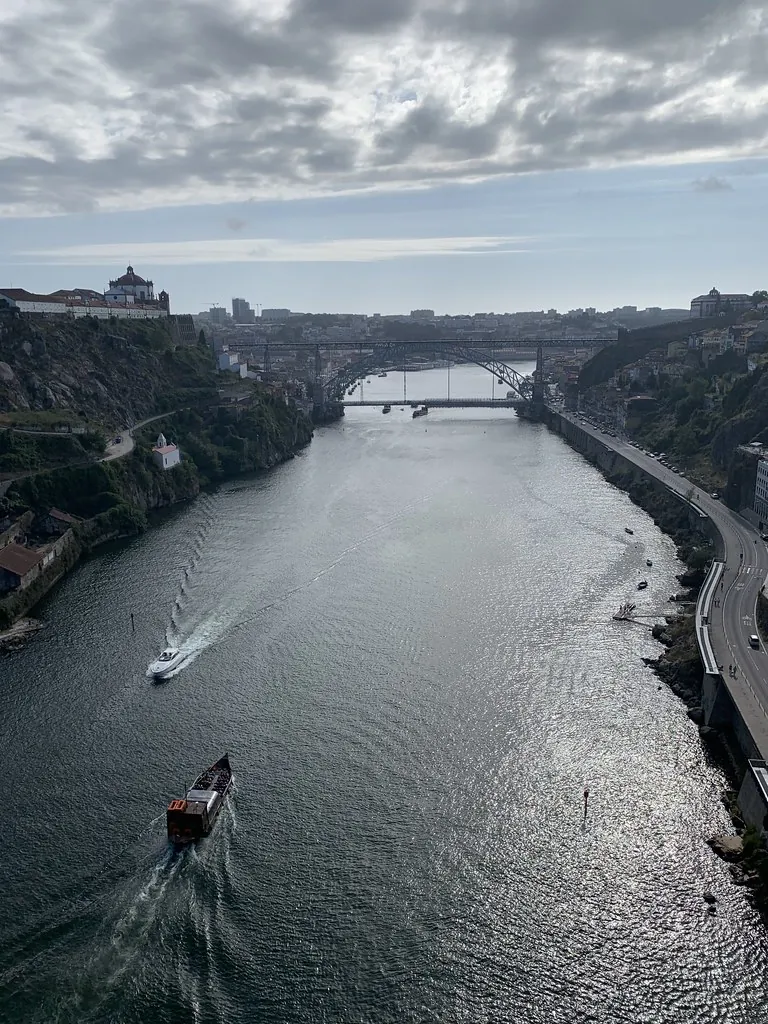
The aroma reaches you before the view does. Sardine fat spits over charcoal, smoke curling into the estuary breeze and drifting between the plastic tables of the quayside cafés. Rust-red fishing boats knock against iron rings, gulls quarrel over fish heads, and somewhere a outboard engine coughs itself awake. You are a twelve-minute ferry ride from Porto's Ribeira, yet the clock here keeps sea time, not city time.
Afurada covers less than a square kilometre — 99 hectares into which 17,000 souls are packed so tightly that washing lines zig-zag across the alleys and every grandmother knows the exact decibel at which a voice becomes neighbourhood news. The parish was only carved out of Santa Marinha in 1952, but its licence to exist was stamped in the early 1500s, when explorers' logs mention "a furada" — literally "the hole" — where crews could beach and mend nets. The first families — Ferreirinha, Faneca, Fanela — still echo in the present-day phone directory.
Stone, lime and saints that stare
The original chapel, begun by a sea-captain called Manuel Pinto Pinhal and finished in 1894, squats on Rua da Igreja like a salt-stained afterthought. Whitewash blisters off its single nave; the pews creak under the combined weight of rosary beads and arthritis. Inside, river damp mingles with the metallic tang of candle smoke. Outside, the 1955 replacement church rises in municipal concrete: a staircase that seems designed for processions, and electrically-triggered bells that mark the hours like a ship's chronometer. The stone Saint Peter on the forecourt grips a gilded key and stares down-river as though he alone knows where the current ends.
Up the hill the eighteenth-century Palácio de Fervença is being coaxed into a second life as river-view flats. Its granite blocks, blackened by coal soot and time, stand in deliberate contrast to the single-storey fishermen's cottages along the wharf — thick-walled, tile-roofed, doorways just wide enough for a net-loom or a coffin.
River as altar
On the night of 29 June the streets become dance floor and dining room. Locals in pressed white shirts stamp out fandango on Rua António da Cruz; wax from the street-candles pools into coloured slicks that glue themselves to sandals. Two weeks later, the Romaria de São Gonçalo and São Cristóvão borrows the river for a floating pilgrimage: gilt saints are ferried upstream, the water catching the torchlight like liquid stained glass. When the flotilla turns back, the church bells unleash a full twenty-minute bronze avalanche that rattles teacups in the marina cafeteria.
Before the first haul of the year, laurel branches and rock salt are still flicked over hulls for luck. Retired trawlermen meet in the Clube de Conveses to retell the one about the octopus that counted the crew, stories that survive only in the telling, fraying a little each time like old hemp.
Eel stew, corn bread and an oven that never cools
Dona Alda's caldeirada arrives in blackened iron pots that refuse to cool. The sauce is the colour of rusted anchor chain — sweet paprika, slow-collapsed onion, a splash of loureiro white brought in five-litre demijohns. At Mr Joaquim's bakery the broa de milho still contains a whisper of chestnut flour; the wood-fired oven has been alight since 1962, swallowing loaves at 5 a.m. and returning them at dawn with a crust that cracks like thin ice. In Café Central, Ana scrambles bacalhau à Brás on a domestic gas hob, wielding a handless wooden spoon that must have seen the Salazar years.
Between estuary and footpath
Afurada's beach is a slip of shale and sand that appears only at half-tide. When the water rises it swallows the stone benches where women once mended sails. In the mudflats behind, herons stalk the rills that children raid for green crabs, armed with a chicken wing and a supermarket bucket. The Jardim do Rio has the sort of benches that sigh when you sit, grandparents timing the clouds and declaring that weather "isn't what it used to be before the bridge."
You do not sight-see Afurada; you pick your way through it as you would a net spread to dry — filament by filament, knot by knot, palms filmed with brine. And when you leave, what lingers is not a photograph but a precise sound reel: the hollow thunk of a boat kissing a tyre fender, the squeak of warped planks under a crate of sardines, and the low, almost tuneless chant some helmsmen still hum as they throttle down, as though the Douro needs to be told, voice by human voice, that another day at sea is safely done.