Full article about Seixezelo: Where the Douro Glows Through Cork-Oak Shadows
Feel Seixezelo’s warm granite walls, hear blackbirds echo through cork-oak folds and watch the distant Douro shimmer like poured pewter.
Hide article Read full article
The granite is warm against my palm. It’s mid-afternoon and I’m leaning on the low wall of Santa Marinha’s churchyard; stored heat seeps slowly through the stone while my eye skims the cork-oak folds of the Serra. Between the trunks a molten ribbon flashes – the Douro estuary, distant yet pin-sharp, as if someone had poured liquid pewter across the horizon. Silence here is not absence but subtraction: a blackbird rehearses a phrase and leaves it unfinished, a wooden shutter complains, an invisible stream rehearses its descent to the river. Seixezelo never declares itself; it lets you overhear it.
Stone that remembers footsteps
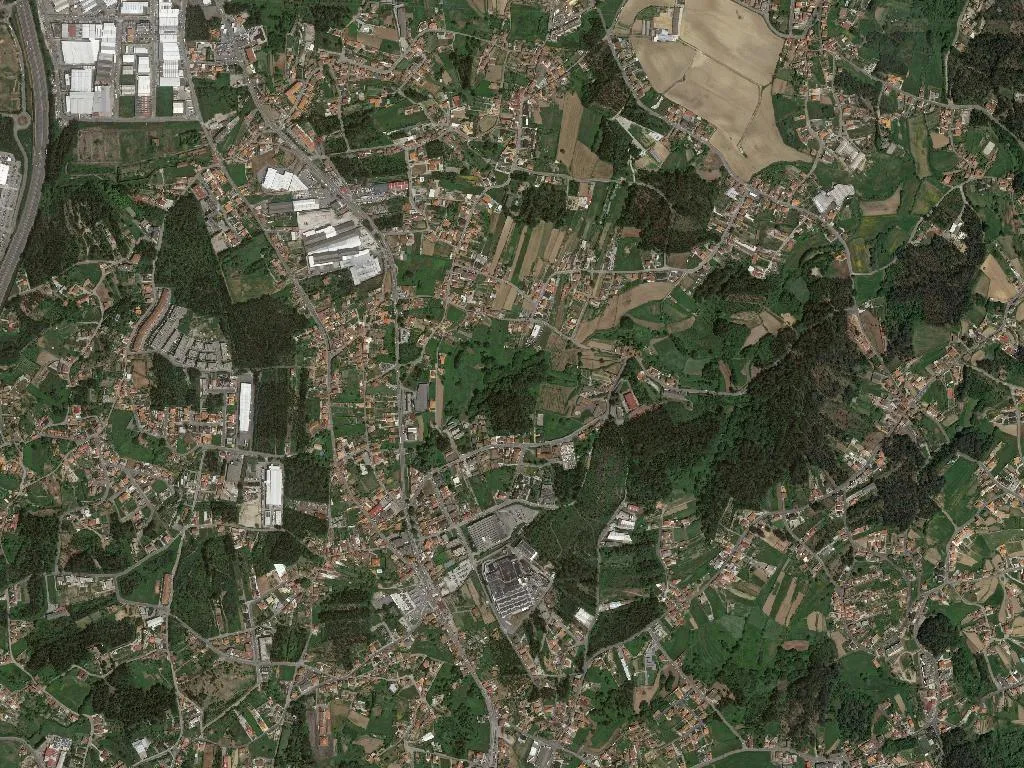
At barely a square mile, Seixezelo is the smallest parish in Vila Nova de Gaia, yet its topography refuses to be miniature. Terraces stitched together with granite retaining walls buckle the slope into abrupt little cliffs; stone crosses – the Portuguese “cruzeiros” – stand guard where footpaths switchback. The name itself is a geology lesson: seixo (river pebble) plus the suffix -zelo, watchfulness. A place of schist and granite folded in on itself, 200 m above sea level and half a day's walk from the Atlantic.
Human memory here starts in the early Middle Ages, when these plots belonged to the larger parish of Oliveira do Douro. Only when Vila Nova de Gaia became the global warehouse for Port did Seixezelo acquire muscle and purpose. Abandoned lagares – stone treading-tanks the size of village plunge-pools – still lurk beside smallholdings, their walls blackened by centuries of grape must. Officially the parish of Santa Marinha dates only from 1911, but the vines had already mapped its boundaries long before.
The baroque altarpiece that glows at dusk
The parish church, built piecemeal between the sixteenth and seventeenth centuries, is pure northern sobriety on the outside: granite blocks, a bell-cote, no nonsense. Step in at five o’clock and the interior ignites. A gilded baroque altarpiece – ordered by the reforming priest José Joaquim Pinto de Azevedo (1798-1865) – catches the oblique light and burns with a dense, almost viscous gold. During the Liberal Wars the churchyard doubled as a lookout; sentinels watched river traffic from the same steps where today you watch the sun slip behind the Serra de Santa Marinha.
Fifty metres downhill, the tiny chapel of São Pedro stays shuttered for most of the year, opening only on the night of 29 June. Then the procissão de velas threads the lanes, every hand carrying a paper-shaded candle. Concertinas pump, bass drums answer, and the air smells of wood-smoke and hot beeswax – midsummer condensed into one flammable hour.
Three feasts, three seasonal pulses
Seixezelo keeps time the old way. Before Lent, Domingo Gordo erupts in a homemade carnival: papier-mâché masks, circle dances in the street, a stubborn refusal of suburban anonymity. In early September the Festas da Senhora da Saúde bring processions and outdoor dinners under fairy-lights. Most singular is the romaria to Serra do Pilar – a dawn pilgrimage that walks four kilometres uphill to the monastery across the river, singing chamadas in unison, feet keeping time on the granite setts.
On feast days the village still plays malha, a nineteenth-century lawn game that looks like French pétanque gone metallurgic: players hurl a brass disc at a wooden pin, the clang slicing the afternoon like a cracked bell. Precision, patience and a willingness to stand still – the same qualities Seixezelo asks of visitors.
Kid goat, wood smoke, corn bread
The local table is proudly weighty. Kid goat is slow-roasted in a bread-oven until the skin blisters and the aroma settles in your clothes for the night. Arroz de cabidela – chicken stewed in its own blood, sharpened with vinegar – arrives almost black and smoking. Rojões à minhota – dice of pork belly – spit and crackle in their own fat before being doused with sarabulho, a blood-spiked sauce that tastes like winter decided to become edible. Even the caldo verde is denser here: potato and kale soup bobbing with coins of local chouriça, the corn bread torn, not sliced, so the crust shatters into the bowl. Finish with toucinho-do-céu, a yolk-and-almond slab that translates, unapologetically, as “bacon from heaven”. Ten minutes down the hill, the Port lodges in Vila Nova de Gaia pour the wine these terraces once helped freight to Victorian dining rooms.
Four kilometres that talk back to your knees
Two branches of the Portuguese Way of St James cross the parish: the Central and the Coastal. Between Seixezelo and the nineteenth-century suspension bridge at Lever you can walk four kilometres of official camino – a stony braid that switches from schist walls to cork groves and sudden, cinematic views of the Douro valley. The path is uncompromising: loose granite, exposed tree roots, red earth that turns to slick ochre after rain. It answers every footstep with a small complaint, then repays you with the green hush of the Serra, air thick with moss and wet oak bark.
Late afternoon, when the sun has slipped behind the ridge and the churchyard wall begins to give back its heat, you may hear the dry metallic clack of brass on wood. It is too precise for the city, too intimate for the open country. It is the exact sound of Seixezelo keeping its own slow time.